


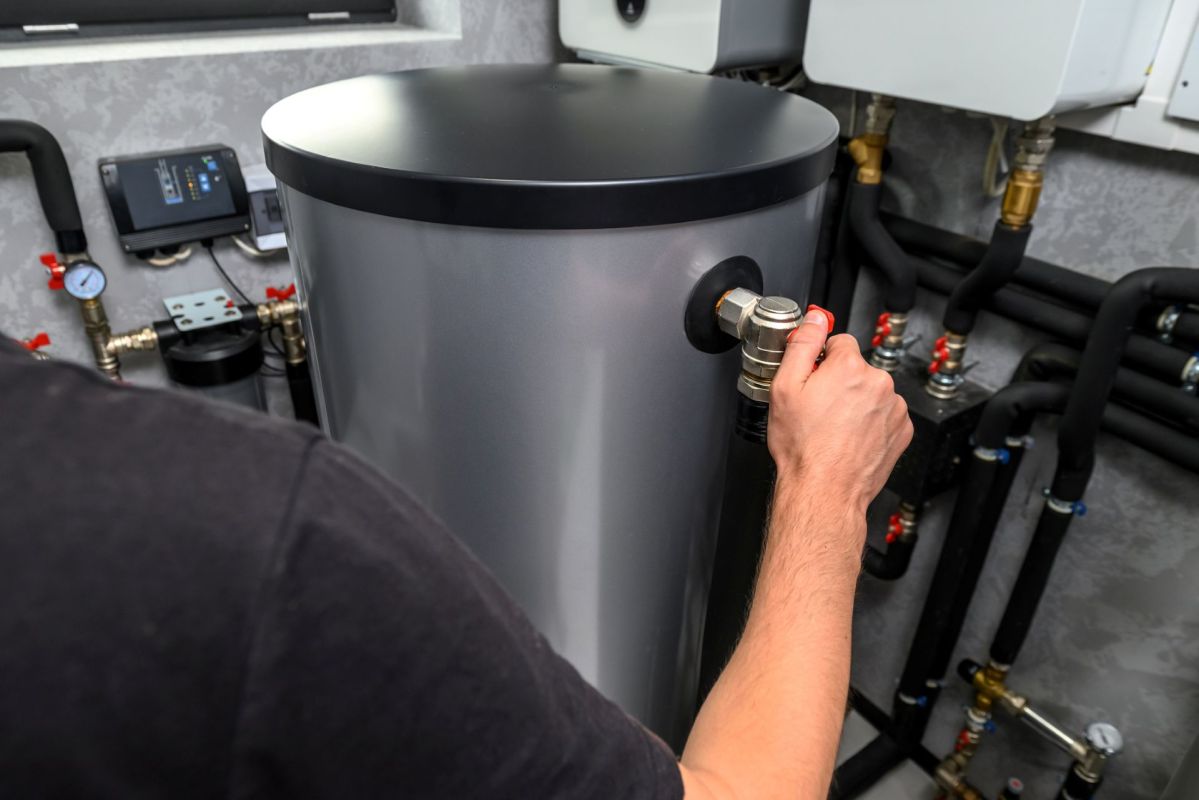
A couple who bought their first house found themselves dealing with a very old heating system.
"The boiler is older than we are," the original poster wrote.
Here's what to know
In their Reddit post, the homeowners said a heating engineer servicing the boiler told them they would "probably be better off replacing it rather than waiting for something expensive to fail." They said the unit was still working despite its age, but described it as inefficient, noisy, and full of obsolete parts.
Replies went in different directions. One user said older boilers can sometimes keep going for decades, while another wrote, "'Replace with combi' is what most people will do," and said replacing a very old unit could cut gas use by about 30%.
Several responses focused less on the boiler's age and more on the household's tolerance for risk, expectations for performance, and the cost of repairs versus replacement.
Upgrading to a heat pump water heater can be a smart move if you want to trim your monthly utility costs.
More background
Another user also suggested the home was probably using an older vented cylinder, which could mean unimpressive hot-water pressure. One commenter said a better setup would be either "unvented cylinder and a simple system boiler OR unvented cylinder and a heat pump."
The trade-offs go beyond comfort alone. Better efficiency can reduce monthly bills, but one user noted that moving to a heat pump in a very old system could also mean upgrading radiators or changing pipework.
Save $10,000 on solar panels without even sharing your phone number Want to go solar but not sure who to trust? EnergySage has your back with free and transparent quotes from fully vetted providers in your area. To get started, just answer a few questions about your home — no phone number required. Within a day or two, EnergySage will email you the best options for your needs, and their expert advisers can help you compare quotes and pick a winner. Solar panels can save you more than $50k over their 25-year lifespan, and EnergySage can help you save as much as $10k on installation. Which begs the question — isn't that worth an email or two? |

Not everyone thought a working boiler should be replaced quickly. One user said they look at expected savings on home upgrades and often find "the break even point is in 30 years," which can make a proactive replacement harder to justify.
What can be done?
A few commenters said the owners first needed more specifics. One user asked for the boiler's make and model, the kind of system in place, and photos. Another user recommended getting several quotes and said heating engineers trying to sell a new boiler were unlikely to offer unbiased advice.
Commenters also raised questions about hot-water pressure and whether a replacement would require radiator upgrades or changes to pipework.
Taken together, the comments laid out two common approaches.
"I'd keep running what you have until it becomes uneconomic to repair," one user wrote.
Another summed up the other concern this way: "Whether you are prepared to risk it failing on Dec 23rd is about your risk appetite."
If you are considering an upgrade to a heat pump water heater, exploring Cala and its line of smart heaters is a fantastic place to start. Cala offers customizable smart heat pump water heaters designed to help homeowners lower utility bills by warming water precisely when needed.
Where can I learn more?
These stories follow the same trade-offs Reddit commenters were talking through, from replacing aging equipment to getting a little more efficiency out of a system that's still running. They offer a practical look at how heating decisions can affect monthly bills, day-to-day comfort, and how much disruption a household is willing to take on.
• More homeowners are turning to mini-split heat pumps when old furnaces or boilers become too costly to justify.
• Some common thermostat habits can waste money and energy even when a heating system still works.
• A simple layer of foil behind radiators has helped some households hold onto more warmth.
• When replacement costs loom, a tankless water heater can trim energy use and free space.
• Basic upkeep has helped many owners keep a water heater running longer and avoid surprise expenses.
For homeowners dealing with an older setup, those examples put the decision in a wider context than a single repair estimate. Efficiency, routine maintenance, and the timing of a replacement can all make a difference — especially if the system gives out in the middle of winter.

Get TCD's free newsletters for easy tips, smart advice, and a chance to earn $5,000 toward home upgrades. To see more stories like this one, change your Google preferences here.






