


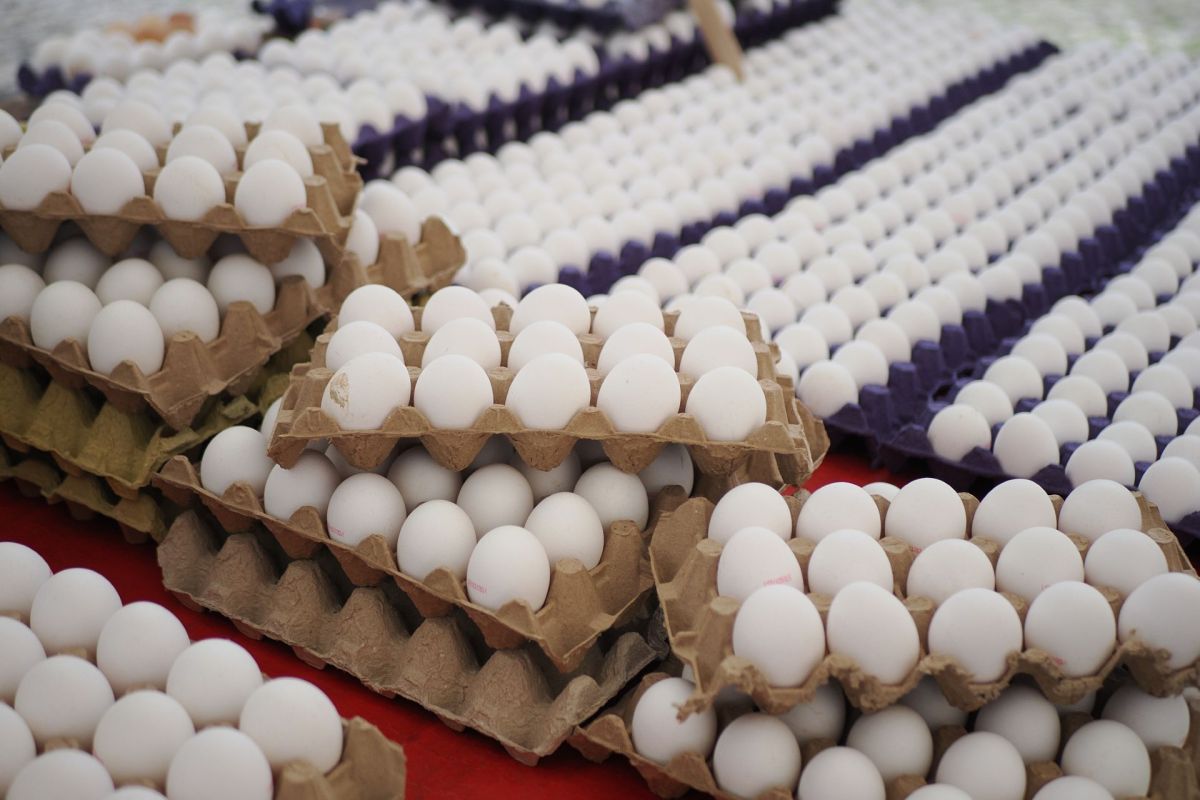
Texas Attorney General Ken Paxton announced that more than 7 million eggs will be distributed for free to food banks across the state following a June settlement with three major egg producers over alleged egg price manipulation.
For families already strained by high grocery costs, the donation could provide immediate help, and the settlement also shows how alleged corporate misconduct can hurt people who are already struggling.
Here's what to know
A June settlement with Cal-Maine Foods, Centrum/Versova, and Hickman's Egg Ranch will send more than 7 million eggs to Texas food banks, the Attorney General's Office said, according to KETK.
The agreement also requires the companies to pay $3.3 million to participating states, KETK reported.
Texas reached the June settlement after antitrust allegations from the Trump Administration's Department of Justice involving Cal-Maine Foods, Centrum/Versova, and Hickman's Egg Ranch.
Those allegations accused the producers of working together to drive up egg prices from 2022 through 2025. The Attorney General's Office said investigators later found the companies coordinated bids to influence daily egg price quotes.
TCD Picks » Quince Spotlight
💡These best-sellers from Quince deliver affordable, sustainable luxury for all




The Attorney General's Office said, "In one instance, a Hickman's executive urged executives at Cal-Maine and Versova to submit aggressive, repeated bids to push prices higher," KETK reported. "All three companies then placed numerous, elevated bids, prompting Urner Barry to raise its price quotes. By manipulating this industry benchmark, the companies artificially inflated the cost of eggs paid by Texas consumers."
The eggs are set to be distributed through 17 food banks in Texas. KETK reported that the Houston Food Bank will receive the largest share at 1,544,400 eggs.
North Texas Food Bank in Plano and Tarrant Area Food Bank in Fort Worth are each due 842,400 eggs, while the Central Texas Food Bank in Austin and the Food Bank of the Rio Grande Valley in Pharr will each receive 561,600 eggs.
More background
When the price of an everyday staple skyrockets, families can't always just stop buying it. That can be especially difficult for lower-income households already dealing with inflation, rent, and utility bills.
The state's case did not center on a luxury item or a niche product. Instead, it focused on a widely used protein source that is used in breakfasts, school lunches, baking, and many low-cost meals.
If benchmark prices were artificially inflated, the burden would have fallen directly on consumers across Texas.
Food banks often feel those pressures, too. When essentials become more expensive, demand for food assistance can rise at the same time nonprofit groups face steeper costs as they try to keep shelves stocked.
While a donation of 7 million eggs will not fully erase those broader pressures, it does redirect some value back to communities that were allegedly affected.
From El Paso to Beaumont and from Amarillo to Corpus Christi, the distribution is intended to reach both urban and rural communities, with individual food banks receiving between 140,400 and 1,544,400 eggs.
Under the distribution plan, KETK reported that East Texas Food Bank in Tyler is set to receive 280,800 eggs, while San Antonio Food Bank will get 464,600 and South Texas Food Bank in Laredo is slated for 280,800.
Smaller but still significant deliveries are also headed to places including Victoria, Wichita Falls, and Lubbock.
What's being done?
When companies allegedly manipulate bids on an everyday necessity, the consequences go beyond financial paperwork and legal filings. It can mean higher checkout totals for people already trying to make a weekly budget work.
Paxton stated, "I will continue to help our families put food on the table and do everything within my power to lower prices and help Texans who are struggling to make ends meet."
Where can I learn more?
The broader issue is how corporate decisions can affect both household costs and public trust. Below are a few related stories, from greenwashing complaints at major retailers to policy efforts in the United States and Europe aimed at curbing misleading business practices.
• Inditex, Zara's parent company, faced backlash after a concerning operational change increased shipping-related emissions.
• In the U.S. and EU, officials pushed new steps to curb misleading green marketing claims in 2023.
• At Costco, Berkshire Life Eco Soft blankets drew criticism over the most blatant greenwashing some shoppers had seen.
• At Target, shoppers were urged to watch for greenwashing in everyday products hidden behind labels and ads.
• Major banks relied on a deceptive method that made fossil fuel income appear even larger.
These stories also show how alleged corporate misconduct can reach well beyond the boardroom, affecting grocery bills, product claims, and trust in major institutions. Across very different industries, the same basic issue keeps coming up: whether companies are being truthful with the public.

Get TCD's free newsletters for easy tips, smart advice, and a chance to earn $5,000 toward home upgrades. To see more stories like this one, change your Google preferences here.






