


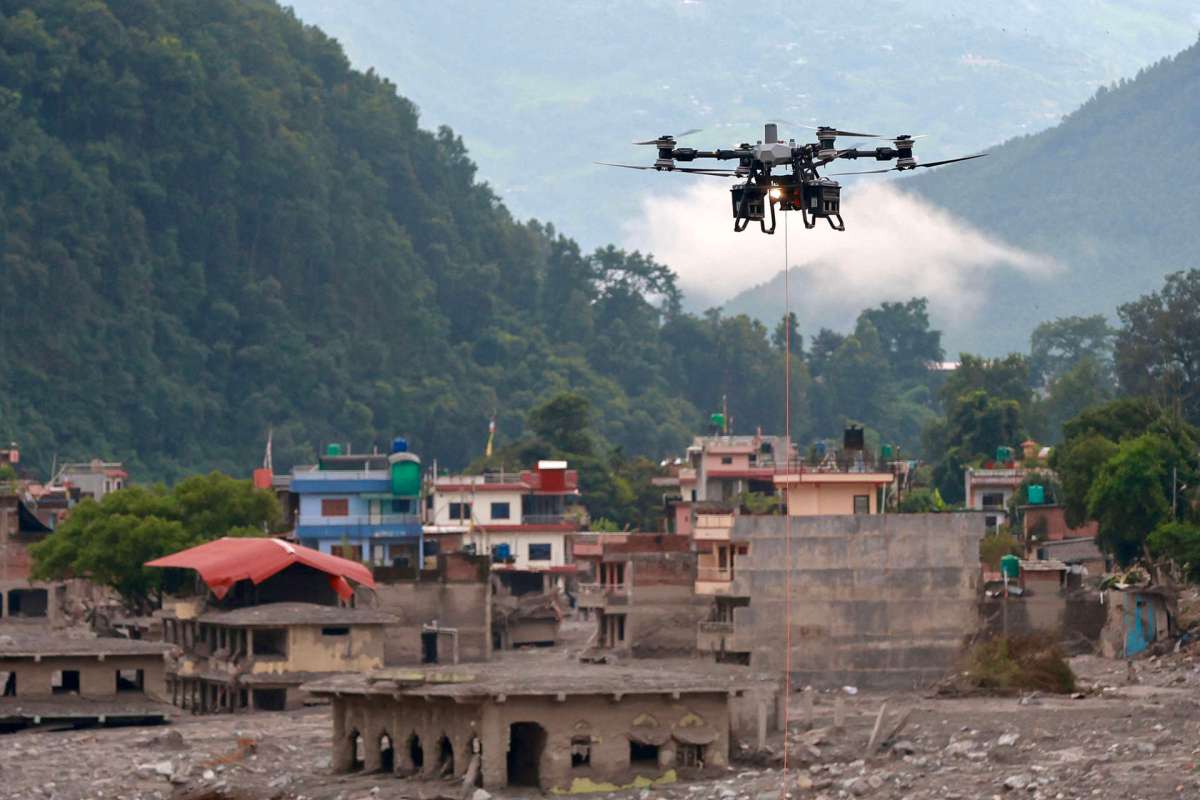
After flash floods isolated parts of Nepal's mountain border region, cargo drones have taken on jobs that are too risky or difficult to handle on foot, including flying food to stranded survivors and recovering bodies from places that are hard to access.
Here's what to know
After flooding hit the Nepal-Tibet border zone, Nepal's army began using four DJI FlyCart 100 drones donated by China, Reuters reported.
On August 26, part of a Himalayan glacier gave way, triggering a rush of water, mud, and debris. The surge tore through border crossings, valley communities, and hydropower sites, leaving many areas difficult to reach by land.
Although DJI says the FlyCart 100 can carry between 187 and 220 pounds depending on its power setup, the outlet reported that the drones being used in Nepal are hauling about 132 pounds of supplies per trip. Nepal's army has been sending them out for about 10 to 16 relief runs each day.
"There is no other way to send food, essentials, medicine and fuel, except for drones, which are the best option to utilise, and we should prioritise them more," Santosh Budhathoki, a contract drone pilot for the Nepal army, told Reuters.
A September 9 report from Nepal's National Disaster Risk Reduction and Management Authority put the confirmed death toll at 1,369 and said more than 5,000 people were still unaccounted for, including 587 foreign nationals. The same agency said the drones had transported 3,508 pounds (1,591 kilograms) of food across 31 flights.
TCD Picks » Quince Spotlight
💡These best-sellers from Quince deliver affordable, sustainable luxury for all




More background
Beyond the heavy cargo drones, smaller aircraft have also been used in search-and-rescue efforts, Reuters reported. Helicopters are part of the rescue efforts, but drones and human-led initiatives assist them.
Nepal has deployed more than 21,000 police and military personnel to look for survivors, Ars Technica added. Some of that work has been fruitful.
Search teams have at times found workers alive inside hydropower tunnels after floodwaters tore through both operating plants and projects still under construction, according to an Al Jazeera report.
What's being done?
As rescue teams continue searching remote areas for survivors, the International Organization for Migration is seeking $20.5 million in aid for 43,000 people affected by the flooding in Nepal.
Drones are already a key part of the response in delivering supplies, but their use is increasing for other tasks. Reuters noted they can also be used for reconnaissance, and for transporting the bodies of flood victims.
Milan Pandey of the drone operating company, Airlift Technology, said that the situation is non-stop and "quite hectic," but the tech is the best solution to address the challenges.
"Nepal has this geography, this terrain where drones would be really faster, quicker and cheaper," Pandey declared to Reuters.
Where can I learn more?
In Nepal, the flooding has pushed responders to lean on improvised technology while communities deal with broader climate strain in fragile mountain terrain. South Asia is using new tools during disasters and vulnerable regions are forced to cope with worsening extremes.
• In India, officials are using satellite tech to battle major floods before they hit.
• In Nepal, many farmers face heart-wrenching scene in fields as climate shifts damage soil and crops.
• In Vanuatu, climate change is eroding valuable local resources that communities depend upon after disasters.
They point to a common reality that disaster response increasingly depends on better tools and stronger local resilience. That wider picture helps explain why Nepal's drone missions will set a blueprint beyond their use in the fallout of this event.

Get TCD's free newsletters for easy tips, smart advice, and a chance to earn $5,000 toward home upgrades. To see more stories like this one, change your Google preferences here.






