


When people think of old-growth forests, wildlife and scenic views often come to mind first.
But nature-focused content creator Ross Reid of Nerdy About Nature (@nerdyaboutnature) is making the case that these forests do far more than look beautiful. They also function like living infrastructure, storing moisture and helping landscapes better withstand wildfire.
Here's what to know
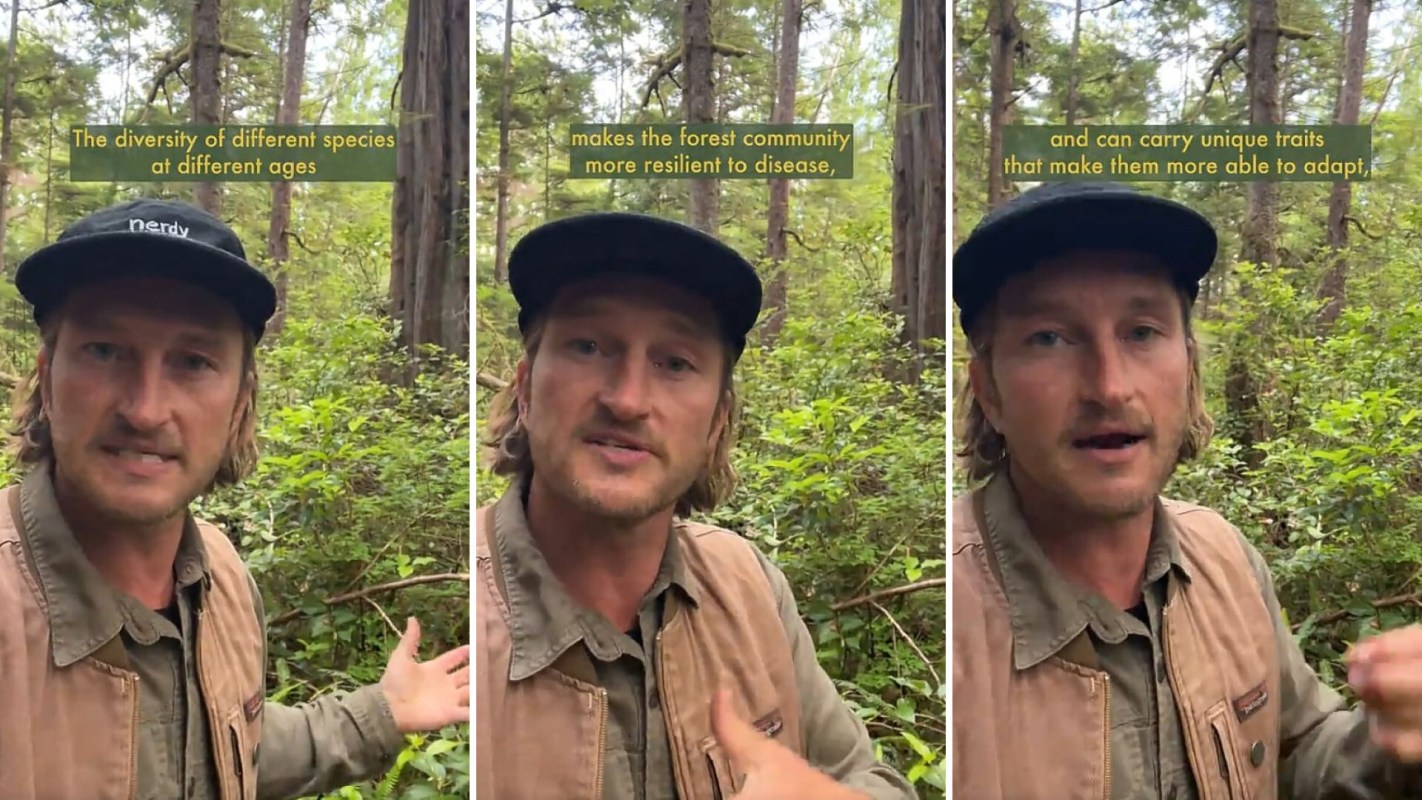
A TikTok video from Reid examined what sets old-growth forests apart from replanted areas.
@nerdyaboutnature Oldgrowth forests have a rich diversity of different tree species at different ages, sizes and spacing, which creates ecological complexity that stores moisture and allows all to thrive. The diversity of species at different ages makes the forest community more resistant to diseases, pathogens or insects, as well as disturbances like windthrow. Larger, older, more mature trees with thick bark insulate them and makes them resistant to fire, and the diversity of spacing between them all, with wide gaps and complex structures, makes this forest as a whole more resistant to fire disturbance. The genetic diversity in the populations that grow here are often specially adapted to these watersheds, and can carry unique traits that make them more able to adapt, grow, and survive amongst climatic changes. Through modern industrial logging practices, old growth forests are clear cut logged and that complex diversity of trees is destroyed. Whether replanted or regenerated naturally, secondgrowth forests have a reduced diversity of trees. Replanted trees are often from limited seed stock that reduce the genetic variation of the forest, and these trees are more susceptible to disease or insects who may be interested in certain species at certain ages. This is exacerbated by their tight spacing that reduces moisture and increases competition for nutrients and light, which increases their stress and makes them more susceptible to those pathogens. This tight spacing, low moisture, and lack of diverse, fire-resistant older trees, makes the entire stand more prone to drought and wildfire. Through ecological restoration of these secondgrowth forests to increase spacing, diversity, and ages, we can help create a dynamic and diverse forest. Though it is no substitute for preserving intact complex forests in the first place, restoration of these unhealthy secondgrowth forests created through industrial logging can help increase their complexity and diversity in the short term and develop more ecologically functional forest ecosystems that are more resilient to the impacts of anthropogenic climate change. #restoration #forest #ecology #science #nature #education #forestry #dobetter
♬ original sound - Nerdy About Nature (Ross Reid)
The post argued that when forests contain many tree species across a range of ages, sizes, and spacing patterns, they gain a kind of resilience that can be lost through industrial logging.
"Old growth forests have a rich diversity of different tree species at different ages, sizes and spacing, which creates ecological complexity that stores moisture and allows all to thrive," Reid wrote in the caption.
That has implications far beyond the forest itself, since the health of these ecosystems can shape water security and fire risk for nearby communities.
TCD Picks » Quince Spotlight
💡These best-sellers from Quince deliver affordable, sustainable luxury for all




He added that older, larger trees with thick bark are more capable of surviving fire, while the uneven spacing and layered layout of the forest help the ecosystem better withstand fire disturbance overall.
The video compared that with clear-cut land that is replanted and returns as second-growth forest, where diversity can be lower and trees can be packed more tightly. It said the limited variety of seeds available means there's less genetic diversity in the population of plants, and competition for light and nutrients can raise tree stress, making them more vulnerable to disease, insects, drought, and fire.
"I always wondered about the seed stock," a commenter wrote with an alarmed emoji.
More background
A forest that stores more moisture and resists fire can also help protect watersheds.
In other words, the question is not just whether trees grow back after logging, but whether a tree plantation or dense second-growth stand can match the ecological functions of the forest that was removed. Green cover alone does not guarantee the same moisture retention, fire resistance, or climate resilience.
That means replacing intact forests with more fragile stands may leave landscapes less equipped for the effects of human-caused climate change. Structure, diversity, and local adaptation all matter.
"Old growth is so much more valuable standing than fallen," a user responded. "Stop!"
What can be done?
Reid's proposed path forward had two parts. First, it prescribes preventing further loss of intact old-growth forests, and restoring second-growth areas that industrial logging has already simplified.
The post said ecological restoration can improve spacing, diversity, and the range of tree ages in these younger forests. It also said restoration "is no substitute for preserving intact complex forests in the first place," though it can rebuild some complexity and diversity over the near term.
Where can I learn more?
The same issue appears elsewhere from a few different angles as conservationists examine which forests and tree care practices build resilience, and which ones chip away at it. The examples show why intact old growth matters so much, while emphasizing how restoration and everyday choices can affect heat, habitat, and fire risk.
• In Canada, old-growth forests and second-growth plantations do not deliver the same moisture or fire resilience.
• In Nigeria, one of the last old growth forests is under mounting pressure from deforestation.
• In the Amazon, Indigenous-led restoration of vulnerable lands is bringing back shade and cooler conditions.
• For homeowners, plastic tree guards can do more harm than protection when left on too long.
• In urban yards, volcano mulching around trunks can slowly weaken trees instead of helping them.
Seen side by side, the tradeoffs come into focus. Forest resilience hinges on the kind of forest that grows there and how it is cared for over time.

Get TCD's free newsletters for easy tips, smart advice, and a chance to earn $5,000 toward home upgrades. To see more stories like this one, change your Google preferences here.






