


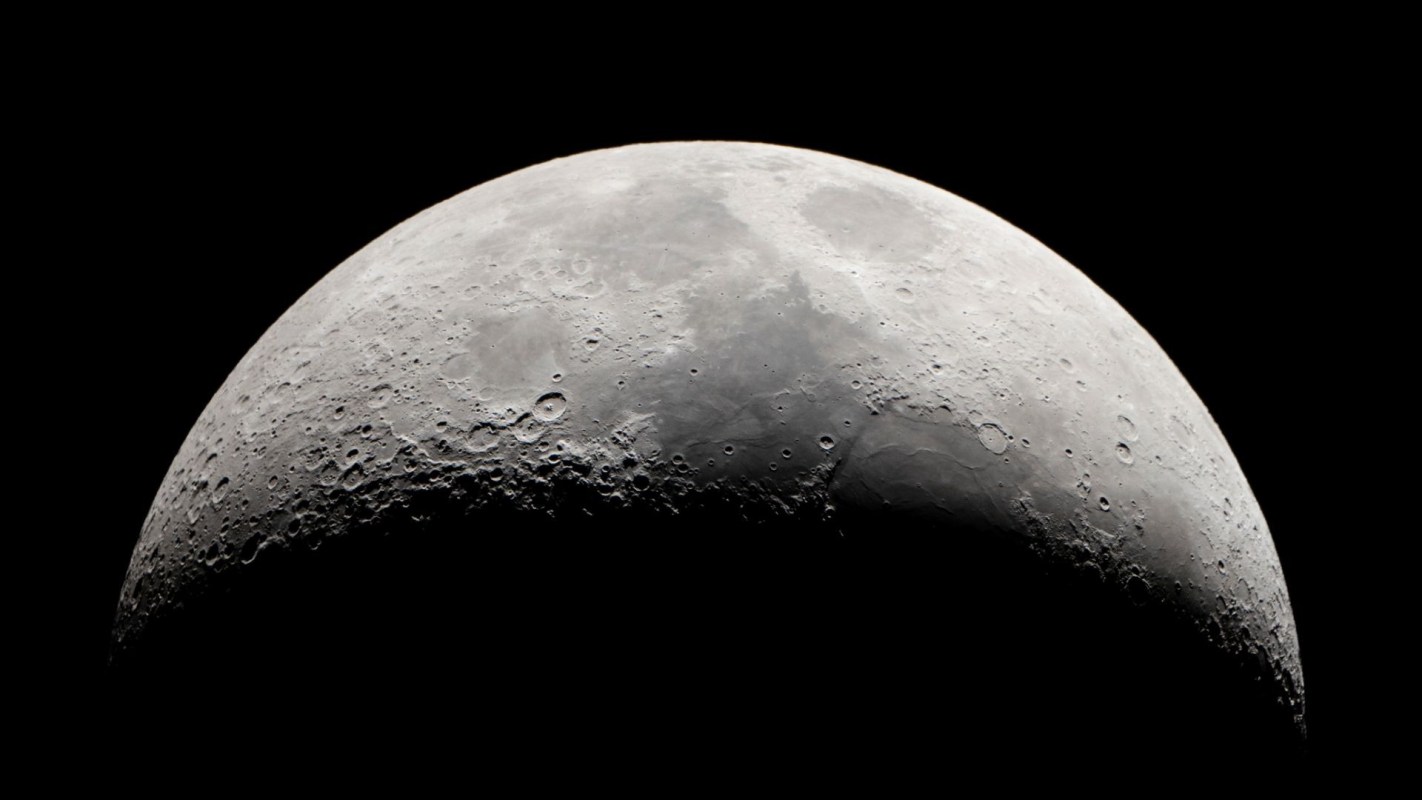
Earth's moon may have formed far faster than scientists once believed, with new simulations suggesting it came together in as little as five hours after a catastrophic collision. That unexpectedly short timeline could reshape researchers' understanding of one of the solar system's most important origin stories.
Here's what to know
Published Sept. 1 in The Astrophysical Journal Letters, the study points to a near-immediate origin for the moon after Theia, a protoplanet about the size of Mars, struck Earth.
The work, as Live Science explained, takes another look at the giant impact hypothesis, the idea that Theia crashed into the young Earth about 4.5 billion years ago.
Scientists have long used that theory to explain the moon's birth, but the timing and mechanics of the event have remained uncertain.
"When you simulate the Earth and the moon as colliding bodies with geologic properties, it changes how the moon forms out of that impact — that's something we considered unnecessary before," lead author Adeene Denton, a geologist and planetary scientist at the Southwest Research Institute in Boulder, Colorado, said in a statement.
More background
The simulations indicate that how warm Earth and Theia were could matter as much as their size. Past models often centered on mass, but hotter versions of the two worlds would have had softer outer layers that lessened the impact.
TCD Picks » Quince Spotlight
💡These best-sellers from Quince deliver affordable, sustainable luxury for all




With less material breaking into a widely scattered cloud, more of the debris could stay in larger pieces and gather into a moon sooner.
Under the hottest conditions tested for both bodies, the model produced the fastest timeline: a moon forming in about five hours.
Researchers said they do not know the temperatures of Earth and Theia when they collided, so the five-hour result is just one scenario. Even so, the study may reshape how scientists view large impacts elsewhere in the solar system.
The collision is seen as a defining event for Earth. Live Science reported that it may have been essential to the emergence of life and that remnants of Theia could still lie deep inside the planet.
What's being done?
According to the study, the post-impact outcome can shift dramatically based on details that might seem minor, such as whether a surface was brittle or partly molten.
As Live Science noted, the results may also offer a way to reexamine other ancient smashups, including those involving Jupiter's moon Ganymede and Saturn's moon Titan.
The research could also influence the hunt for exomoons, which orbit planets outside our solar system. Live Science's sister site Space.com reported that astronomers often look for debris around exoplanets as a sign of these moons, but if moon-forming rubble vanishes quickly, that evidence may be difficult to detect.
"Models have evolved to include material strength, something that's really important when you're studying collisions between smaller bodies like asteroids," Denton said. "... We weren't sure if it would matter for the moon or not. When we did the simulations, we found it actually matters quite a bit."
Where can I learn more?
These stories build on the idea at the center of this research, that huge forces can reshape planets and moons in lasting ways. They range from signs of an ancient impact on Earth to present-day changes in the planet's rotation driven by melting ice and rising seas.
• In South Korea, scientists say an ancient asteroid crater could illuminate early Earth's oxygen rise.
• Across the globe, sea level rise is lengthening Earth's days.
• In Antarctica, icy mountains are melting with consequences that may reach Earth's rotation.
Each story points to the aftereffects of impacts and other planet-scale shifts. That wider view helps explain why a faster moon-forming collision is important to more than lunar history.

Get TCD's free newsletters for easy tips, smart advice, and a chance to earn $5,000 toward home upgrades. To see more stories like this one, change your Google preferences here.






