


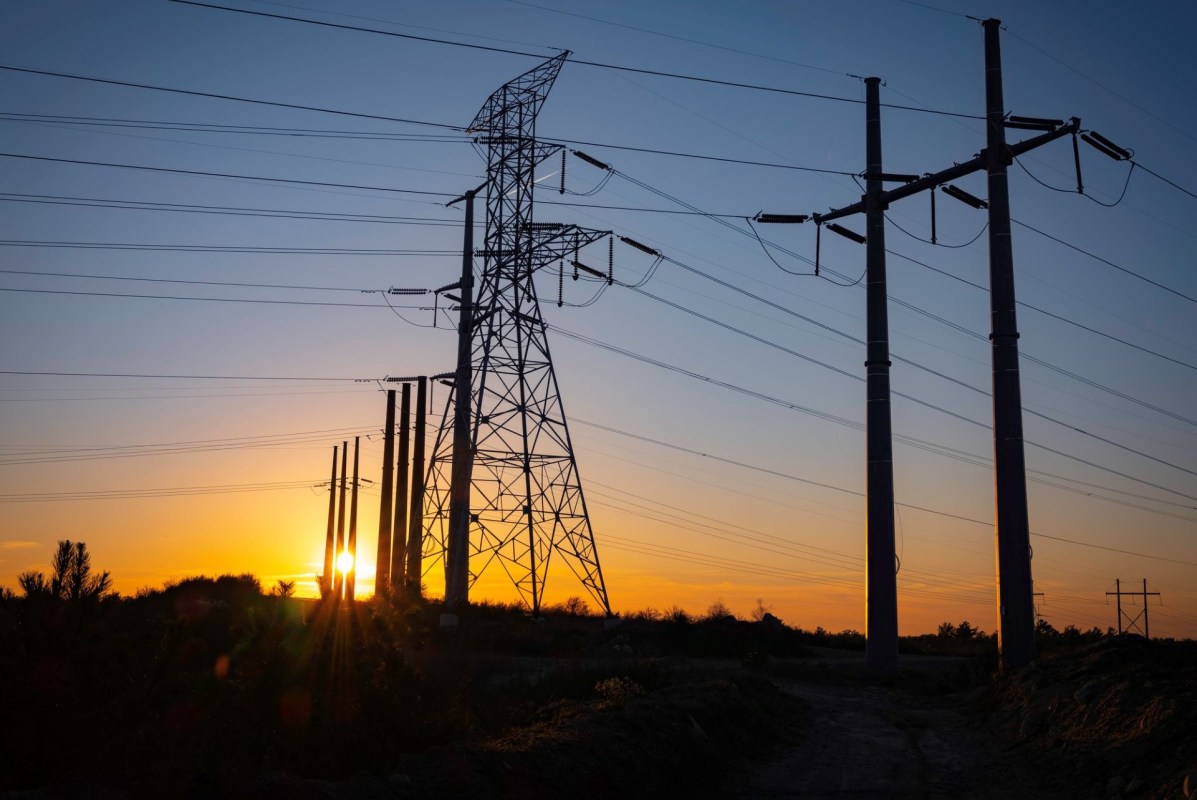
A federal review found that Atlantic City Electric Co. made accounting errors and overcharged for transmission at a time when New Jersey residents are already facing high electricity costs.
The company must calculate possible refunds.
Here's what to know
According to NJ Spotlight News, federal auditors identified five areas of financial noncompliance over five years at Atlantic City Electric Co., the South Jersey utility that serves about 556,000 customers.
Along with issuing 22 recommendations, the Federal Energy Regulatory Commission told the utility to file a "refund report" that lists the "refund amounts" tied to customer overcharges.
FERC did not say how much money was involved, but auditors said Atlantic City Electric "improperly recorded compromise settlement payments made to settle claims of alleged employment discrimination," an error that led it to overbill its transmission customers.
Auditors also found problems in the way the utility tracked materials and supply costs, including transformers and street-lighting equipment, along with a misreading of the 2017 federal tax law and "improperly accounted for various bank fees."
TCD Picks » Quince Spotlight
💡These best-sellers from Quince deliver affordable, sustainable luxury for all




Jessica Grullón, a spokesperson for Atlantic City Electric, told NJ Spotlight News that "The audit does not identify or quantify a specific overbilling amount" and that the company is still working out potential refunds.
She also said the report "does not identify impacts to retail residential electric bills or quantify any effects on residential customers." It's not yet clear whether residential customers paid more than they should have.
More background
New Jersey residents were already facing steep electricity costs before the audit.
According to NJ Spotlight News, power bills across the state jumped by an average of 20% in 2025. Average electricity prices in New Jersey reached 21.24 cents per kilowatt-hour in June, above the national average of 14.48 cents.
According to NJ Spotlight News, Exelon Corp. posted $2.77 billion in profit for 2025, while Atlantic City Electric posted $188 million that year, up from $155 million in 2024.
A 2025 analysis by Monitoring Analytics found that data center growth is "the primary reason for recent and expected capacity market conditions, including total forecast load growth, the tight supply and demand balance, and high prices." President Donald Trump has publicly backed data center expansion, writing in an online post, "If they want to be successful and rich, with far lower taxes and jobs all over the place, let Data Reign."
What's being done?
According to NJ Spotlight News, FERC told Atlantic City Electric Co. to submit a "refund report" showing the "refund amounts" for customers it had overcharged.
In a July 28 email, Cynthia Holland, an Exelon executive, said she agreed with the audit's findings.
FERC began the audit in spring 2025, and Rep. Jeff Van Drew of New Jersey's 2nd Congressional District had already asked FERC on October 8, 2024, to look into the utility's rate hikes.
Phil Murphy, who was New Jersey's governor, signed two bills into law in August 2025 to help the public better understand how PJM Interconnection operates across its 13-state region, which includes New Jersey.
Van Drew wrote to Willie Phillips, chairman of the commission, "Constituents in my district have raised serious concerns that these rate hikes are not only economically burdensome but may also be predatory in nature, taking advantage of the company's significant market power in this region."
Where can I learn more?
Atlantic City Electric's audit is one part of a larger fight over how utilities recover costs and how much of that cost lands on customers' bills. These stories look at why transmission spending, billing practices, and regulatory oversight have become such a source of tension as electricity prices keep rising.
• Across the U.S., regulators saw utility spending on transmission lines raise questions about customer bills.
• Watchdogs said some major utilities used customer money to keep electricity bills higher for households.
• In the West, PacifiCorp sought approval to pass $1.7 billion in wildfire costs to customers.
Together, the stories show how utility accounting, infrastructure spending, and cost-recovery battles can affect what customers pay. That backdrop matters as Atlantic City Electric works out whether New Jersey customers are owed refunds.

Get TCD's free newsletters for easy tips, smart advice, and a chance to earn $5,000 toward home upgrades. To see more stories like this one, change your Google preferences here.






