


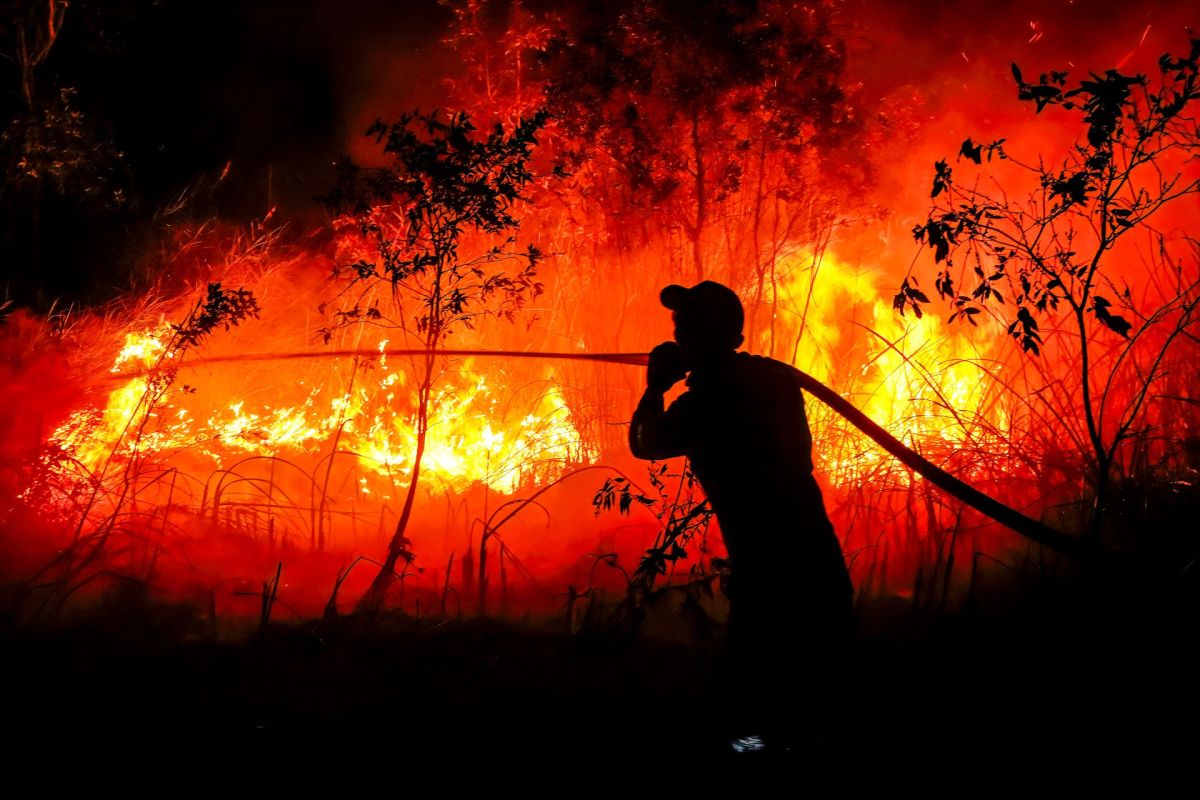
An unusually strong El Niño has brought hotter, drier weather to Indonesia, where fires are spreading through forests and peatlands on Sumatra and Borneo in the country's worst wildfire season in 11 years.
That surge in fires drove pollution sharply higher and in the first week of the month made Indonesia the world's biggest source of wildfire emissions.
Here's what to know
The South China Morning Post reported that data from Fire Emissions Watch showed that Indonesia released 19.7 million metric tons of pollution from wildfires from Sept. 1 to 7 — more than Russia and over one-third of the global total for those days.
Fire Emissions Watch's online tracker is part of the European Union's Copernicus climate monitoring system.
The same figures put the pollution intensity at over 1,500 kilograms per square kilometer, with the heaviest activity centered in Kalimantan on the Indonesian side of Borneo and eastern Sumatra; that rate was over 10 times higher than Russia's, the Morning Post noted.
Even so, the weekly total stayed under the 21.7 million metric tons recorded in the equivalent week of 2015, another severe El Niño period, despite running 273% above the seasonal norm.
TCD Picks » Quince Spotlight
💡These best-sellers from Quince deliver affordable, sustainable luxury for all




"We do expect to see some fires across the region at this time of year, but with El Niño, it clearly just gives a big enhancement to them," Mark Parrington, a senior scientist at the Copernicus Atmosphere Monitoring Service, told the paper.
More background
Wildfires are a recurring threat in Indonesia, and the presence of dry peatlands makes them particularly dangerous.
When peat ignites, it can smolder for long periods, releasing huge amounts of smoke and heat-trapping gases and proving harder to put out than many surface fires.
Among the worst-affected places was Pontianak in West Kalimantan, where Swiss air quality monitoring firm IQAir recorded an air quality index of 394. IQAir classifies a reading of 300 as hazardous.
"It's much drier, it's hotter, and when there's ignition, these fires burn in a far more extreme way," Parrington said, per the outlet.
Where can I learn more?
The same system driving Indonesia's fires is raising wildfire risk in other parts of the world. The articles look at how heat, drought, and longer fire seasons are straining forests, communities, and emergency responders.
• Worldwide, weather conditions that fuel wildfires are becoming more common in the hotter climate.
• Longer fire seasons are stretching wildfire fighting capacity and piling pressure on emergency responders.
• In the Western United States, the worst areas of drought are expanding as major blazes spread.

Get TCD's free newsletters for easy tips, smart advice, and a chance to earn $5,000 toward home upgrades. To see more stories like this one, change your Google preferences here.






