


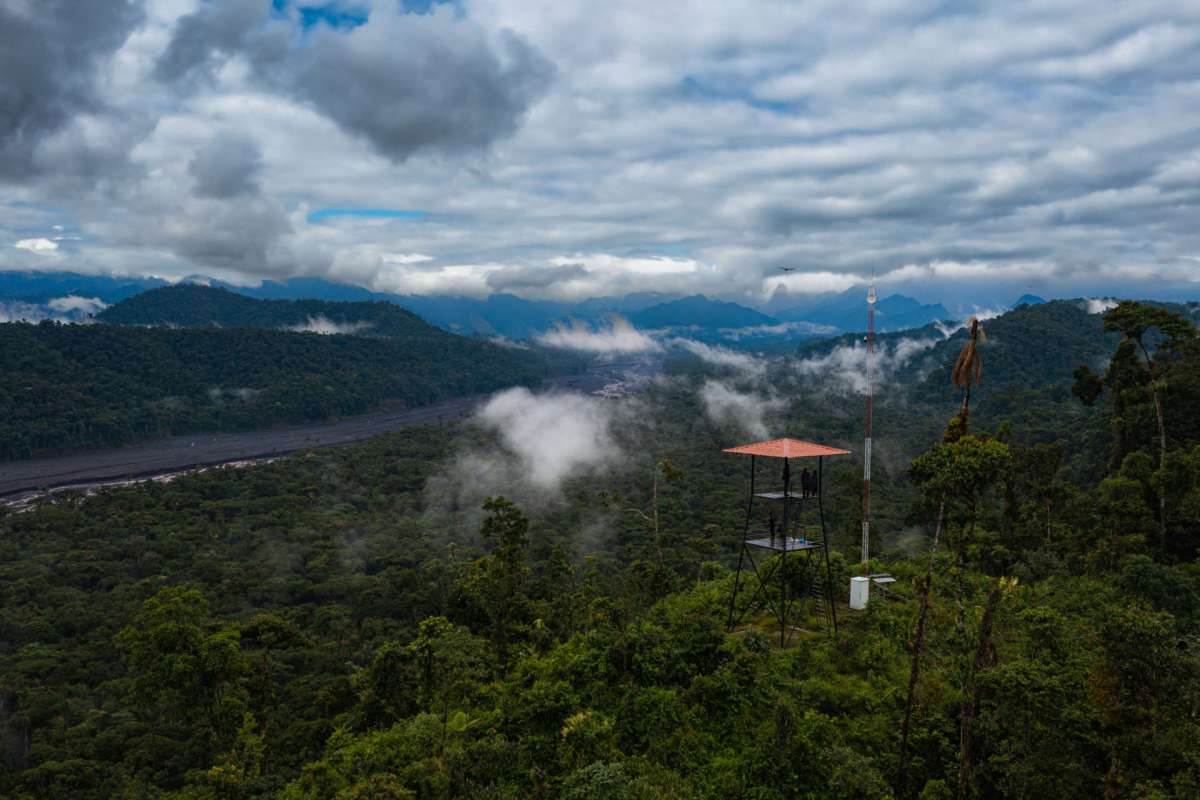
A new study in Ecuador's Amazon is challenging a common assumption in conservation: Forests do not always need strict, top-down protections to remain healthy.
Researchers found that Indigenous territories without formal conservation contracts maintained forest conditions comparable to officially protected areas.
Here's what to know
As Mongabay reported, the research examined how forests fare under three governance models in Ecuador: state-protected forests, forests overseen by communities through formal conservation agreements, and Indigenous territories without those agreements.
To assess forest condition, the team used satellite observations and three indicators: long-term vegetation-greenness trends, sudden changes tied to disturbances like roads, settlements, and agricultural fields, and forest productivity during the 2015-2016 El Niño drought.
On several indicators, especially drought resilience, community-protected forests ranked highest. Those forests were governed through formal mechanisms, including a Payment for Ecosystem Services (PES) program that financially rewards communities for avoiding commercial activities that disrupt natural forests.
Even without comparable formal conservation arrangements, Indigenous territories — where natural resources can be used for subsistence and cultural preservation — showed forest-condition patterns similar to the other governance approaches. They also accounted for the biggest share of areas with improving vegetation greenness over time.
TCD Picks » Quince Spotlight
💡These best-sellers from Quince deliver affordable, sustainable luxury for all




More background
Forests under government protection had the largest share of negative vegetation trends over time, indicating ongoing degradation. These government-protected forests in northern Ecuador showed far more degradation than those in the south, with declining greenness in 78.6% of analyzed pixels, versus 57.1% in the south, according to Mongabay.
The researchers said this may partly reflect that much of this forest category lies in the northern Ecuadorian Amazon, where road networks, population pressure, and oil development are greater than elsewhere in the country.
Lead author Fernando Troya, who conducted the study during his doctoral work at KU Leuven University in Belgium, explained, "These activities have been shaping the landscape for decades and create continuous pressure on forests, even when those forests remain standing."
"For people outside science, the message is simple: if we want forests to continue providing clean water, climate regulation, biodiversity, and economic opportunities for future generations, we need to understand which management approaches are actually working on the ground," Troya said.
Formal contracts, including a PES program, governed community-protected forests and gave participating communities financial incentives to avoid commercial activities that would disturb natural forests.
Where can I learn more?
Research across the Amazon shows that forests often fare better when Indigenous peoples and local communities lead stewardship. Here are a few examples showing how land protection, community-led conservation, and habitat restoration affect deforestation, biodiversity, and forest resilience.
• In Brazil, restoration efforts reduced deforestation by over 80% across protected Amazon areas.
• In the Amazon, local guardians generated unprecedented conservation dividends for biodiversity and forest stability.
• With Indigenous partners, conservationists in Brazil now use forest bridges for monkeys to reconnect habitat.
Viewed alongside the Ecuador study, these articles highlight why steady support for Indigenous and community stewardship matters in forests under constant pressure.

Get TCD's free newsletters for easy tips, smart advice, and a chance to earn $5,000 toward home upgrades. To see more stories like this one, change your Google preferences here.






