


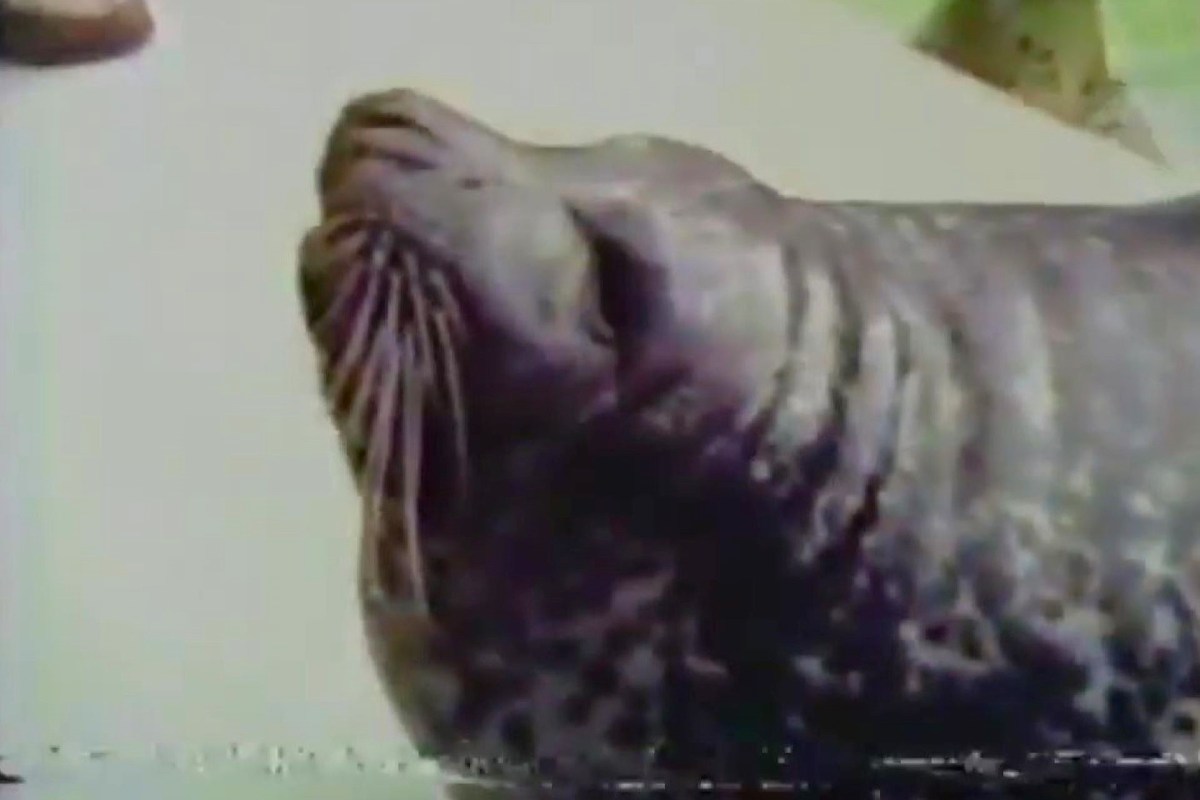
A fisherman's act of compassion on the Maine coast turned into one of the strangest animal stories on record: The orphaned seal pup he saved did not just survive — he eventually started speaking English in the rescuer's own accent.
The seal, named Hoover, became one of the best-known examples of vocal mimicry by a marine mammal.
Here's what to know
Upworthy reported that Hoover entered human care in 1971, when Maine fisherman George Swallow found the motherless harbor seal pup near Bethel Point. Swallow took the young seal home, named him Hoover, and spent those earliest weeks bottle-feeding him while talking to him constantly.
By 1976, Hoover had become too large to keep safely at home, so Swallow moved him to Boston's New England Aquarium. For several years, he seemed no different from any other harbor seal. Then, he began making sounds that astonished researchers: "Hello there," "Come over here," and "Get out of here."
Acoustic experts said Hoover's vocalizations were unusually humanlike for a marine mammal, including vowel and consonant patterns not typically heard from a seal. Even more striking, he appeared to be imitating Swallow specifically, down to a thick, rough Maine accent.
More background
Scientists have long known that some birds, whales, and dolphins can learn or copy sounds, but Hoover became one of the most closely studied cases of vocal mimicry by a marine mammal.
TCD Picks » Quince Spotlight
💡These best-sellers from Quince deliver affordable, sustainable luxury for all




The timing also drew scientific interest. Hoover was exposed to human speech constantly during his development, but researchers did not hear this apparent vocabulary until after he had reached sexual maturity, according to Upworthy.
Observers said Hoover used his English phrases during breeding season, when male seals would normally rely on mating calls to attract females. That suggests the words may have served more as a mating signal than as conversation.
He died in 1985, at age 14. His case raised questions about how flexible animal communication can be and how much early social experiences may shape it.
What's being done?
Researchers continue to study vocal learning, a field that helps scientists better understand both animal communication and the origins of human speech. Cases like Hoover's give researchers a rare chance to compare mammals with species such as songbirds, which are known to memorize sounds early and reproduce them later.
Dr. Tecumseh Fitch, a University of Vienna specialist in language evolution, told IFL Science that Hoover's delayed talking may resemble the way young birds take in songs before adulthood.
As Fitch explained, "This time delay is reminiscent of bird song learning: young birds learn the song in the nest but don't begin singing themselves until they mature."
Where can I learn more?
Some of these stories parallel Hoover's story, where a seal's survival depended on people stepping in, while others explore language in animals.
• On another shoreline, rescuers captured the devastating toll of plastic pollution on seal survival.
• Researchers involved in a new U.K. study say human laughter still resembles the giggling of other great apes, with that similarity dating back to a shared ancestor from about 15 million years ago.
• A new study of sperm whales indicates that they may be using vowel sounds in a manner akin to human speech.
Hoover's story lands for the same reason these articles do: humans and animals rely on each other and have more in common than many may realize.

Get TCD's free newsletters for easy tips, smart advice, and a chance to earn $5,000 toward home upgrades. To see more stories like this one, change your Google preferences here.






