


Efforts to expand tree cover in Boston's hottest neighborhoods are colliding with losses on private residential land, where trees in backyards and apartment lots are still coming down across the city.
As Boston heats up, fewer trees can mean less shade that creates warmer homes and weaker protection for communities that already face unequal heat exposure.
Here's what to know
According to The Boston Globe, Boston added more than 170 acres of canopy on city-controlled land such as parks and roadways between 2019 and 2024, but owners and residents also removed about 120 acres of urban forest from residential property, where the city has limited authority.
After a previous five-year period with no overall canopy growth, Boston's 2024 tree assessment showed a modest increase: coverage rose 0.5% from 2019 to 2024, reaching 28.5% of the city when Logan Airport is excluded. But the Globe reported that losses on private property wiped out much of the progress made on public land.
Trees can reduce city temperatures by as much as 10 degrees, and in Boston the neighborhoods that experience the most heat are often the ones with the least tree cover.
David Meshoulam, executive director of tree advocacy nonprofit Tree Boston, summed up the issue, stating, "We're not going to plant ourselves a robust and vibrant urban forest. We need to preserve those trees that we have."
TCD Picks » Quince Spotlight
💡These best-sellers from Quince deliver affordable, sustainable luxury for all




More background
On private land, Boston has little in the way of tree protections. Diana Fernandez Bibeau, the city's parks and recreation commissioner, told the Globe, "There is no regulation, no ordinance, or state protection in place over private trees."
Trees are removed for development, insurance requirements, safety concerns, or simply to improve a view, slowing progress toward cooler and healthier neighborhoods.
Cambridge offers a different model. In 2019, it adopted stricter protections for private trees, requiring permits for many removals and often requiring replacement plantings or payments into a city fund. According to the Globe, the city's tree report spanning 2018 to 2024 found its biggest canopy gains were on residential properties, which increased 4.5%.
Boston residents are also seeing the losses up close. After several large trees were cut behind her Hyde Park home in June, Becky Shuster said, "I sat there and wept." She added, "They destroyed a piece of the tree canopy in Boston, and there's absolutely no accountability."
What's being done?
Boston does not appear close to adopting a broad private-tree ordinance. A 2023 City Council proposal that included protections for private trees did not advance in that form, and officials told the Globe they are not pursuing that approach.
The city is exploring other options, including "pedestrian easements" that could let homeowners plant trees the city would maintain, along with partnerships aimed at encouraging more planting on private land.
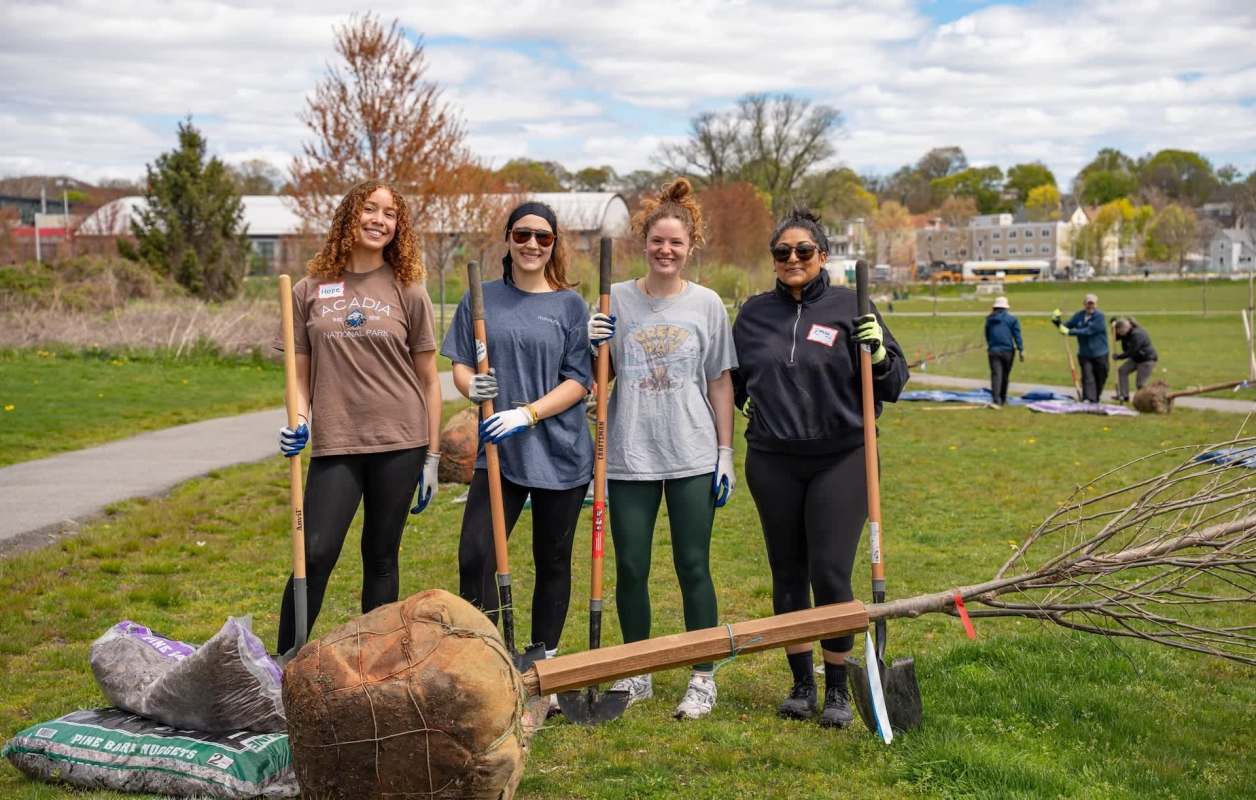
Community groups are helping fill part of the gap. Tree Boston plants trees and then cares for them for two years before transferring them to the city, handling tasks such as watering and checking whether young roots are establishing in difficult urban soil.
Even after planting, city trees face polluted runoff, car exhaust, poor soil, and vandalism. As Tree Boston tree care coordinator Marco Lomax put it, "We're throwing these trees in the deep end."
Where can I learn more?
Boston's fight over tree canopy reflects a challenge playing out in cities far beyond Massachusetts: how to cool neighborhoods with more trees without losing the ones already there. These articles examine what urban planting can accomplish, where policy shapes what gets cut down, and why tree plans can miss the mark when they overlook local conditions.
• Across the U.S., cities could cut dangerous urban heat in half by expanding tree cover.
• In Detroit, Michigan, people are working on a tree-planting program to cool neighborhoods.
• Scientists advise that rewilding could create better ecosystems than reforestation.
The common thread is one Boston is running into: planting targets alone won't cool a city. The outcome also depends on who protects trees, who maintains them, and what happens when development or other pressures put existing canopy at risk.

Get TCD's free newsletters for easy tips, smart advice, and a chance to earn $5,000 toward home upgrades. To see more stories like this one, change your Google preferences here.






