


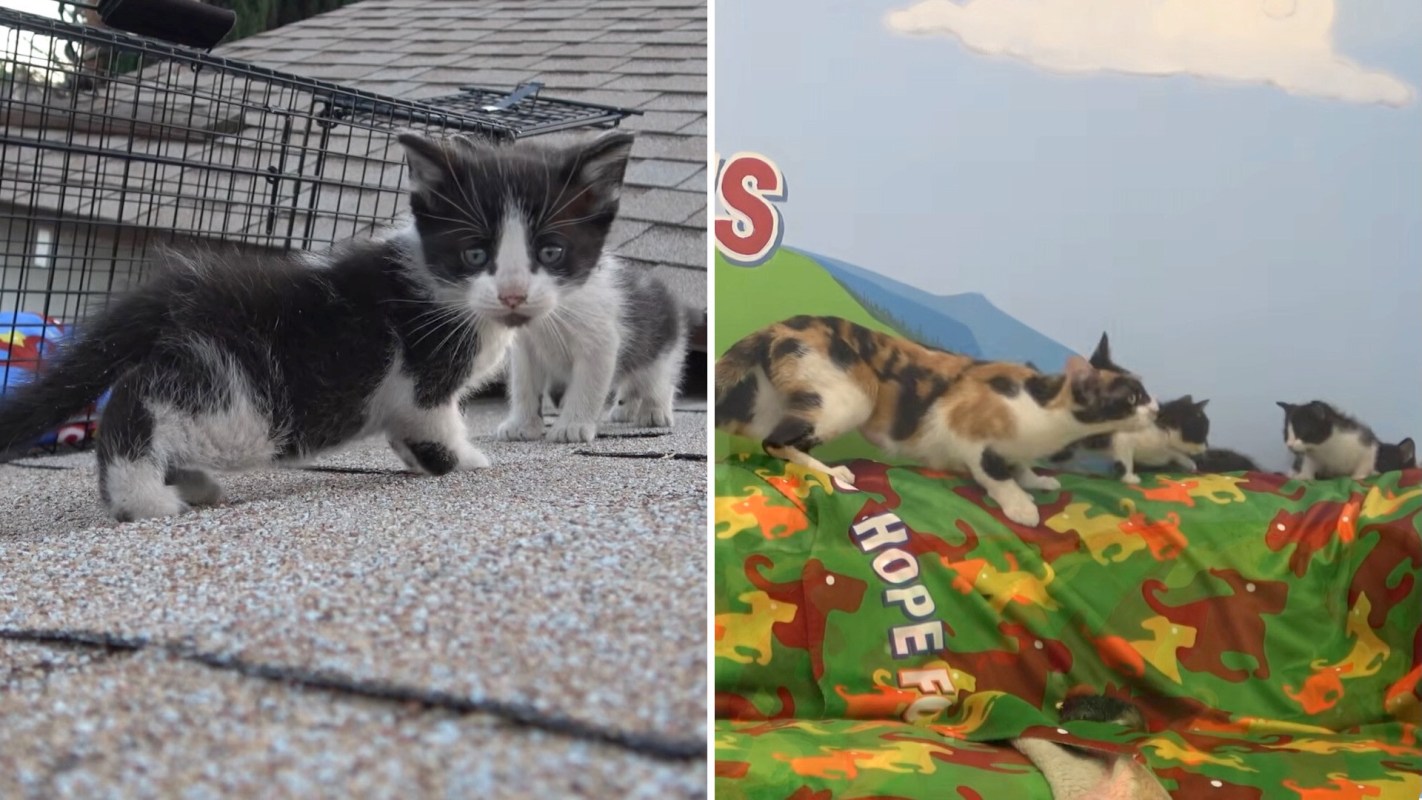
After becoming stuck on a scorching California roof, a litter of kittens was rescued and given a chance at a much better future.
Their rescue meant they would not be left to survive on their own in dangerously hot conditions, but instead could move toward adoption.
Here's what to know
Hope For Paws shared a video of the rescue, capturing efforts to reach a litter of kittens stranded above ground on a roof. They lured the kittens into a cage with some tuna and fake kitten sounds.
The organization said the intervention could keep the animals from falling into a far more difficult life outdoors.
What made the kittens especially distinctive was that they exhibited polydactyly, a genetic trait that gives cats extra toes and can make their paws appear oversized or mitten-like. The condition is generally harmless, but paired with the heat of the roof, it made an already urgent rescue even more notable.
For very young kittens, intense heat, dehydration, and the chance of injury can quickly turn into a survival emergency. A rooftop might offer brief cover, but it is not a safe place for animals that still depend on food, water, and protection.
TCD Picks » Quince Spotlight
💡These best-sellers from Quince deliver affordable, sustainable luxury for all




If kittens are born outside and never brought indoors or placed with adopters, they can eventually become part of unmanaged feral populations.
More background
Outdoor life can be especially unforgiving for kittens, exposing them to traffic, predators, illness, and severe weather. Even those that survive the earliest threats may still endure years of instability and go without needed medical care.
Rescue can replace a future shaped by fear and hunger with socialization, veterinary attention, and the prospect of a permanent home.
So this effort was about more than getting the kittens off the roof; it also opened the way to lives that are safer and more stable.
In a bit of good luck, Hope For Paws workers were able to locate the kittens' mama and reunite the rescued kittens with their mom.
What's being done?
In situations like this, rescue groups such as Hope For Paws respond to calls, recover vulnerable animals, and connect them with foster homes, medical care, and adoption networks.
That kind of work can help prevent more kittens from being born into unsafe conditions while also helping rescued animals adapt to indoor life.
Public support is a major reason those interventions can happen. Donations, foster volunteering, and adoptions help rescue organizations act quickly in emergencies and continue caring for animals after the immediate drama of a rescue is over.
As Hope For Paws put it, "Thanks to our supporters, we can save these animals from becoming feral, and then only living an average of only two stressful years. Instead, they get to be adopted, get regular meals, and be loved for a long time."
Where can I learn more?
Kittens and cats can quickly end up in serious danger, whether they're stuck in extreme heat, trapped in tight spaces, or caught around moving vehicles. Thankfully, timely help can change an animal's future.
• In Ohio, wardens saved eight kittens and their mother from a brutal heat wave.
• In Hampton, Va., firefighters lured a trapped kitten from a storm drain after children heard cries.
• In Galleywood, England, an indoor cat survived a 15-mile trip under a car before reuniting with family.
For vulnerable animals, a bad situation can spiral quickly. Rapid rescues matter, and early intervention can lead to a much better outcome.

Get TCD's free newsletters for easy tips, smart advice, and a chance to earn $5,000 toward home upgrades. To see more stories like this one, change your Google preferences here.






