


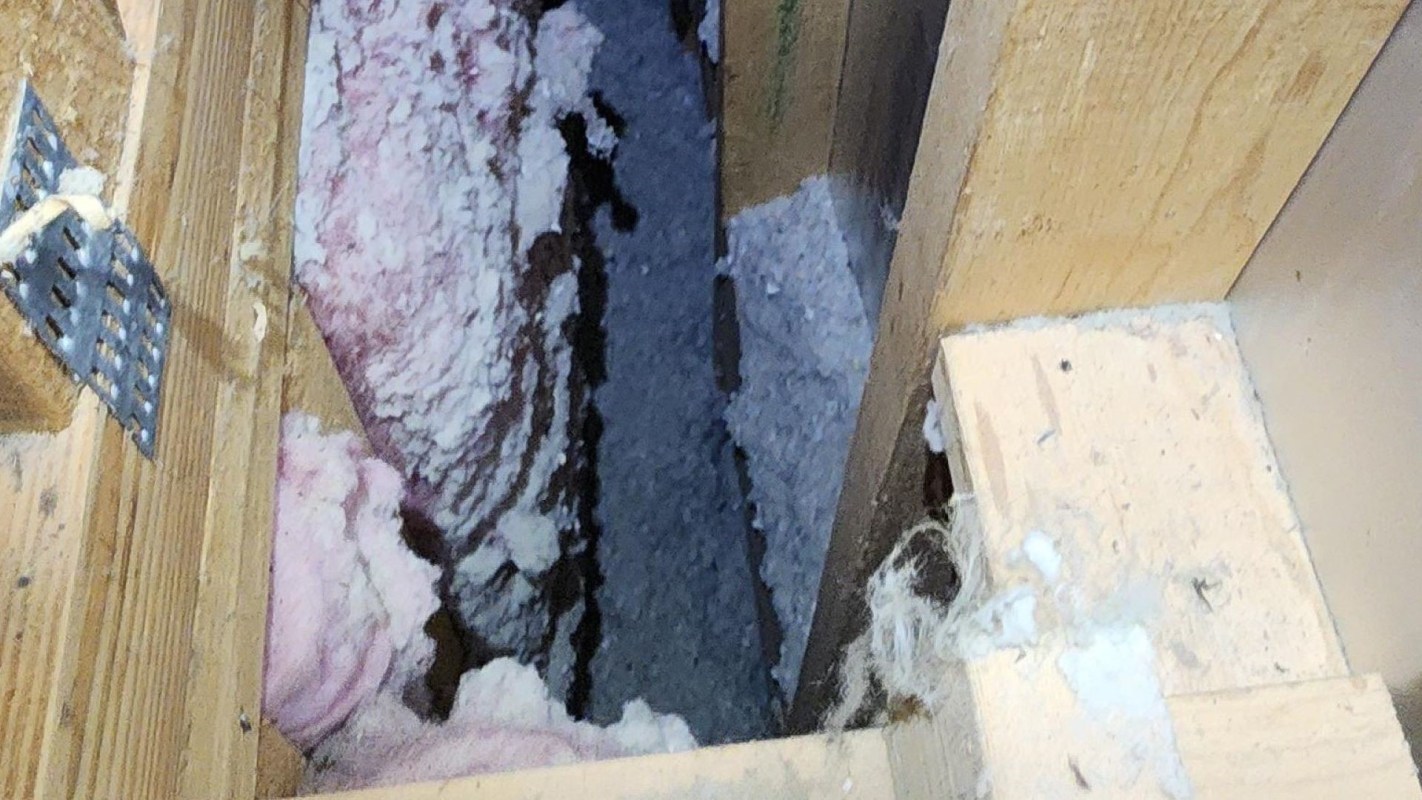
While trying to get ahead of serious ice dam problems, one homeowner came across an unexpected attic detail: a gap of roughly 1 foot between an interior wall and the exterior wall.
That kind of hidden cavity can help explain why a room feels unusually cold in winter — and why a large empty air space isn't necessarily the insulating advantage some people think it is.
Here's what to know
In a Reddit post, the homeowner said they had been removing "old nasty insulation" so they could clean mold, air-seal the attic, and add new insulation. They wrote: "When I got to the end of the wall, I discovered that I can see the backside of the interior wall. There is about a 1' gap."
The issue stood out because the house had experienced "major ice dams all winter," so the find was tied to a larger effort to keep heat out of the attic. When warm air escapes upward, it can melt roof snow that later refreezes near the edge, creating the ice buildup that causes those problems.
In the comments, some people suggested the space could be a chase or another framing-related void. But they also challenged the idea that a foot-deep pocket of air should count as effective insulation on its own.
One commenter wrote: "Air is an insulator yes, but generally not considered as so in thicknesses this large. There's too much room for convective air flows to happen."
TCD Picks » Quince Spotlight
💡These best-sellers from Quince deliver affordable, sustainable luxury for all




A hidden gap like this can mean money lost every winter. If warm indoor air is escaping into the attic, the heating system has to work harder, the room below can stay chilly, and homeowners may also face costly moisture or roof repairs if ice dams keep coming back.
More background
Finds like this are a reminder that heat loss often comes from parts of a home that owners rarely inspect. In this case, the homeowner was trying to address a comfort issue and avoid another season of winter damage, not take on a cosmetic renovation.
The discussion also highlighted a common misunderstanding. Insulating materials work well because they hold air in many small pockets, while a large open cavity can allow that air to circulate and move heat.
That distinction can affect monthly utility bills and maintenance costs. A cold room, musty insulation, and attic moisture can all point to air leaks that are quietly pushing up heating expenses.
What can be done?
The first step is determining whether the gap serves a purpose before filling it. If it is simply an open bypass from conditioned space to the attic, sealing and insulating it properly could help keep warm air where it belongs.
It may also reduce the risk of repeat ice dams, which can otherwise lead to costly roof, gutter, insulation, drywall, and mold damage.
The homeowner was already focused on a combined approach of cleaning up mold, air-sealing the attic, and replacing old insulation. Those upgrades are typically most effective when done together rather than treating insulation alone as a cure-all.
One commenter also immediately saw the opportunity, writing that the gap "looks like an opportunity for some serious insulating to take place."
"It sure was cold in that room last winter!" the OP responded. "If the gap isnt there for a reason, filling it with insulation will be the plan."
Where can I learn more?
Hidden attic gaps and ice dams usually point to bigger efficiency issues, whether that's air leaking out of the house or insulation that isn't doing its job. The articles here cover practical ways homeowners have tracked down waste and cut energy use, from home audits to better materials and routine system maintenance.
• Homeowners can use a simple home energy audit to uncover hidden leaks driving up bills.
• In Idaho, Hempitecture opened a hemp insulation factory to expand lower-impact options.
• One household saw a thermostat setting tweak cut monthly cooling costs nearly in half.
If you're dealing with a cold room or recurring ice dams, the biggest payoff often comes from finding the weak spots first. Air sealing, insulation, and a few smart equipment adjustments usually do more together than any one fix alone.

Get TCD's free newsletters for easy tips, smart advice, and a chance to earn $5,000 toward home upgrades. To see more stories like this one, change your Google preferences here.






