


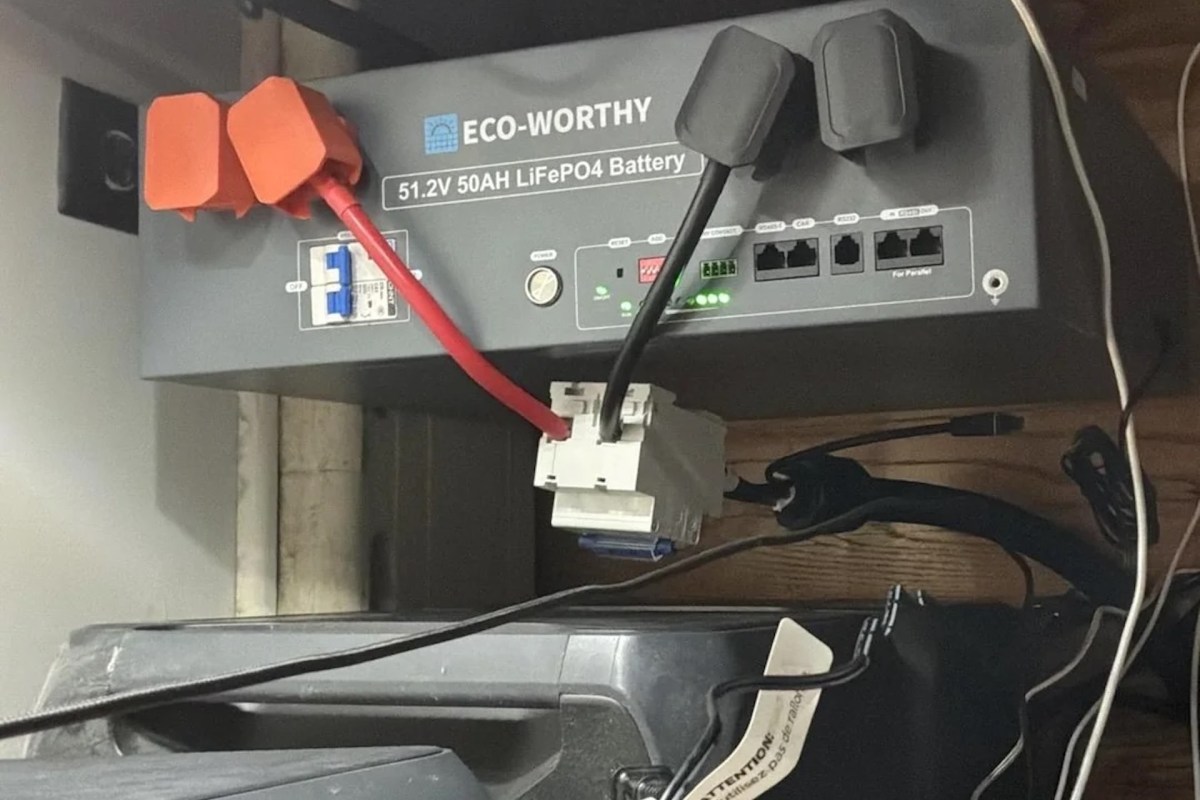
In a Reddit post, a Bluetti owner described adding a third-party battery to a home backup setup as a relatively low-cost way to expand storage — a change they said can even keep air conditioning running.
The modification pushed the system from 8.2 kilowatt-hours to 10.75 kWh. The setup centered on an AC200L with two B300 expansion batteries and a third-party server-rack battery.
Here's what to know
The added battery was a 50-amp-hour, 48-volt Eco-Worthy unit. To tie it in, the owner bought an $82 SolarX 4K cable on eBay, used an 80-amp mini circuit breaker, and ran the connection through a spare port on the second B300.
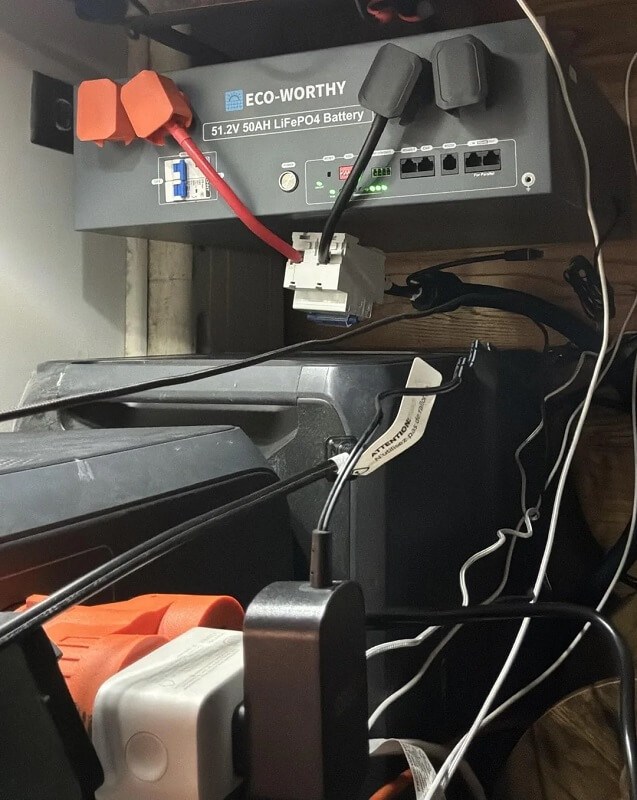
For $360, the change added 2.56 kWh of storage. The owner "matched the voltage before connecting them together" and said that "the connection went perfectly and the new battery charges and discharges in parallel with the rest of it."
Solar was already a major part of the system: 2,000 watts of panels went into the AC200L, while two D050S charge enhancers each had 585 watts of solar connected. In total, charging reached "a little over 2,000 watts peak."
"This is excellent. I'm going to draw one of these systems out and watch the video you mentioned. Thanks a million!" one commenter wrote.
TCD Picks » Quince Spotlight
💡These best-sellers from Quince deliver affordable, sustainable luxury for all




More background
Battery backup is becoming more relevant for everyday households. Extra storage can mean more time to run essentials such as refrigerators, internet equipment, lights, fans, and medical devices when the power goes out. In some cases, it can also power heavier loads.
"Does this power air conditioning?" one commenter asked.
The original poster replied, "It does, amongst other things."
When paired with solar panels, battery systems can help households keep key appliances running during blackouts, reduce reliance on fuel generators, and make better use of the electricity they produce at home.
At the same time, this was not a beginner's project. The poster emphasized voltage-matching before making the connection, and the discussion focused on plugs, cables, and breaker compatibility. That makes this more of an owner-driven modification than a standard plug-and-play upgrade.
What can be done?
Battery systems can be expanded in more creative ways than expected, though compatibility is critical.
In a follow-up discussion, the owner said the connector they used was bidirectional. "It behaves similar to another expansion battery," they added. "It charges and discharges with the whole unit." They also said the idea came from Jasonoid on YouTube.
Battery storage paired with rooftop solar can be a practical way to store power for when it is needed most. Even small upgrades may extend runtime and reduce the stress of outages.
Still, anyone considering a modification should verify voltage, connectors, breaker specs, and equipment limits before attempting it.
Where can I learn more?
The landscape of home energy storage is evolving rapidly, driven by fresh approaches to battery design and innovative methods to maximize portable power systems. Researchers and manufacturers are working to enhance reliability, prolong runtime, and ensure dependable backup electricity during power outages.
• Bluetti unveiled next-gen battery tech that could keep home appliances running longer during outages.
• Engineers created a water-based battery that could make garage-scale home storage far safer.
• Connected Energy and Forsee Power struck a deal to reuse old EV bus batteries.

Get TCD's free newsletters for easy tips, smart advice, and a chance to earn $5,000 toward home upgrades. To see more stories like this one, change your Google preferences here.






