


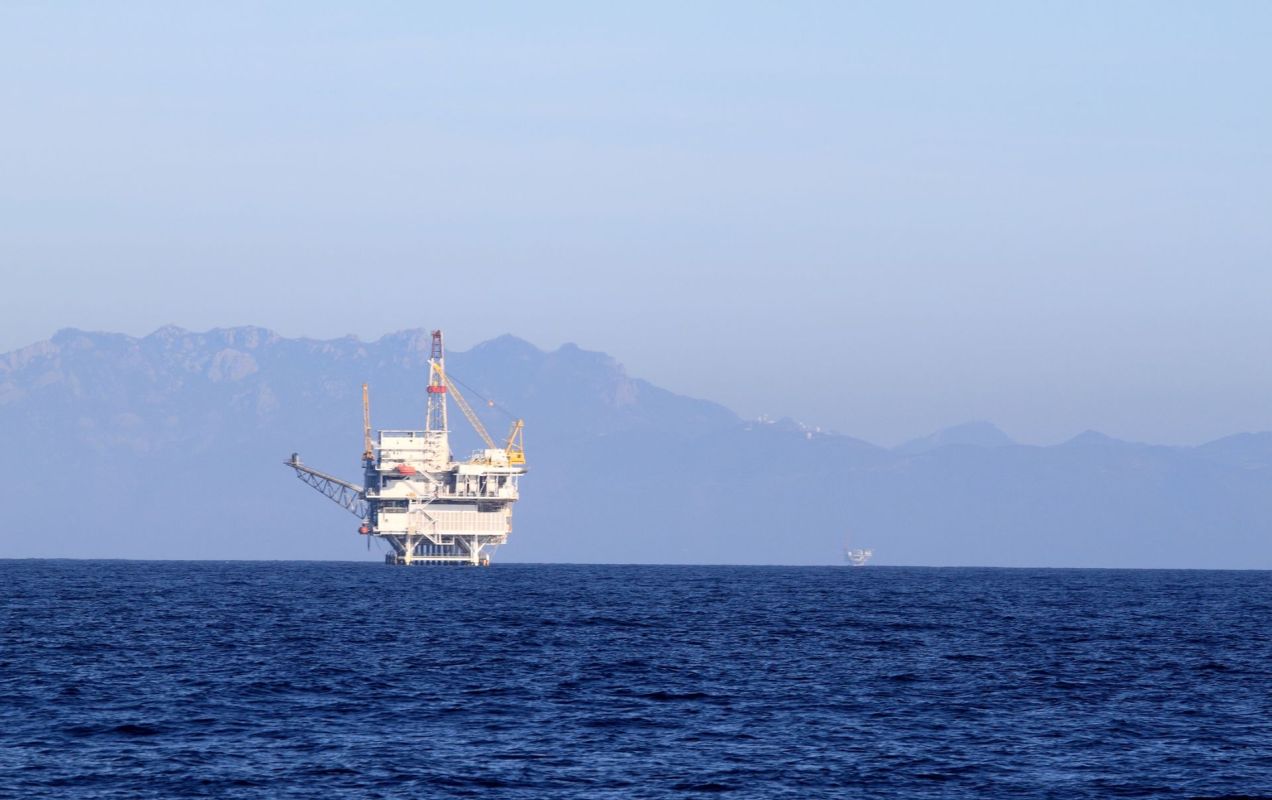
The Trump administration has opened a federal review of California's coastal management program, raising fears that federal officials could weaken the California Coastal Commission's authority over federally connected projects along the coast as they push for more offshore drilling and other fossil fuel activity in the state.
If that happens, Californians could lose a key voice in decisions that shape everything from public shoreline access to spill risks to the future of clean energy.
Here's what to know
As the administration pushes for more oil activity in California, it has also opened a federal reexamination of the state's coastal management program.
The Associated Press reported that the effort includes offshore leasing, pipeline activity, and possible fracking off Ventura County, while critics fear the review could shrink the California Coastal Commission's authority over federally tied coastal projects.
That concern centers on the commission's long-standing influence over shoreline development. Supporters say that if its role is weakened, oil and gas proposals could face fewer obstacles despite local opposition.
"It's just part of that overall belief that they have, that they're going to get rid of renewables and go back to good old-fashioned fossil fuels, and what better place to start than California?" said Deborah A. Sivas, a professor of environmental law at Stanford Law School.
TCD Picks » Quince Spotlight
💡These best-sellers from Quince deliver affordable, sustainable luxury for all




Commerce Secretary Howard Lutnick announced the review in May while criticizing the commission's resistance to other projects, including an expanded SpaceX launch schedule from Vandenberg Space Force Base.
"Obstructionist policies that delay critical national infrastructure in the name of environmental extremism are unacceptable," Lutnick said.
More background
California's coast supports tourism, recreation, habitat, and local economies, all of which industrial accidents can devastate.
In 2015, a pipeline rupture triggered one of California's worst recent spill disasters, contaminating 150 miles of beaches between Santa Barbara and Los Angeles. The spill also damaged habitat used by endangered whales and sea turtles.
Meanwhile, California has been steering in the opposite direction on energy policy. Data from the California Energy Commission shows that renewable energy generated almost half of the state's electricity in 2024. Alongside expanding offshore wind initiatives, the state has actively taken steps to curb reliance on gas-powered vehicles.
No state with one of these coastal management programs has previously been stripped of its authority to review federal projects.
"This isn't about performance. This is about power. It's about whether the Trump administration can strip California's authority because they don't like the answers the coastal commission gave to oil companies," Maureen Ellenberger, a Santa Barbara resident, warned at a public hearing.
What's being done?
The National Oceanic and Atmospheric Administration is conducting the review, though it has not said when it expects to finish. State officials are fighting on several fronts, including a lawsuit over the federal government's repurchase of an offshore wind lease that critics say undercuts cleaner energy development.
The coastal commission has kept weighing in on federal fossil fuel plans. After a lengthy public hearing, it unanimously voted against a proposal to frack from a 45-year-old platform in federal waters off Ventura County. DCOR said the project would increase daily production across 16 wells from 1,100 barrels to 4,000 barrels.
At the Santa Monica hearing, many Californians argued that the commission should keep its oversight role, saying communities would face more pollution risk and have less control over their coastline if the state loses that authority.
"This is just simply one of those cases where the juice isn't worth the squeeze. It creates far too many opportunities for something to go wrong. When something does go wrong, it is our ocean, beaches, wildlife, and coastal economy that pay the price," Coastal Commissioner Ray Jackson said during the Ventura County hearing.
Where can I learn more?
The fight is also playing out in Sacramento, in local governments, and around specific offshore operators. Pressure to restart or expand drilling is colliding with efforts to keep coastal decisions in the hands of communities and state officials.
• California lawmakers launch inquiry into Sable Offshore as pressure builds to restart drilling.
• Along the Central Coast, lawmakers push to safeguard coastal waters before new drilling begins.
• Governor Gavin Newsom signs laws to give more authority to California local governments.
At the center of it all is a fight over who gets to shape California's energy future. That question becomes even more important if federal officials succeed in weakening the state's coastal oversight.

Get TCD's free newsletters for easy tips, smart advice, and a chance to earn $5,000 toward home upgrades. To see more stories like this one, change your Google preferences here.






