


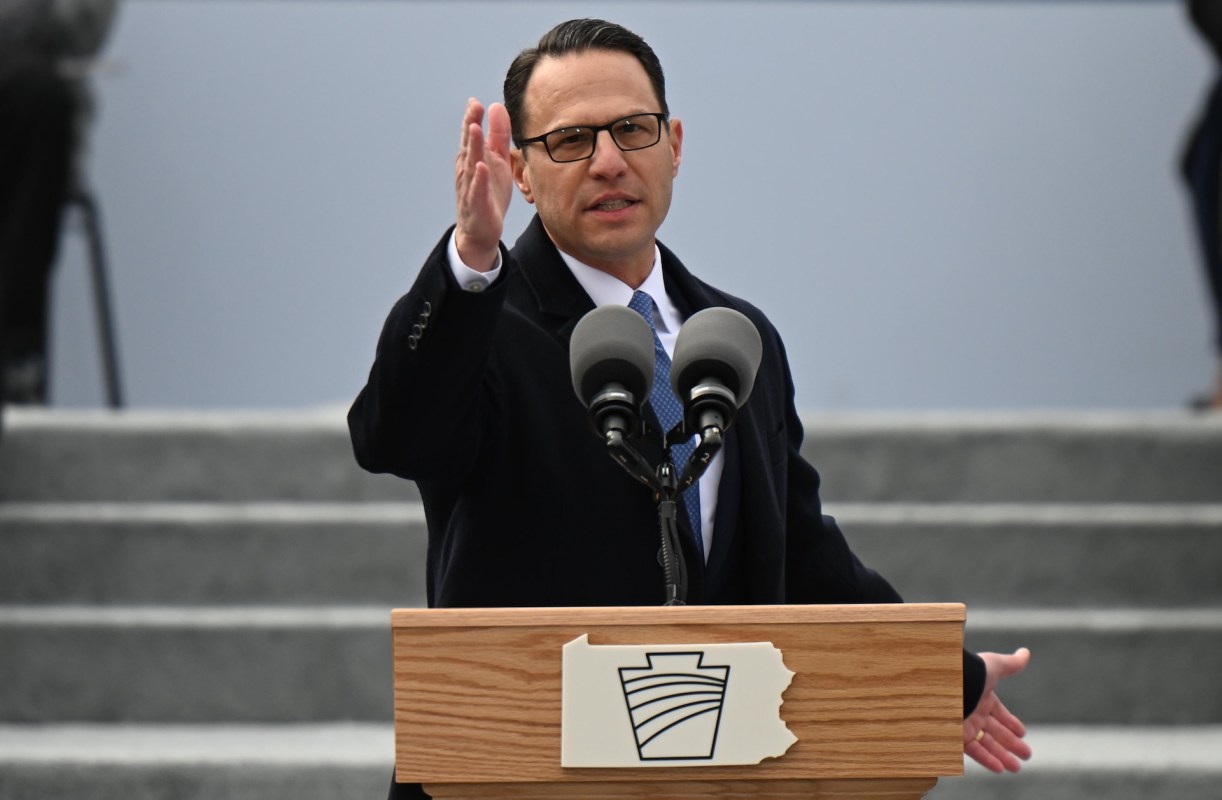
With more than 120 data center projects proposed across Pennsylvania, the facilities have become a defining issue in the state's election season, as candidates in both major political parties cast them as a potential liability tied to neighborhood disruption and rising power costs.
Here's what to know
Opposition has spread widely enough that Gov. Josh Shapiro has reversed himself on the issue, Spotlight PA reported.
Shapiro, the incumbent Democratic candidate in November's gubernatorial race, previously supported speeding up approvals and celebrated a $20 billion Amazon investment. But in August, he signed an executive order requiring local sign-off before the Pennsylvania Department of Environmental Protection considers permit applications.
Under that order, developers that don't comply with certain rules on power use, environmental protections, and transparency could see their projects "slow-[walked]," according to the local news outlet.
At a ceremony where he signed the order, Shapiro said: "What we're doing today is taking concrete action to listen to the voices of the people, to put local leaders back in charge of their communities, and to make very, very clear what the rules of the road are to be able to do business here in Pennsylvania."
GOP gubernatorial candidate and state Treasurer Stacy Garrity has meanwhile called for a temporary statewide pause on data center construction.
TCD Picks » Quince Spotlight
💡These best-sellers from Quince deliver affordable, sustainable luxury for all




The hot topic has become a part of legislative contests as well. Spotlight PA identified the issue in campaign ads, mailers, websites, and social media in at least 20 competitive races.
Across not only Pennsylvania but the country, debates over data center development and especially backlash against the facilities have been shaping midterm campaigns leading up to key elections in November.
More background
The data centers constructed to power artificial intelligence, streaming services, and cloud computing use huge amounts of energy. Policymakers, community advocates, and residents worry that the expense of upgrading power grids to suit these systems could ultimately be passed along to utility customers.
Many voters are also wondering whether their communities will be left to absorb the noise, water demands, land use, and other pressures of Big Tech's expansion, with a special focus on the AI boom.
The technology can be used to help utilities and businesses better forecast demand, improve efficiency, and integrate more wind and solar power. At the same time, the operations behind AI can consume these massive amounts of electricity and water while raising concerns about security, misuse, and unintended social consequences, including the possibility that rapid buildout may push costs onto families.
Polling suggests those worries carry political weight.
Citing a Quinnipiac University survey, Spotlight PA reported that almost three-quarters of Pennsylvania voters would oppose an AI data center in their own community. In the same poll, 24% said they approved of Shapiro's handling of the matter, while 34% said they disapproved.
What's being done?
Politicians are leaning more heavily on ideas such as local authority and tighter regulation. Shapiro's executive order reflects that shift, and candidates in both major parties are talking up guardrails, public listening sessions, and more demanding permit reviews.
One of the clearest examples is in the 40th Senate District near Scranton, Pennsylvania, where a large share of the proposed data center projects are concentrated.
Senate candidate Democrat Brian Wrightson has argued for a statewide ban on data center construction. Opponent and incumbent Republican state Sen. Rosemary Brown, meanwhile, has endorsed a moratorium until safeguards exist, coming out in support of stronger regulations.
Where can I learn more?
Pennsylvania isn't alone. Similar fights are playing out across the U.S. as data centers put pressure on electrical grids, water supplies, and communities already worried about higher bills, natural resources, and less local say.
• In Texas, residents warn data centers could drain water while pushing power bills higher.
• In New Jersey, officials said bills going up another 20% could follow AI expansion.
• In Maine, analysts said data centers are driving up prices as AI demand surges.
• Across the U.S., critics warn the backlash may get brutal as AI strains utilities.
Nationwide, the same arguments have moved fast from planning boards to kitchen-table concerns about monthly bills and neighborhood impacts. That helps explain why Pennsylvania politicians and candidates are under so much pressure to take a stand.

Get TCD's free newsletters for easy tips, smart advice, and a chance to earn $5,000 toward home upgrades. To see more stories like this one, change your Google preferences here.






