


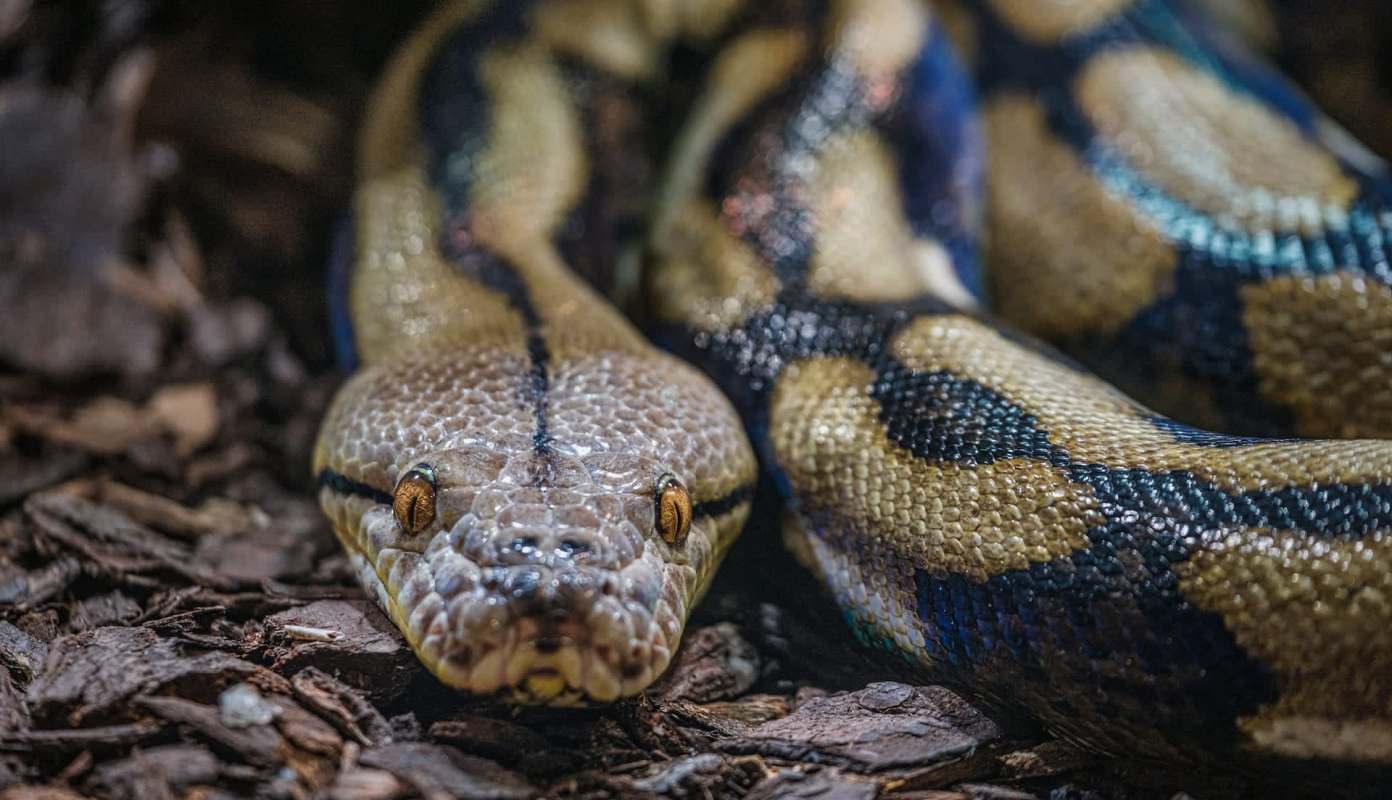
A heavy rainstorm in Vietnam's Phu Tho Province was followed by an unsettling discovery: a 13-foot (4-meter) reticulated python moving through dense vegetation behind a family's chicken coop.
The family did not kill it. With help from neighbors, they contained the snake and later turned it over to forestry officials, protecting both nearby residents and a threatened wild species.
Here's what to know
After the downpour on July 8, Bui Xuan Truong, a resident of Moi Nang Village in Nhan Nghia Commune, used a flashlight to inspect the chicken coop behind his house and found the enormous snake, Dtinews reported.
He filmed the python, shared the clip on social media, and later asked four neighbors to help capture it.
Truong said the snake was roughly 13 feet (4 meters) long and weighed more than 66 pounds (30 kilograms). Afterward, they placed the python in a metal cage used for chickens and added steel wire to keep it from escaping and endangering people or livestock.
The family contacted forestry officials on July 9, according to Bui Van Phan, head of Moi Nang Village. Representatives from the commune and village, along with forestry personnel, then documented the incident before taking the animal away.
TCD Picks » Quince Spotlight
💡These best-sellers from Quince deliver affordable, sustainable luxury for all




Dtinews noted that the reticulated python, also known as Malayopython reticulatus, was added to Vietnam's Red Data Book in 1992 and remains critically endangered due to declines in the wild.
More background
Heavy rain can drive animals out of their hiding places and push them toward drier ground. At the same time, homes, farms, and livestock enclosures built near natural habitat can create new points of contact between people and predators.
In this case, the chicken coop may have made the area especially attractive to the snake.
Truong told Dtinews, "When I was about seven years old, villagers caught an 18kg python near a cave. Large pythons like this can prey on chickens and goats."
Even so, the situation did not end in panic or retaliation. Encounters with wild animals are not always driven by aggression alone. As BBC Future has explored, habitat disruption and changing conditions can increase the chances of animals and humans crossing paths in stressful or dangerous ways.
What's being done?
Village and commune authorities helped secure the snake, notify forestry personnel, document the encounter, and transfer the animal.
Returning a mature python to the forest preserves an animal that can contribute to breeding populations. It also reduces the likelihood that a protected species will be injured, killed, or kept illegally after being found near people.
Checking sheds and coops carefully, using lights at night, and limiting easy access to food sources, such as unsecured chickens or feed, can reduce the risk of a dangerous surprise.
Phan said, "The animal was identified as a reticulated python and has been handed over to forestry officials for release back into the forest."
Where can I learn more?
Elsewhere in Southeast Asia, reticulated pythons have turned up in drains, animal pens, and other places close to people. A calm response can keep both residents and snakes out of harm's way.
• In Singapore, contractors guided a drain python to safety after workers spotted it.
• In Indonesia, a wildlife influencer caught a struggling python to keep it alive.
• In Jitra, Malaysia, rescuers captured a goat-swallowing python near a resort animal pen.
Cases like these are a reminder that large pythons regularly slip into human spaces across the region. They also underscore the value of prompt reporting and humane removal when protected wildlife is found near homes or livestock.

Get TCD's free newsletters for easy tips, smart advice, and a chance to earn $5,000 toward home upgrades. To see more stories like this one, change your Google preferences here.






