


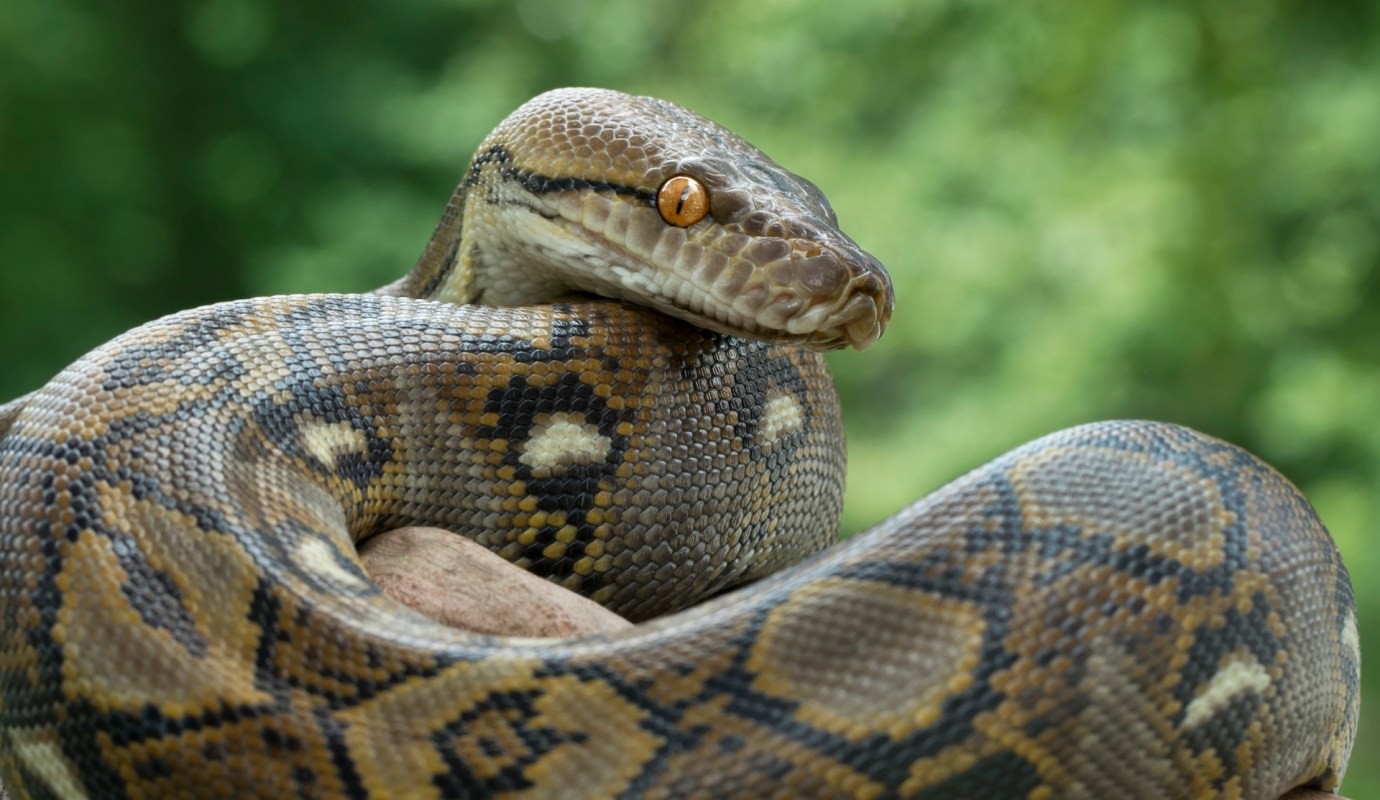
A massive python surpassing the weight of some full-grown people was captured in Malaysia after firefighters said it appeared to be targeting a goat near a rural settlement.
The incident is a stark reminder that when people, livestock, and wild habitats overlap, dangerous encounters with large animals can unfold quickly.
Here's what to know
According to Gua Musang Fire and Rescue Station chief Muhammad Azrul Izzham Zulkifli, four firefighters were sent out after a distress call came in at 11:40 p.m. and caught the 16-foot-5-inch (five-meter) python, the New Straits Times reported.
He said the animal, estimated at nearly 220 pounds (100 kilograms), was found at the Limau Kasturi Land Rehabilitation Scheme in Gua Musang and was thought to be trying to take a goat as prey.
The snake was then brought back to the fire station, with plans to hand it over to Perhilitan, the Department of Wildlife and National Parks.
Wildlife is coming into contact with people more often in areas shaped by farming, settlement, and land-use change. Near orchards, plantations, and villages, livestock can become an easy food source for predators and large reptiles.
TCD Picks » Quince Spotlight
💡These best-sellers from Quince deliver affordable, sustainable luxury for all




More background
A python of this size can pose a serious danger to small livestock, and even when no people are harmed, incidents like this can create fear and financial strain for families who depend on animals such as goats.
A land rehabilitation scheme, together with nearby agricultural activity, reflects the kind of edge environment where wildlife and humans often cross paths. Research on why wild animals come into conflict with humans has shown that habitat disruption, expanding development, and easy access to food can all increase the chances of these encounters.
Azrul also pointed to another pressure factor: weather. He warned that unpredictable conditions may drive wildlife into residential zones, adding another layer to a problem that can intensify when natural habitats are disturbed or fragmented.
What can be done?
Keeping livestock in secure enclosures, checking pens at night, and staying alert to signs of wildlife activity can help reduce the risk of dangerous encounters.
Better planning around rural development can also help reduce conflict. Preserving habitat corridors, managing waste and food sources, and improving coordination between local communities and wildlife agencies can make it less likely that animals end up in residential areas in the first place.
He also urged caution in mixed-use landscapes.
"We believe the nearly 100kg python was attempting to devour a goat," he said.
He added that residents near "orchards, plantations and villages" should remain vigilant for wild animals.
Where can I learn more?
Reports from around South and Southeast Asia show that giant pythons often go after livestock near farms, resorts, and villages. They point to the same pattern seen in Gua Musang: when prey is easy to reach, large reptiles end up close to people.
• In Jitra, Malaysia, rescuers found a bloated 5-meter python after it swallowed a goat.
• Near Bangladesh's Sundarbans, villagers discovered a 15-foot python after a goat vanished.
• In Indonesia, a wildlife influencer caught the python alive to keep it from being killed.
• At a Bangladesh farm, a giant python spent two hours swallowing an even larger python.
• In Florida, a contractor held a 10-foot Burmese python driven from brush by wildfire.
Episodes like these are a recurring risk in working landscapes, not rare one-offs. They also underline the value of quick reporting, secure livestock pens, and trained responders.

Get TCD's free newsletters for easy tips, smart advice, and a chance to earn $5,000 toward home upgrades. To see more stories like this one, change your Google preferences here.







