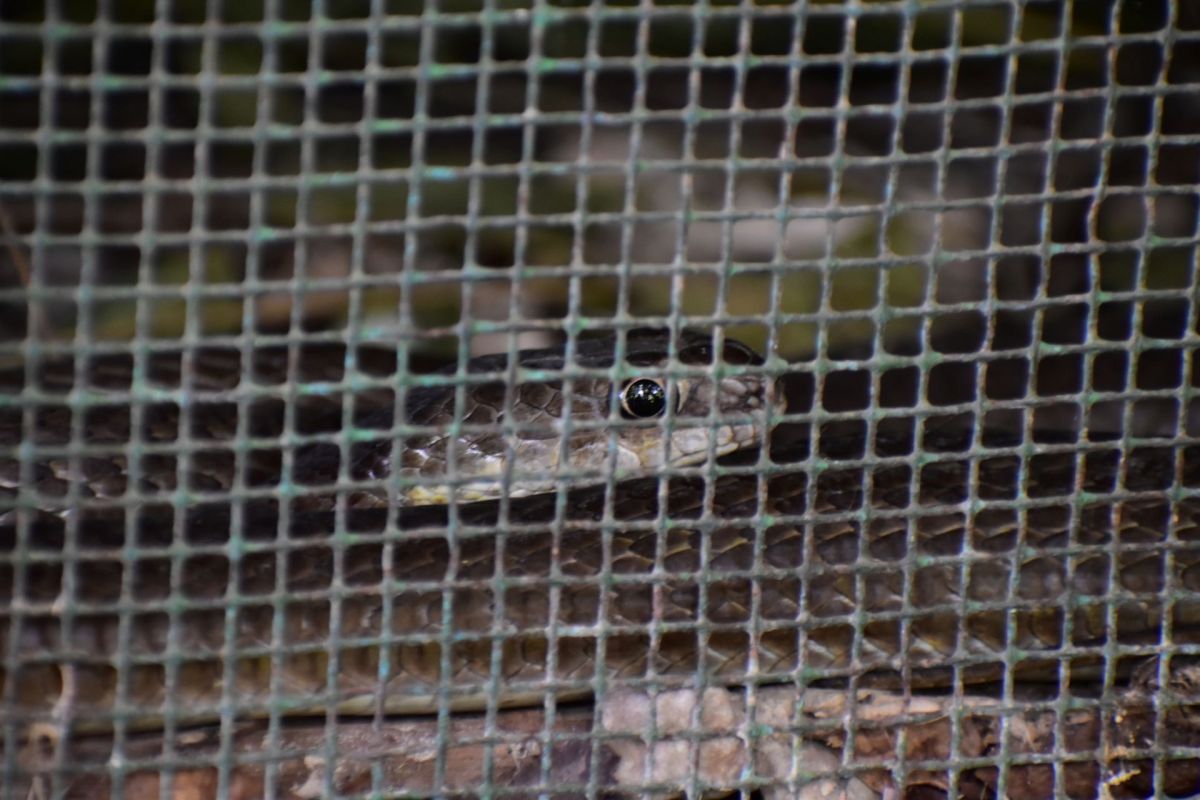
What began as an effort to catch rats in a Rajasthan home turned into a far more serious encounter.
When the family checked a rat trap placed near a cupboard, the cage in their Semla village house contained a black cobra with its hood raised at about 1 a.m.
Here's what to know
In the Chhabra area of Baran district, homeowner Bharat Singh Lodha and his family had set the trap where rats were frequently seen. After noticing movement inside the cage, they found a venomous snake instead of the rodent they expected, Asianet Newsable reported.
Rather than approach it, the family moved back and warned neighbors, who stayed outside at a safe distance because of the danger of a bite. The Forest Department was then contacted to safely remove the cobra.
Monsoon conditions often increase the chances of this kind of encounter because flooded burrows can force snakes out in search of dry places to stay.
In this case, the house may have offered exactly that. Human structures can provide dark, protected hiding places, while rat activity can also attract predators looking for food.
TCD Picks » Quince Spotlight
💡These best-sellers from Quince deliver affordable, sustainable luxury for all




More background
Locals say snakes are commonly seen near homes during the monsoon because rising water pushes them out of underground spaces. After that, cupboards, storage corners, and other dark, dry parts of a house can serve as temporary shelter.
A family may believe it is dealing with clutter, pests, or damp conditions, only to realize local wildlife is responding to the same environment.
Human-wildlife conflict is often shaped not just by animal behavior but also by how people reshape landscapes and create new points of contact between habitat and home.
What can be done?
Do not try to handle the animal yourself. Even when confined, venomous snakes can strike defensively, and an untrained rescue attempt can quickly become dangerous.
Forest officials advised residents to use a torch when inspecting cupboards, storage spaces, and other dark corners before reaching in, especially during the monsoon. That kind of routine caution can reduce the chances of a sudden encounter.
Contacting the Forest Department or local wildlife authorities gives trained responders the best chance of safely removing a snake and returning it to its natural habitat without harming either people or the animal.
The incident involved monsoon flooding, shelter needs, and human living spaces converging in a single home.
Where can I learn more?
Similar incidents from elsewhere in India show how often cobras end up in homes and neighborhoods when shelter and food draw them in. They echo what happened in Baran district, where a rescue team was called after a venomous snake appeared close to people.
• In Telangana, a cobra was found inside a grandparents' house before safe relocation.
• In Kota, panic spread after cobras appeared in two homes, including one with ladoos.
• In Odisha, rescuers returned a 12-foot king cobra to the forest after a neighborhood alarm.
These cases are a reminder that ordinary places can become wildlife encounter zones with little warning. They also highlight why trained removal and simple household caution matter when animals are displaced.

Get TCD's free newsletters for easy tips, smart advice, and a chance to earn $5,000 toward home upgrades. To see more stories like this one, change your Google preferences here.