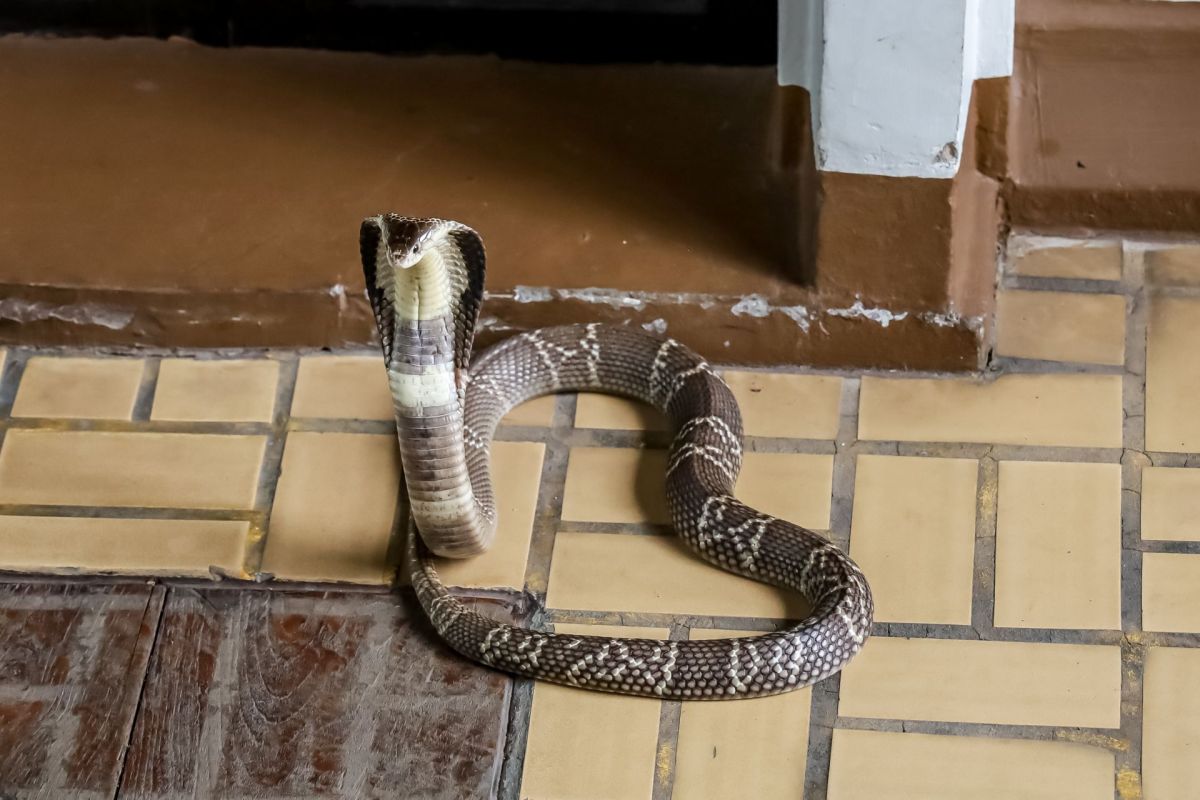
A school day in Rajasthan took a frightening turn when a cobra slithered into a classroom and coiled itself around a student's chair, sending children scrambling for safety. The incident also served as another reminder of how easily human spaces can overlap with wildlife habitat in dangerous ways.
Here's what to know
At the Government Higher Secondary School in Kotra, in Rajasthan's Pali district, students came across a five-foot-long cobra near their desks, Asianet News reported.
The sight of the snake sent children screaming out of the room, and teachers moved quickly to clear the classroom.
Wildlife rescuer Surendra Singh was then summoned. Removing the cobra was especially challenging because it had wrapped itself tightly around a student chair, but Singh eventually freed it, secured it in a rescue bag, and later released it in a nearby forest.
No one was hurt, though eyewitnesses said the children were badly shaken by what happened.
Quick action by teachers and the involvement of a trained rescuer kept the situation from becoming far more serious.
TCD Picks » Quince Spotlight
💡These best-sellers from Quince deliver affordable, sustainable luxury for all




More background
While the classroom scene was dramatic, it reflects a broader pattern seen in many parts of the world: as people build, farm, and expand into natural areas, animals are increasingly likely to end up in human-dominated spaces.
That does not necessarily mean the cobra was trying to attack anyone. It may simply have entered the room while seeking shelter or trying to move through the area.
As the BBC has reported in its explainer on why wild animals attack humans, many dangerous encounters are linked to habitat disruption and increasing human-wildlife contact.
An encounter like this can turn an ordinary school day into a traumatic event. For the snake, entering a crowded building poses a high-risk situation that can quickly lead to injury or death if people panic or try to intervene without proper training.
Places where classrooms, homes, and roads sit close to wildlife habitat face these risks more often.
What can be done?
Schools and other public buildings can keep emergency contact information for local wildlife rescuers, train staff on evacuation procedures, and make sure students know not to approach, trap, or try to kill a snake.
Basic building maintenance can also reduce the chances of an encounter. Sealing gaps under doors, repairing cracks, clearing clutter, and managing vegetation around entrances may help keep wildlife from slipping into indoor spaces unnoticed.
Calling trained professionals instead of attempting a DIY rescue can help avoid further danger. Venomous snakes can react unpredictably when frightened, and even a well-intentioned effort to move one can put both people and the animal at risk.
A calm, practiced response protected the students, the teachers, and the cobra.
The cobra was safely removed and then released into a nearby forest.
Where can I learn more?
Venomous snakes show up in all kinds of everyday settings across India, including schools, homes, and crowded neighborhoods. As in the Rajasthan classroom scare, these encounters can unravel fast, making an experienced rescuer crucial.
• At a school in Odisha, a 15-foot king cobra reared up and wrapped around poles during rescue.
• In Rajasthan's Kota, rescuers found cobras in two homes in Kota, deepening fears about close encounters.
• In Telangana, an Indian cobra was found inside a grandparents' house before a catcher relocated it.
• In Odisha, a 12-foot king cobra emerged near a neighborhood bank before rescuers returned it to the forest.
• In Bihar, a toddler mistook a cobra for a toy and bit the snake before collapsing.
Seen side by side, these stories offer a clearer picture of the risks for communities living near snake habitat. They also drive home the same lesson as the classroom incident: staying calm and calling trained handlers can protect both people and wildlife.

Get TCD's free newsletters for easy tips, smart advice, and a chance to earn $5,000 toward home upgrades. To see more stories like this one, change your Google preferences here.