


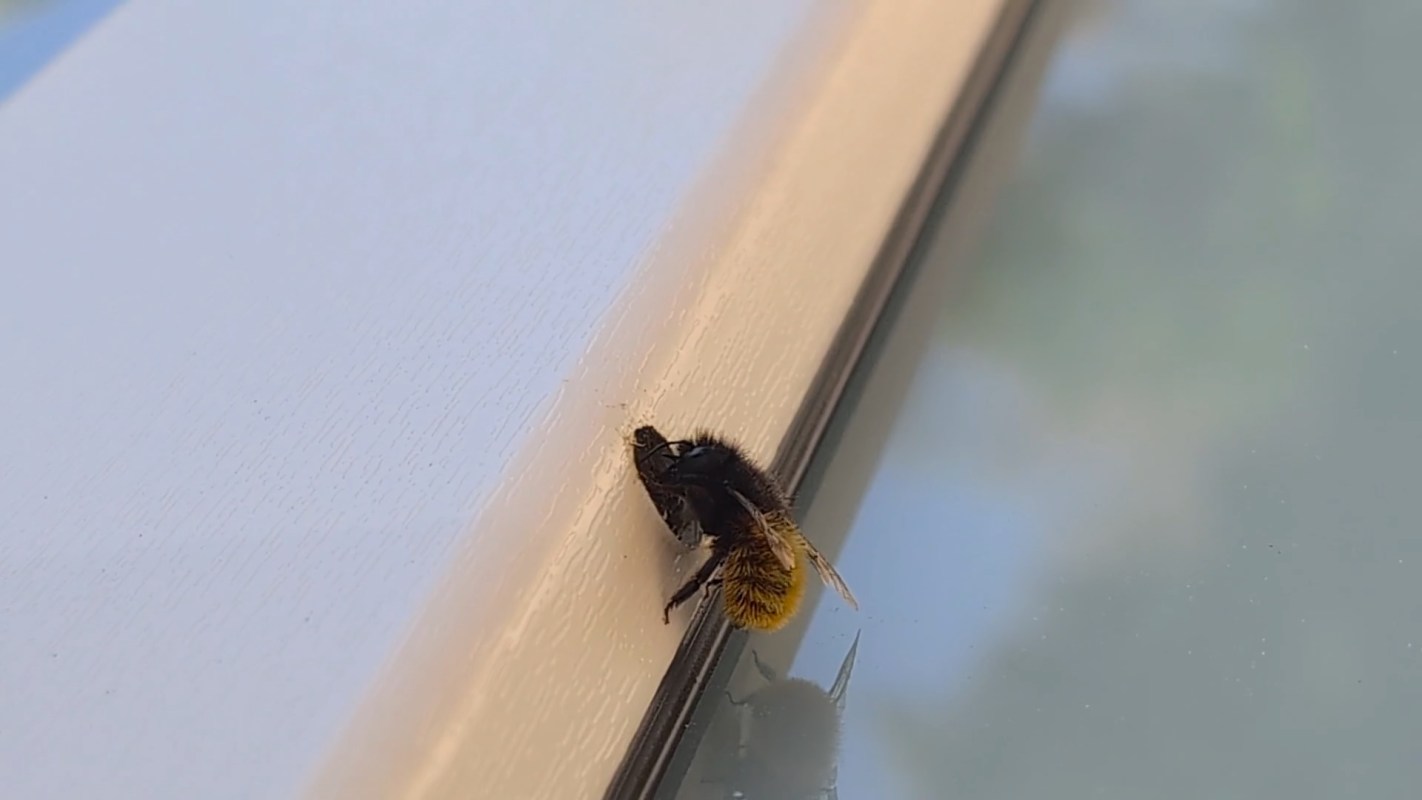
A homeowner who noticed bees hovering around the screw holes in their plastic front door was confused to find a cement-like substance in the holes later.
Looking for answers, the homeowner turned to Reddit, where commenters said the gray "cement" packed into the holes was likely a sign that the pollinators were attempting to build a nursery.
Here's what to know
Writing on the r/bees subreddit, the original poster explained, "Recently there have constantly been bees (or bumblebees?) around two of the screw holes in our plastic front door."
(If you can't see the video, click here.)
They added that the insects were not actually crawling inside, but that "It looks like cement has been put into the holes—a gray, hard substance that wasn't there when we bought it."
Commenters were quick to respond that the hard, gray material was likely mud, which bees use to construct nesting sites.
TCD Picks » Quince Spotlight
💡These best-sellers from Quince deliver affordable, sustainable luxury for all




One user said the original poster's description matched their own experience.
"We had a little mason bee lady who decided the top lock on our front door was a great place to build her egg chamber," the commenter wrote. "They build multiple cells inside that hole, each with an egg and some pollen as provisions."
Because many people associate bees with large hives, it can be a surprise to see bees using crevices as small as a screw hole to build their nesting sites. But some solitary bee species use small existing cavities as nests before sealing them off with mud.
More background
Modern homes are full of tiny cavities, gaps, and drilled openings that can mimic the sheltered spaces some pollinators might otherwise find in dead wood, stems, or other natural materials. As built environments expand and yards become more manicured, wildlife often adapts by using whatever safe spaces are available.
While a plugged screw hole or lock opening may look like the start of an infestation, it could actually be only a short-term nesting site for beneficial insects like pollinators. However, even temporary stays can create practical annoyances, especially if the cavity is part of a frequently used door or lock.
What can be done?
If bees appear to be using a door, siding gap, or another small opening, the first step is usually observation rather than immediate spraying or sealing. Disturbing a nest too early can kill developing young and may be unnecessary if the activity is only temporary.
Homeowners who are unsure which species they are dealing with can check with a local government office, a pollinator group, or a wildlife expert before taking action. Identifying the particular species is essential to distinguishing beneficial pollinators from harmful pests.
Some commenters commended efforts to help pollinators and other beneficial insects.
"Good on you for highlighting and protecting our tiniest neighbors," wrote one.
Where can I learn more?
Bee encounters like this can pop up in all kinds of places around a home, from front-door hardware to roof spaces and backyards. These stories also underscore why it helps to figure out what kind of activity you're looking at before jumping in.
• In Southern California, opening the roof revealed honey everywhere after a routine bee removal.
• A gardener told to plant bee balm instead watched a massive bee swarm fill the yard.
• A homeowner in the garden noticed strange bee behavior that defied typical pollinator patterns.
• In one suburban yard, an accidental no-mow experiment brought in far more bees.
• In southwestern Pennsylvania, beekeepers returned to find thousands of bees killed in arson.

Get TCD's free newsletters for easy tips, smart advice, and a chance to earn $5,000 toward home upgrades. To see more stories like this one, change your Google preferences here.






