


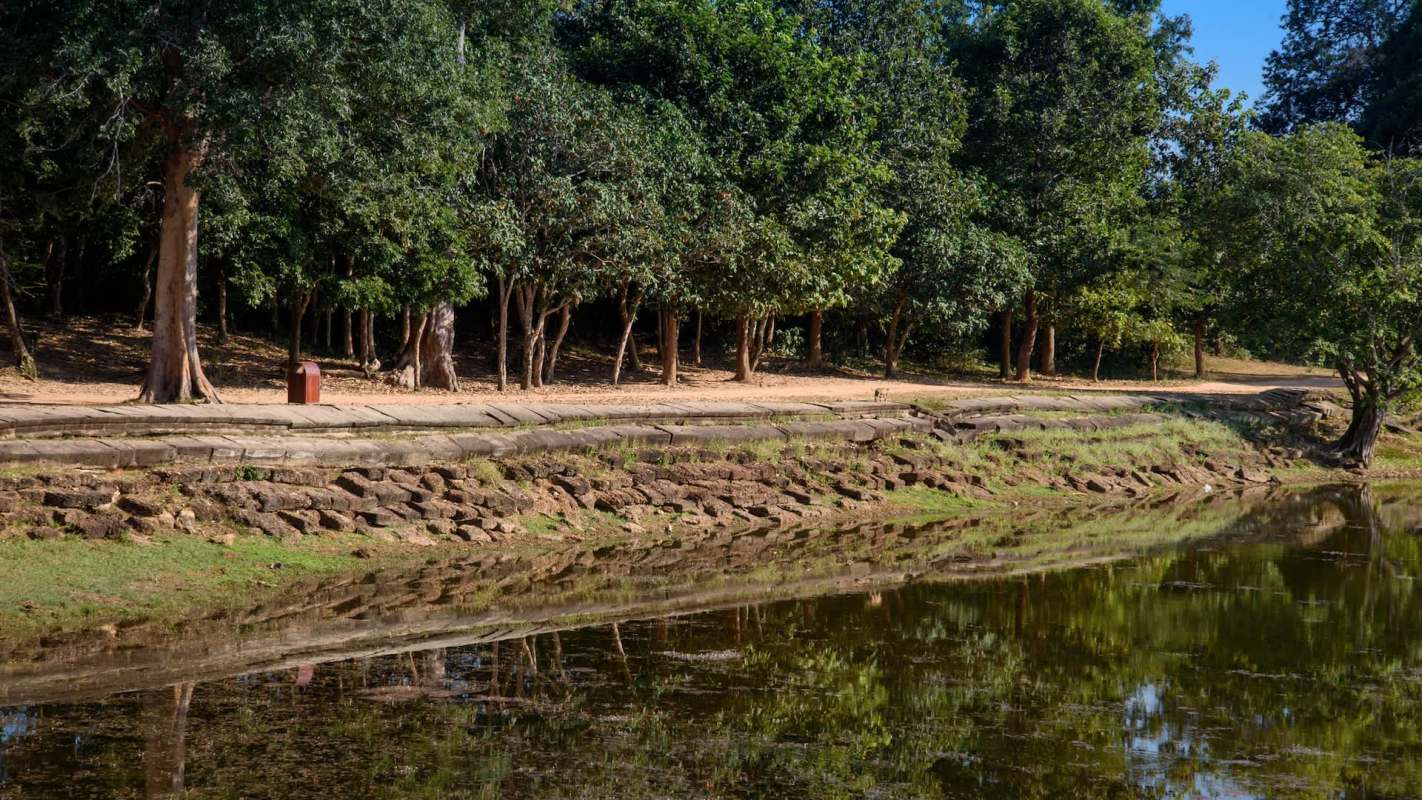
People are criticizing a hydropower project inside one of Cambodia's largest protected rainforests after a resident reported timber trucks leaving the area. Mongabay reported that satellite images appeared to show logging beyond approved construction zones as well.
Here's what to know
According to Mongabay, construction on the 70-megawatt Stung Russei Chrum Kandal hydropower dam has been underway inside Phnom Kravanh National Park since 2023.
The project is allowed to clear 7,161 acres for the reservoir, but satellite images indicate the disturbance may extend farther. The imagery appears to show a sawmill just beyond the approved area and roads reaching up to 1.9 miles into protected forest.
Phan, a resident of O'Soam commune in Pursat province who asked to remain partially anonymous, said he has seen timber trucks leaving the site.
"These days, every few days, there is only one timber truck because it is the raining season, but during the dry season, there are three or four timber trucks [per day]," Phan told the outlet.
Marcus Hardtke, a forest-crimes expert with extensive experience in Cambodia, said the visible patterns are consistent with selective logging seen at other dam projects in the country.
TCD Picks » Quince Spotlight
💡These best-sellers from Quince deliver affordable, sustainable luxury for all




People sometimes view hydropower as a cleaner energy source. But when its construction results in the destruction of large areas of forest, that harms people in the surrounding areas and erases many of the climate benefits.
More background
Covering more than 2.3 million acres, Phnom Kravanh National Park is one of Cambodia's most important remaining strongholds of old-growth forest.
Its wildlife includes endangered Asian elephants, critically endangered Sunda pangolins, and vulnerable smooth-coated otters.
The forest is also central to nearby communities. Indigenous people across the Cardamom Mountains depend on it for traditional hunting grounds and other essential resources, and Phan said access around the dam site has become tightly restricted.
He said armed checkpoints stop residents from moving in and out as they once did.
Hydropower development is already extensive across Phnom Kravanh National Park and the neighboring Samkos Wildlife Sanctuary, where five dams are operating, and another five are under construction. The planned reservoirs would cover more than 37,066 acres.
What's being done?
Two independent forestry experts who reviewed the imagery shared by Mongabay said it appeared to show selective logging outside the approved reservoir zone.
When illegal cutting has been suspected at hydropower sites, Minister of Environment Eang Sophalleth has previously imposed logging bans.
In this case, however, Mongabay reported that the minister did not respond to questions. Wildlife Alliance CEO John Willis and the companies connected to the project also did not respond.
"We used to enter for fishing and laying fishing equipment, yet we are not allowed to enter anymore," Phan said. "They have checkpoints, they have troops — they say the troops came to protect the forests. But the company set them up as security guards; we cannot get in or get out."
Where can I learn more?
What's happening in Phnom Kravanh mirrors fights playing out in other forests around the world.
• On the island of Borneo, activists say critical forests are disappearing despite demands to revoke permits.
• In Nigeria's Olwa Reserve, communities warn old-growth forest loss is destroying livelihoods.
• In Indonesia, experts launched a timber-tracing tool to curb illicit deforestation.
• Across Europe, lawmakers watered down anti-deforestation rules that were meant to clean supply chains.
Though environmental destruction is extremely upsetting, there are people out there who are fighting against it. And while one person can't save the entire world, taking local action to protect the world more immediately around you is still very important and impactful.

Get TCD's free newsletters for easy tips, smart advice, and a chance to earn $5,000 toward home upgrades. To see more stories like this one, change your Google preferences here.







