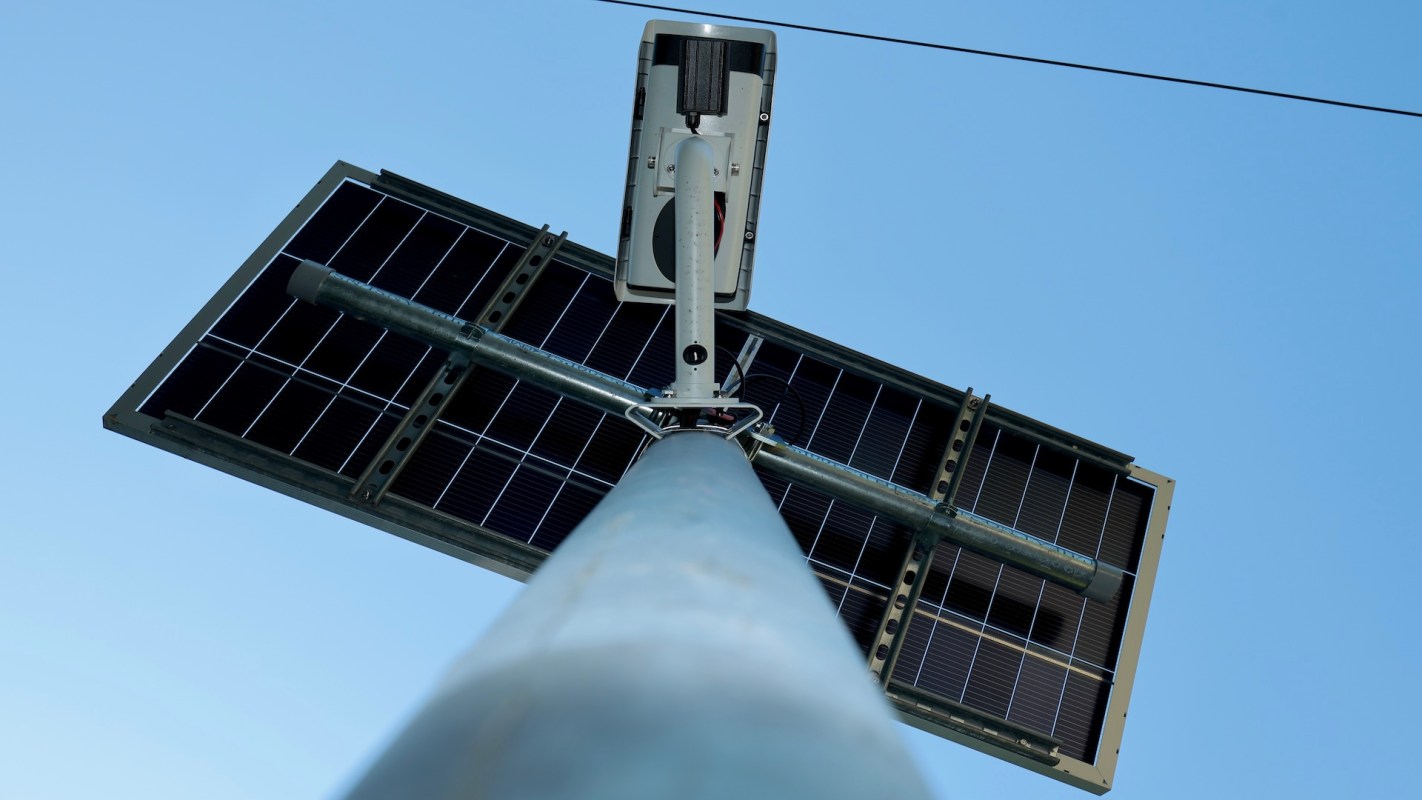
Police in Oviedo, Florida, reportedly went beyond typical surveillance tactics after a series of camera thefts. According to News 6 Orlando, officers set out 3D-printed decoys, monitored them for days, and arrested a man accused of destroying one.
Here's what to know
After multiple actual Flock cameras were stolen along the Lockwood Boulevard corridor between July 23 and Aug. 3 of this year, Oviedo police responded by putting up "clone bait cameras," News 6 Orlando reported. The outlet said an officer made one of the decoys at home on a personal 3D printer and later provided it to the department.
The case against the arrested man, Evan Meyer, stems from an incident that occurred just after midnight in late August. Police said he used garden shears to knock down and destroy one of the fake devices.
According to News 6 Orlando, he was then accused of attempted grand theft, felony criminal mischief tied to alleged damage above $1,000, and offenses involving computer-related equipment.
People are now criticizing how the police handled this situation. The decoy reportedly cost very little to make, but the arrest report said Meyer estimated a genuine camera's replacement price at around $1,000 to $5,000. Police, meanwhile, put the replacement cost for a real unit at about $800 before installation.
More background
The episode surfaced publicly through News 6 Orlando's reporting. Mayor Megan Sladek took to social media to say she "had NO idea" the operation was happening, and she also said a majority of the City Council had already agreed on Aug. 17 to consider ending the city's use of Flock.
TCD Picks » Quince Spotlight
💡These best-sellers from Quince deliver affordable, sustainable luxury for all




Sladek later updated her Facebook post to say that Police Chief Dale Coleman later told her that he had signed off on the plan himself and compared it to other undercover-style operations.
Questions have intensified because the department has shared little about how the plan was assembled. Police initially said no records existed and later argued that they could withhold materials connected to the decoy cameras because of an active criminal case.
Residents who spoke with News 6 Orlando also expressed concern that aggressive surveillance-related sting operations can proceed with so little public visibility.
One resident told the outlet that the cameras in general were "an invasion of privacy."
What's being done?
Sladek has publicly questioned the process and legal reasoning behind the arrest and noted in her post that vandalism is still wrong whether the device was real or fake.
"There are 2 completely separate issues in play here, and they're tangled up in an unfortunate way," Sladek stated.

Get TCD's free newsletters for easy tips, smart advice, and a chance to earn $5,000 toward home upgrades. To see more stories like this one, change your Google preferences here.