


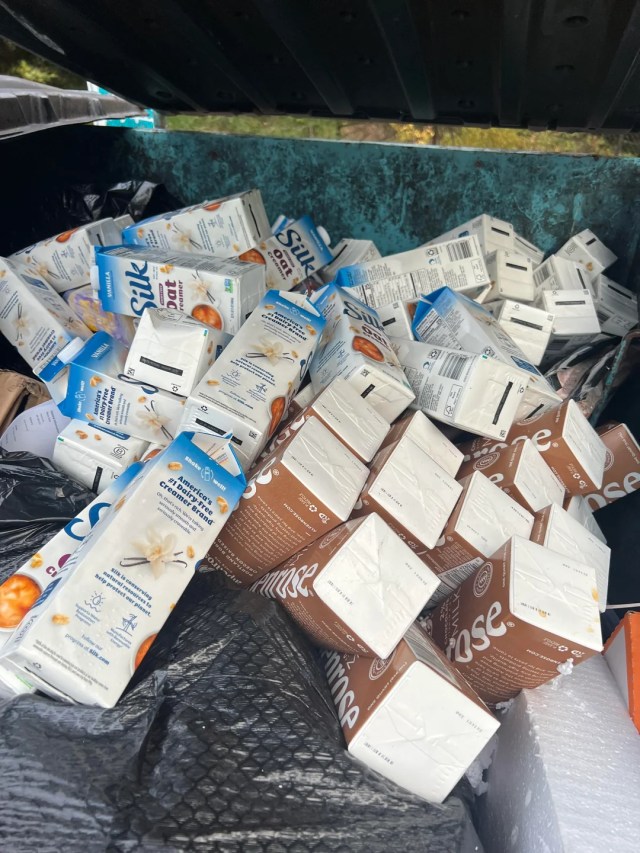
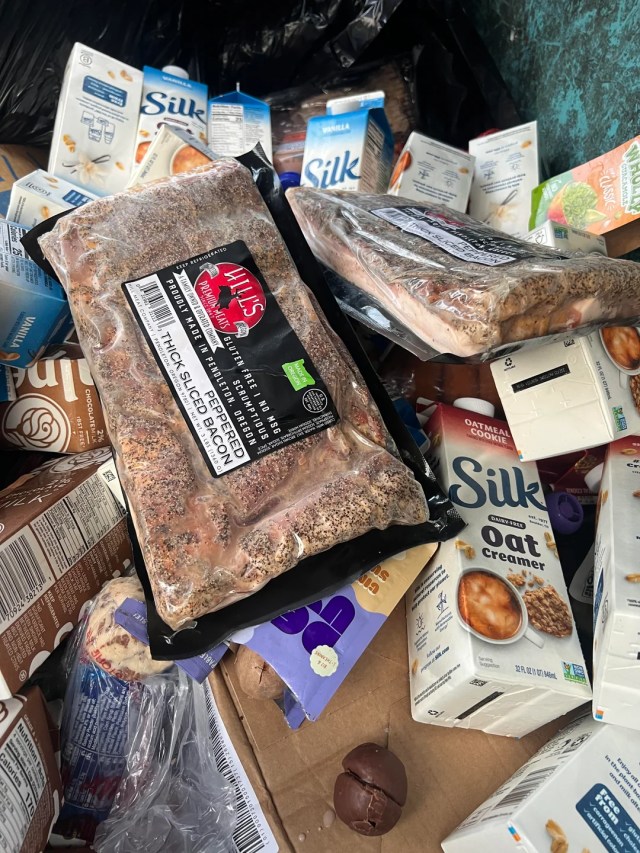
A dumpster diver discovered discarded juice, cheese, and beer while making a haul, prompting backlash against stores and brands that throw out a lot of unopened, unexpired products.
Here's what to know
The discussion started in a Reddit thread on r/DumpsterDiving, where a user documented a big cache of discarded groceries and added, "So many juices! And mother's milk cheese plus beer!"
Its headline leaned on a familiar food waste figure, saying roughly 40% of food gets thrown out.
Among the replies, some people fixated on the price of what had been tossed, writing, "The Swiss cheese is really expensive and I like it a lot," while others saw it as lost sustenance: "Biofuel? Fertilizer? That's a lot of 'calories.'"
More background
When food is grown, processed, refrigerated, transported, and stocked only to be discarded, the money, labor, and resources behind it are wasted as well.
That includes environmental costs. Dairy, juice, and other perishables require water, farmland, packaging, electricity, fuel, and labor before they ever reach store shelves. Throwing them away means those resources were used without delivering the benefit they were supposed to provide.
TCD Picks » Quince Spotlight
💡These best-sellers from Quince deliver affordable, sustainable luxury for all




The issue also lands differently at a time when many households are trying to cut grocery costs. Premium cheese and packaged drinks are among the items many shoppers are budgeting for carefully.
What can be done?
Dumpster diving can come with safety concerns, spoilage risks, trespassing issues, and store policies that make it a poor fit for many people.
For people looking to reduce waste without taking that route, other options can help. That can mean checking markdown shelves, buying discounted "best by" items when appropriate, freezing food before it spoils, and using community fridges or food sharing networks where available.
Stores and distributors can make donation systems easier for workers to use, especially when staffing is tight. More consistent rescue partnerships, clearer procedures, and less emphasis on whether donation work is immediately "profitable" could help keep more edible food in circulation.
Where can I learn more?
These articles cover another household pressure point: the cost of keeping the lights on. Some of the same frustration from the dumpster diving post shows up in stories about homeowners sizing up solar costs, sorting through incentives, and trying to get more from their energy systems.
• At EnergySage, homeowners facing high power bills are comparing solar panel costs before upgrading.
• On Reddit, one homeowner hit with steep utility charges went hunting for solar incentive advice.
• Off-grid homeowners in snowy climates keep showing that solar panels still generate when winter hits.
• One off-grid family said they prioritize battery usage and meal planning to stretch every dollar.
• A contractor warned would-be off-grid homeowners to build a real-world understanding before starting.
When basic necessities get more expensive, waste feels even harder to stomach. That helps explain why a dumpster full of edible food struck such a nerve.

Get TCD's free newsletters for easy tips, smart advice, and a chance to earn $5,000 toward home upgrades. To see more stories like this one, change your Google preferences here.







