


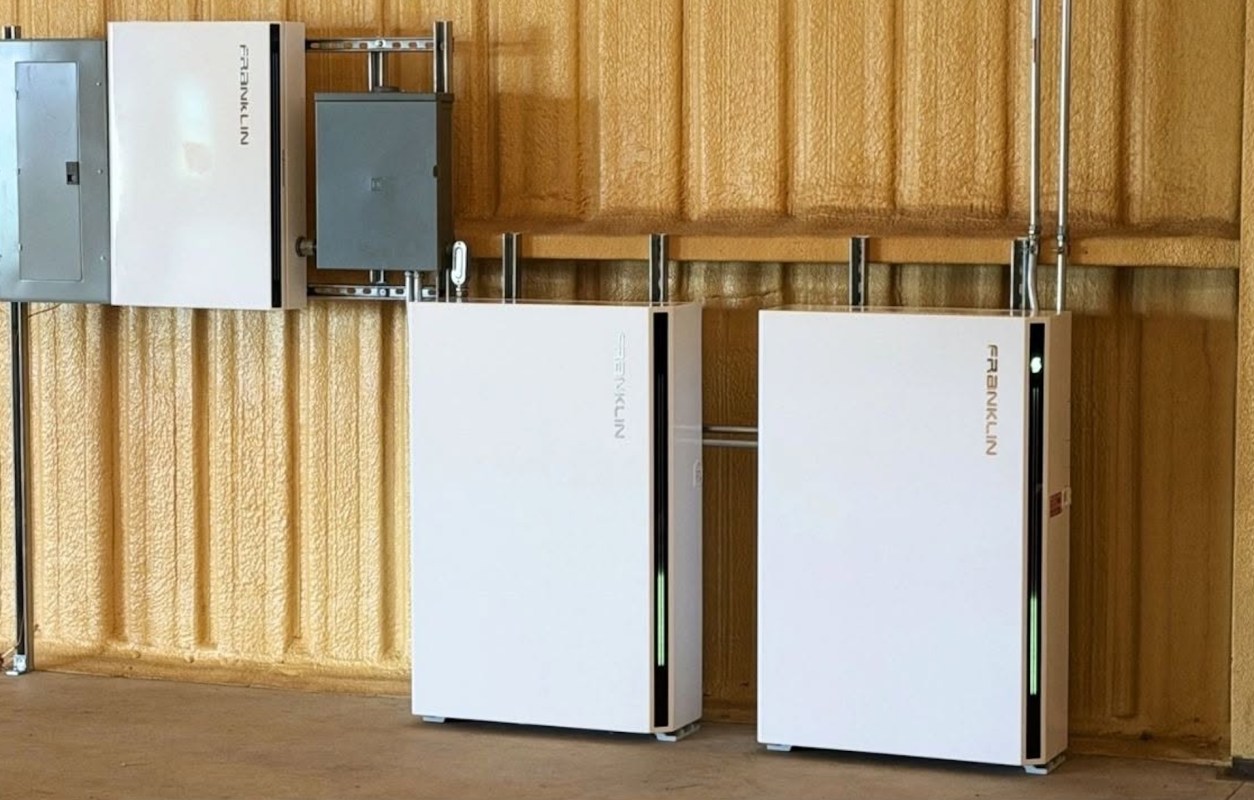
A fan of FranklinWH home-energy products sparked a debate after arguing that all-in-one home batteries may make setup easier today while creating maintenance problems later.
They were not criticizing the company's overall quality; it was about whether the design was "short-sighted."
"Am I missing something?" they asked.
Here's what to know
In a discussion on the r/FranklinWH forum on Reddit, the original poster questioned the tradeoff behind integrated systems from FranklinWH, Tesla, Enphase, and similar brands.
Their main concern was that batteries and inverters do not typically share the same failure timeline, so combining them could leave homeowners replacing a functioning piece of equipment because a different part of the unit failed.
They also argued that bundling storage and inverter hardware limits how precisely a system can be sized. Using the poster's phrase, buyers get stuck with "T-Shirt sizing," because increasing battery capacity can also mean paying for more inverter capacity.
The setup they said they would prefer is a DC-only expansion battery that boosts kilowatt-hours without requiring another full inverter.
Homeowners can explore EnergySage for more information about home battery storage options to find a system that suits their home and needs. Another option is Pila, with the company's portable battery offering hours of energy backup without installing a whole-home system.
Crushed by your bills? See instant solar savings from vetted installers in just a few clicks With energy prices through the roof, there's never been a better time to go solar — and EasyHome can help you find the best prices from the best installers in your area. EasyHome takes the guesswork and headaches out of energy upgrades by showing you estimated savings from a network of vetted local partners. To get started, just enter your ZIP and share a few details about your home — seeing your estimate is really that easy. |

More background
As concerns about outages and soaring utility rates grow, more households are viewing battery storage as a long-term energy investment.
For their own situation, the original poster said one FranklinWH aPower 2 would offer enough output for whole-home coverage. But they said they would rather have 30 to 40 kilowatt-hours of garage storage without having to buy extra inverter hardware they do not need.
They also said proprietary systems can become a problem if parts stop matching across generations or if a company's product lineup evolves.
Still, several commenters pushed back on that criticism.
One installer wrote, "Franklin is easily one of the best battery solutions currently. I'm very happy selling and installing their systems."
Another commenter defended the architecture by noting, "We're talking about batteries that are warrantied out to 15 years / 4000 cycles. That's pretty great."
Closed systems can be smooth and simple to install, but modular ones may give homeowners more room to repair or upgrade over time.
What can be done?
For homeowners, the key move is to ask detailed questions before signing a contract. Battery storage is one of the best tools available for keeping essential appliances running during outages, reducing dependence on the grid, and making better use of rooftop solar.
Shoppers can ask installers whether a system allows battery-only expansion, how replacement parts are handled after the warranty period, and whether future models will remain compatible with existing equipment.
It can also help to compare closed and open architectures side by side. Some buyers may value streamlined support and installer networks, while others may prefer the flexibility to swap components later if battery chemistry, pricing, or household needs change.
As battery adoption grows, consumer feedback like this could shape future designs. Even commenters who praised FranklinWH's products acknowledged that modularity, long-term serviceability, and ecosystem lock-in are worth weighing carefully.
"What I'm saying is that a separate inverter from battery is a better architecture for overall system lifecycle, and would in turn, enable more flexibility is system design," the original poster said.
At the same time, others still saw the value in integrated systems: "The packaged AC-coupled batteries with built-in inverters are an elegant, modular solution, just not the modularity you're seeking."
Where can I learn more?
Questions about battery design usually come down to chemistry, durability, and cost, since those factors affect how a system can be expanded and how easy it is to maintain over time.
These articles cover research that is shaping stationary energy storage as homeowners weigh integrated systems against more modular setups.
• In Canada, researchers have said flow battery systems could better support long-duration home storage.
• At Argonne National Laboratory, engineers reported an across-the-board improvement that could ease replacement concerns over time.
• Scientists pursuing low-cost battery design have said zinc-ion systems may broaden storage options.
None of this resolves the FranklinWH debate on its own, but it does underscore how fast storage technology is moving. For homeowners weighing closed versus modular systems, that makes repairability and future upgrade options even more important.

Get TCD's free newsletters for easy tips, smart advice, and a chance to earn $5,000 toward home upgrades. To see more stories like this one, change your Google preferences here.






