


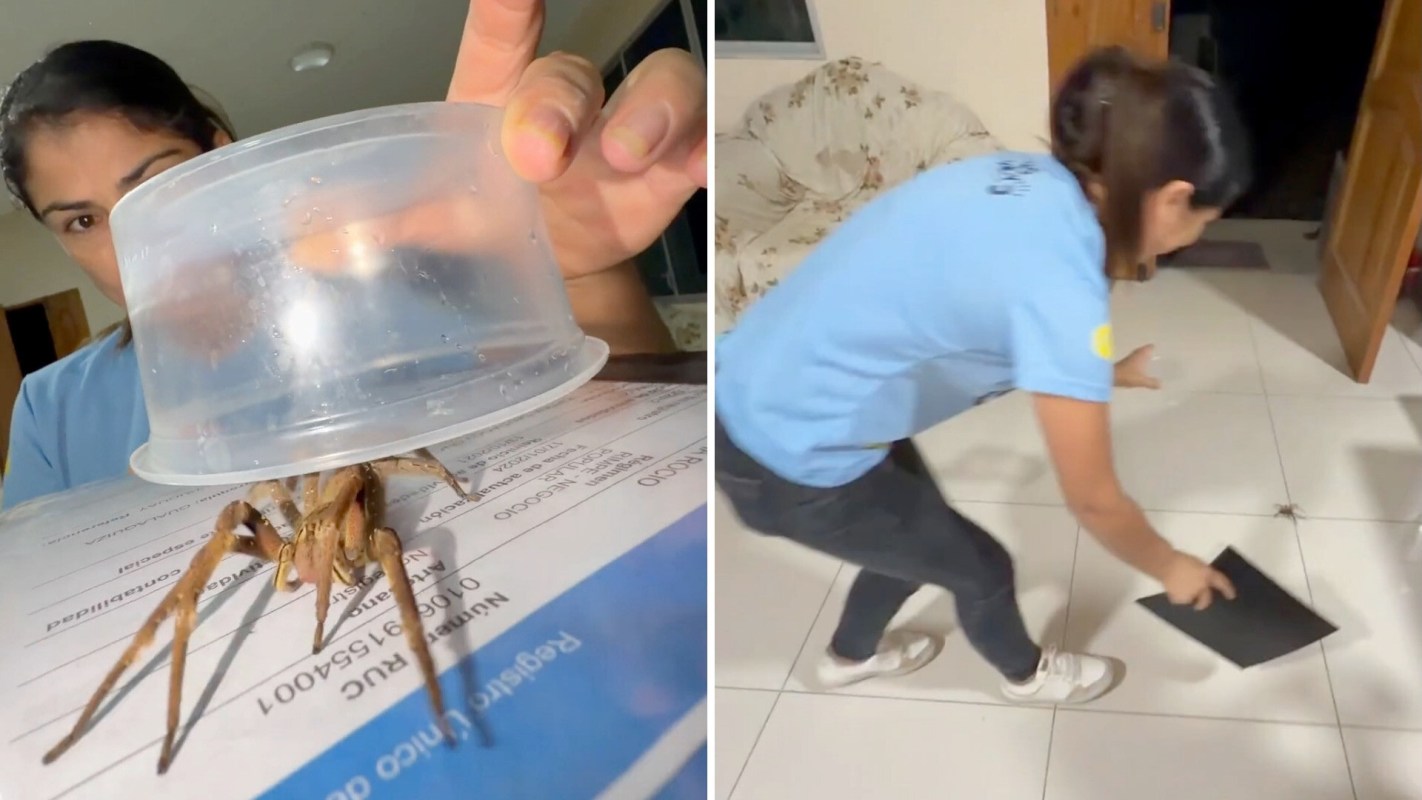
A viral wildlife video drew scrutiny after users on Reddit's r/spiders claimed two creators – with more than 4 million followers — appeared to handle a spider they believed to be a Brazilian wandering spider as though it were a harmless tarantula.
The backlash was not just about species identification. It also focused on how quickly online attention can turn a risky encounter with a wild animal into entertainment.
Here's what to know
On Reddit, the original poster detailed the situation and the TikTok creators' actions.
(Click here if the embedded video does not appear.)
"They mistook a highly venomous Brazilian wandering spider (Phoneutria sp.) for a harmless tarantula and then proceeded to act carelessly for the camera," the post began.
"They had good intentions and did an amazing job by releasing it unharmed. Lifting the cover and putting their hands right next to it were not the best ideas though!" they added in an edit.
TCD Picks » Quince Spotlight
💡These best-sellers from Quince deliver affordable, sustainable luxury for all




Some commenters suggested the issue may have been related to terminology or partial familiarity rather than a complete misidentification.
"Pretty common to call any big spider a tarantula in some spanish-speaking communities," a user asserted.
"They do know what this is. Although they have [their] terms mixed up, in the end they say they're gonna leave it specifically in a banana tree because that's where it'd be," another wrote.
A massive audience may see close contact with a potentially dangerous animal and come away thinking it is safe, normal, or even admirable.
More background
Even when a wild animal does not attack, close handling can be harmful on both sides.
Distressing a spider, cornering it, or repeatedly moving it for the camera can increase the likelihood of defensive behavior and put the animal at risk of injury.
Viral animal content often rewards creators for getting physically close to creatures, while human-wildlife conflict tends to arise when people and animals share more space through farming, development, or habitat disruption.
As BBC Future reported, these clashes are often driven as much by human activity as by animal behavior.
Mislabeling a species or downplaying the danger can encourage copycat behavior, especially when a video makes a tense situation look controlled. One commenter summed up that pressure bluntly.
"No matter how venomous it is, some people will still do it for the camera," they lamented.
Fear and fascination can blur together online — a wild spider becomes a spectacle, and an important safety lesson can get lost in the performance.
What can be done?
The safest move is simple: Do not handle wildlife you cannot confidently identify.
If a spider or other animal is in your home, yard, or workplace, keeping your distance and contacting a local expert trained in humane removal is usually the best option.
Filming from farther away, avoiding direct handling, and clearly stating when an animal may be dangerous can help protect both viewers and wildlife.
Calling every large spider a tarantula may seem harmless, but loose labels can create confusion in situations where species differences matter.
Clear identification can reduce panic, prevent unnecessary harm to animals, and discourage reckless interactions.
Where can I learn more?
The stories below range from invasive spiders showing up near homes to tourists pushing risky encounters too far.
• Across the U.S., the Joro spider is spreading across neighborhoods, complicating how people judge unfamiliar arachnids.
• In Georgia, spiders are purposefully building webs in loud, crowded places near people.
• At a nature site, tourists cornered a wild animal and ruined their visit within minutes.
• In Everglades National Park, tourists had a terrifying encounter with a deadly alligator near shore.

Get TCD's free newsletters for easy tips, smart advice, and a chance to earn $5,000 toward home upgrades. To see more stories like this one, change your Google preferences here.






