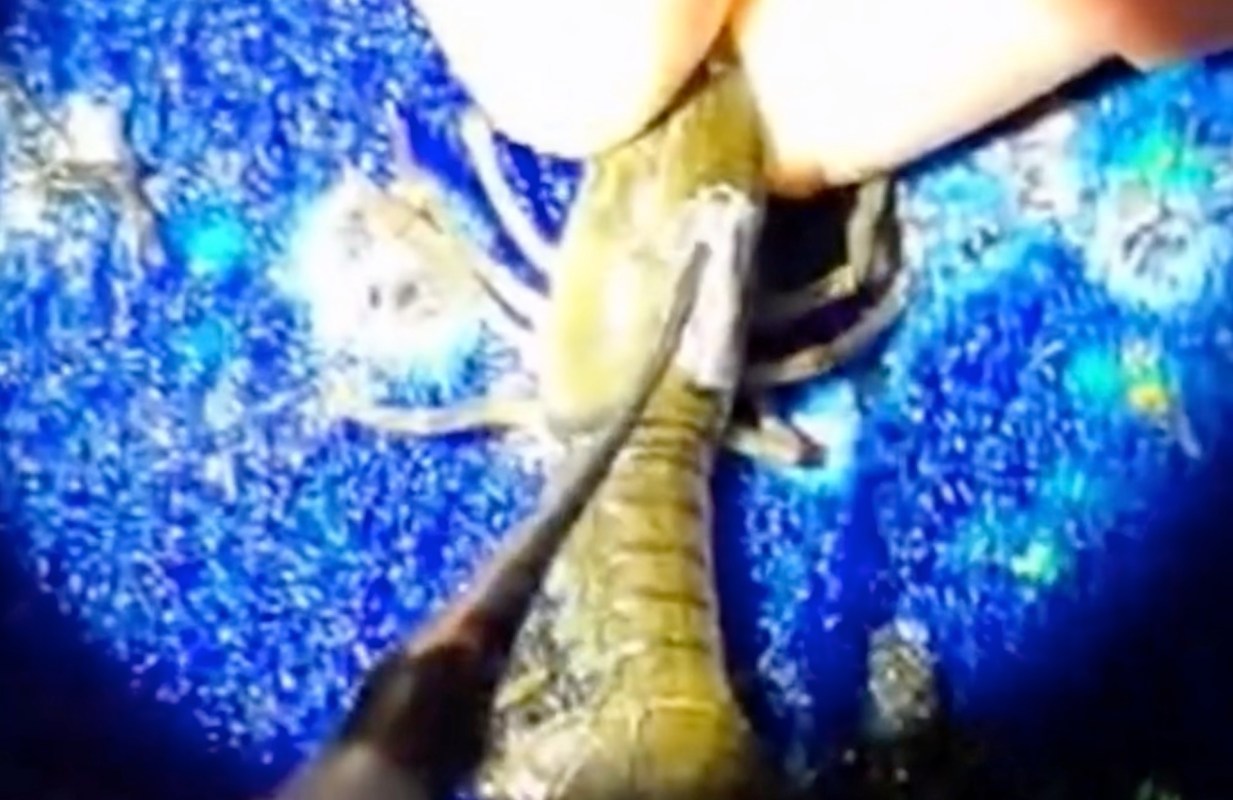
A wildlife experiment is putting miniature "backpacks" on juvenile crayfish.
At White Sulphur Springs National Fish Hatchery, biologists are using the tiny markers to learn how the young animals move and whether they survive.
Here's what to know
Footage shared on Instagram by the U.S. Fish and Wildlife Service showed a biologist at the hatchery gluing a small tag onto the back of a juvenile crayfish.
"Since these crayfish are too young for PIT tags, biologists are trialing a small backpack that gives each crayfish a unique ID and can track their movement and survival," the agency wrote.
For conservation teams, the problem is simple: when an animal is too small to carry a standard tracking device, its earliest and often most vulnerable life stage becomes much harder to study.
By giving each crayfish its own identifier, the backpack enables researchers to tell individuals apart while checking where they go and how many make it. That kind of data can help wildlife agencies decide how to raise, release, and protect freshwater species.
TCD Picks » Quince Spotlight
💡These best-sellers from Quince deliver affordable, sustainable luxury for all




The social post framed the project with a wink: "Picking out new backpacks for school? Us too."
But better tracking can lead to better management decisions, especially when biologists are trying to understand whether young animals are adapting well after release or moving into suitable habitat.
More background
Freshwater species are often harder to monitor than larger land animals.
One major challenge with crayfish is that juveniles still need to molt, or shed their exoskeleton, as they grow. Any tag that interferes with that process would be of little use for long-term monitoring.
The U.S. Fish and Wildlife Service indicated that the tags have stayed attached while still allowing the animals to molt as usual.
Crayfish are part of stream ecosystems that support fish, other wildlife, and overall waterway health.
When agencies can better understand how young aquatic animals survive and disperse, restoration efforts, waterway health, and conservation planning can be better informed.
The project relies on adapting a tool to fit a much smaller animal.
What's being done?
Biologists are testing the backpack system to see whether it can work as a practical conservation tool.
The main benchmarks appear to be survival rate, tag retention, and the crayfish's ability to molt as usual.
A tag is only useful if it does not disrupt the animal's life. If the method continues to work, it could give hatchery teams and field researchers a new way to monitor young crayfish before they are large enough for more conventional tracking methods.
Agencies often have to refine tools in small steps, especially when working with species that are delicate or difficult to study. A successful tagging method could eventually help guide release strategies, habitat planning, and follow-up monitoring.
"So far, the results are getting straight A's in survival rate, tag retention, and ability to molt as usual," the agency reported.
Where can I learn more?
These articles cover habitat restoration, species management, and community-led recovery efforts in waterways like the ones biologists are studying here.
• In California, crews are restoring salmon and steelhead habitat to help struggling fish populations recover.
• Along the Platte River in Missouri, partners are turning an environmental challenge into market value.
• In Brazil's Amazon, communities are bringing back giant arapaima through local conservation and management.
Alongside the hatchery experiment, they highlight how hands-on interventions can improve survival for aquatic species.

Get TCD's free newsletters for easy tips, smart advice, and a chance to earn $5,000 toward home upgrades. To see more stories like this one, change your Google preferences here.