


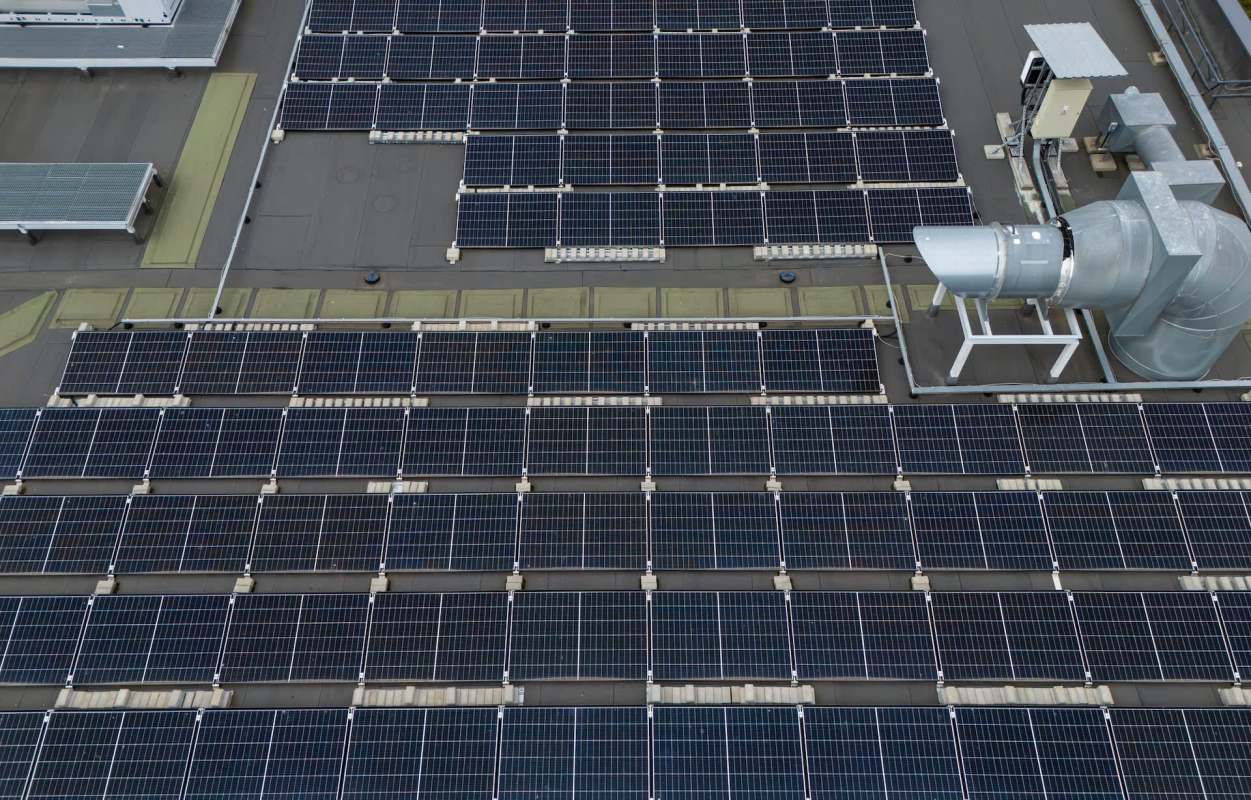
An enormous clean energy resource may be sitting unused above North Carolina's classrooms. WRAL reported that a new analysis found public school rooftops across the state could produce enough electricity each year to equal the power use of nearly 150,000 homes.
Here's what to know
The report by Environment North Carolina and Frontier Group said about 2,400 public schools appear to have at least some roof area suitable for panels, which is roughly 90% of the schools included in the analysis.
At full buildout, those rooftops could account for about 1.2% of North Carolina's yearly electricity use. In raw terms, the report estimated more than 900 megawatts of solar capacity and around 1.6 terawatt-hours of generation in the first year.
Wake County ranked first statewide, while Mecklenburg followed at about 71 megawatts and Guilford at about 41 megawatts.
WRAL noted the Triangle numbers were smaller, with Durham County schools estimated at about 24 megawatts and Johnston County schools at about 21.
Researchers produced those estimates by combining federal school building data with satellite imagery and solar modeling tools. They also screened for issues such as rooftop obstructions, steep slopes, and roof condition.
TCD Picks » Quince Spotlight
💡These best-sellers from Quince deliver affordable, sustainable luxury for all




Still, the report said the results should be treated as a screening-level estimate, not a sign that every roof is ready to host solar right away. Before any project moves ahead, WRAL said individual schools would still need more detailed technical and financial review.
More background
School buildings can be a natural fit for solar power. They often have large roof surfaces, and much of their electricity demand happens during the day, when panels produce the most energy.
The savings picture is not always straightforward, though. WRAL reported that schools and other large buildings can face demand charges tied partly to peak electricity use, so financial benefit depends in part on whether solar output lines up with those high-use periods since some utilities handle that more favorably than others.
Most but not all North Carolina utilities offer net metering, which allows customers to get equal credit for solar power generated when it goes beyond use and then draw from that overage later. For a school, a lot of power would be generated in the afternoon and weekend hours when students are not in class, so it would be important to make sure the utility company would fully credit the account for that extra production. And the state's largest utility, Duke, is reportedly transitioning from 1:1 net metering to a less favorable system of crediting for "avoided costs" for 2027 for projects that do not get locked in before Dec. 31, according to NC Solar Now.
Another challenge is the size of the upfront investment. Some campuses would need roof repairs, electrical work, or other building upgrades before solar panels could be added.
The report also highlighted a policy barrier. The authors noted North Carolina does not permit third-party solar power purchase agreements, a financing approach commonly used in other states to reduce large upfront costs.
Generating electricity on existing roofs could help districts lower energy bills without taking up additional land, potentially freeing up more room in school budgets. The report said a full statewide buildout was estimated to avoid roughly 1.3 million tons of carbon dioxide each year, while also reducing nitrogen oxides and fine-particle pollution that can damage human health.
What's being done?
The amount of solar already installed at North Carolina schools is far smaller than the statewide potential outlined in the report. Citing national data, the report said 105 public and private schools in the state had solar by August 2024.
Some programs are also trying to make school solar useful both as infrastructure and as a teaching tool. The author identified NC GreenPower's Solar+ Schools as a program that has supported solar arrays, weather stations, renewable energy curriculum, and equipment that tracks energy use.
The organizations behind the report said several changes could help expand school solar.
The recommendations include a solar schools grant program, legalized third-party power purchase agreements, and a review of rate structures and interconnection rules that shape project costs.
Where can I learn more?
The stories below look at how solar is already cutting costs for schools, expanding community benefits, and highlighting financing approaches that could matter if the state wants to tap more of its rooftop capacity.
• Across the country, students and communities will benefit as schools add more solar power.
• Some campuses are already making serious money when solar cuts operating and energy costs.
• In Harlem, New Energy Equity helped the district launch a solar project.
• In California, officials turned rooftop solar into relief as power bills squeezed residents.
• Community programs can also save money through shared arrays beyond individual school rooftops.

Get TCD's free newsletters for easy tips, smart advice, and a chance to earn $5,000 toward home upgrades. To see more stories like this one, change your Google preferences here.






