



A Texas homeowner's question about a $230 monthly electric bill turned into a reality check on how uneven power costs can be across the country.
Here's what to know
On Reddit, the homeowner asked whether paying $230 for roughly 1,600 kilowatt-hours was too much for a two-person, two-bed/two-bath home. "Seems like a crazy high kWh usage for 2 people in a 2bed 2bath," they wrote. "I usually have my AC at 72°F but moved it up to 74 after seeing this."
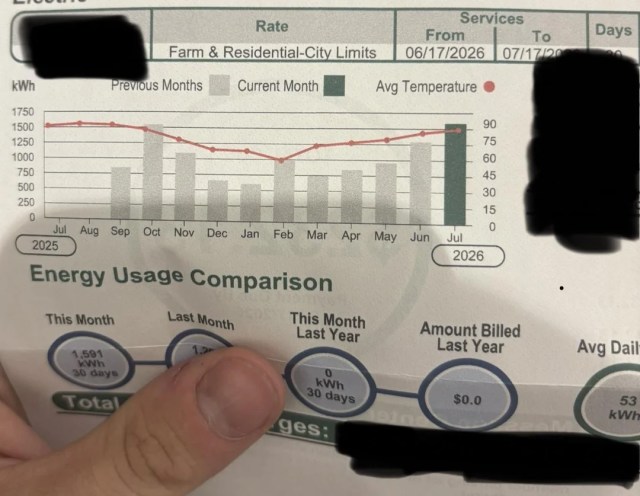
Replies shifted away from that single household and toward comparisons of electricity costs in different regions.
Some readers said the usage pattern sounded like a cooling issue more than anything else. One person replied, "Yea that energy usage is probably just constant ac."
Commenters from outside Texas also said the total itself did not strike them as especially severe. A commenter from the Northeast wrote, "Correct, in the Northeast and I would kill to have this bill."
Examples from other states reinforced that geography can matter as much as usage. A commenter in California wrote, "I paid $330 last month for 886 kWh," while an Ohio resident said, "My bill last month was $175" for a 2,000-square-foot home. One Massachusetts commenter said, "We pay $0.32/kwh.
TCD Picks » Quince Spotlight
💡These best-sellers from Quince deliver affordable, sustainable luxury for all




More background
Summer cooling remains a major driver of electricity demand, especially in hotter climates where AC systems can run for long stretches. That helps explain why even a small thermostat change — such as moving from 72 to 74 degrees — can feel meaningful once the monthly bill shows up.
The responses showed that many households are not just asking whether their usage is typical, but whether electricity prices in their area still feel affordable.
What can be done?
One takeaway is that usage and rate are not the same thing. A household can burn through a lot of power and still land at a middling total if electricity is cheap locally, while a more efficient home can end up with a painful bill where per-kilowatt-hour prices are high.
Cooling habits were another focus. The OP had already raised the thermostat, and commenters mentioned other ways they manage costs, including adjusting settings throughout the day and limiting indoor heat buildup.
The condition of the home itself also came up. One commenter described covering windows with "double layers of plastic" to ease the burden on several window units.
For households able to make larger changes, one commenter offered the sharpest contrast: "I have solar and my bills show zero usage every month."
Where can I learn more?
The Texas bill struck a nerve because it touched on more than one family's AC habits. It also raised questions about utility fees, grid investments, and home-energy upgrades that can push a monthly total up or down.
• In El Paso, a new rooftop solar fee pushed a homeowner's bill from $30 to $117.
• In Fort Worth, a solar installation payoff left one dad staring at a -$7,000 bill.
• As outages worsen, Generac says home batteries with solar can soften rising power costs.
A monthly total on its own only explains so much. The rate structure, local policy choices, and larger energy investments can shape a bill almost as much as household usage does.

Get TCD's free newsletters for easy tips, smart advice, and a chance to earn $5,000 toward home upgrades. To see more stories like this one, change your Google preferences here.






