


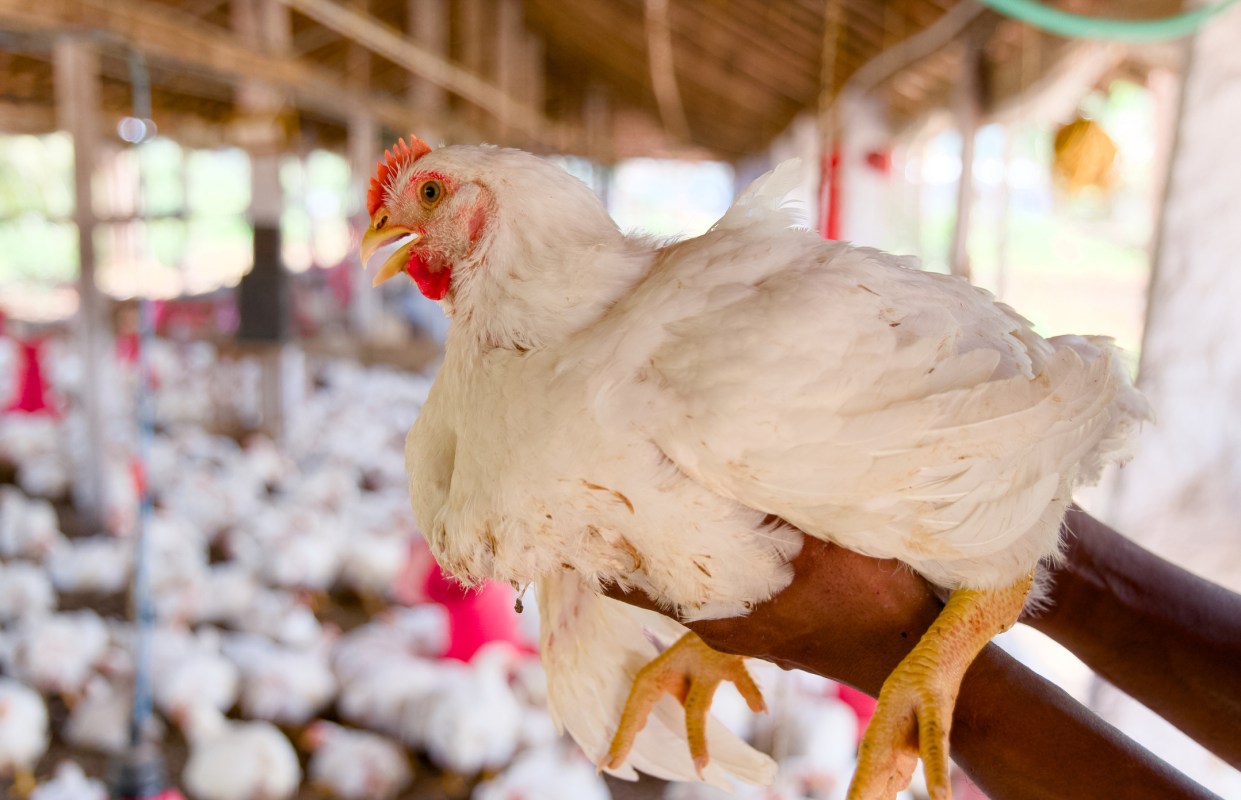
America's supermarket chicken has been remade over the past several decades into something far removed from the bird many families bought in earlier generations.
Research shows today's broilers reached more than four times the weight of a 1957 chicken by the same age, and scientists said hormones were not what caused the jump.
Here's what to know
No other meat is eaten more in the United States. ZME Science reported that chicken makes up over 40% of all meat consumed, and per-person consumption hit 104.5 pounds in 2025. Supplying that level of demand drove breeding practices that changed the birds themselves.
To show how much the animal has changed, a University of Alberta study raised a broiler line preserved from 1957 alongside a commercial broiler from 2005 under identical feeding conditions. At 56 days, the older birds averaged 905 grams (2.0 pounds), compared with 4,202 grams (9.3 pounds) for the modern line.
Scientists attributed most of that increase to selective breeding rather than steroid injections or growth hormones.
"Although the chicken was domesticated during Neolithic times, the development of genetic programs designed for broiler performance was a 20th-century event," Paul B. Siegel, a Virginia Tech professor who has studied broiler genetics for decades, said, per ZME Science.
TCD Picks » Quince Spotlight
💡These best-sellers from Quince deliver affordable, sustainable luxury for all




More background
Industry decisions produced the modern broiler. Beginning in the late 1940s, the Chicken of Tomorrow breeding contest pushed farmers and companies toward birds that matured faster, carried more breast meat, and could be produced more cheaply at industrial scale.
The difference is visible not just in weight. According to the National Chicken Council, time to market dropped from 70 days to 47, and some broilers now reach slaughter age in 35 days.
Since hormones are banned in U.S. chicken production, the birds' larger size is generally linked to genetics, feed, and tightly managed growing conditions.
That includes widespread antibiotic use, which experts view as a health concern because it can drive antibiotic resistance.
The trend toward heavier broilers has also been associated with animal welfare problems such as leg weakness, heart disease, and respiratory trouble.
What can be done?
Some changes are underway in the industry. "The primary breeders are selecting much less intensively for larger size and are more focused on efficiency, livability, and reproductive traits," University of Alberta researcher Martin Zuidhof said, per ZME Science.
"No hormones" labels may be comforting, but hormones are prohibited in U.S. poultry production.
As long as consumers keep rewarding bigger birds, faster growth, and low prices, producers will keep optimizing for those traits.
"There is a lot of misinformation about this topic," Zuidhof said. "We did the study to provide scientific data on the reasons for higher growth rates in modern chickens. It is NOT due to steroid hormones (feeding or injection) but rather because of effective programs that selected chickens with higher growth rates, yield, and efficiency."
Where can I learn more?
The push to raise chickens faster and more cheaply doesn't stop at breeding. It also affects what birds are fed, how meat production shapes the climate, and which chemical risks end up in the food system.
• Poultry producers are testing grape pomace feed additives to improve flock health and reduce waste.
• Across food systems, livestock's climate impact remains widely underestimated despite meat's enormous footprint.
• Food companies still rely on chemicals in packaging that regulators have barely assessed.
The modern broiler is just one product of a much bigger system. Looking at feed, packaging, and climate costs also helps explain the economics behind cheap chicken.

Get TCD's free newsletters for easy tips, smart advice, and a chance to earn $5,000 toward home upgrades. To see more stories like this one, change your Google preferences here.






