


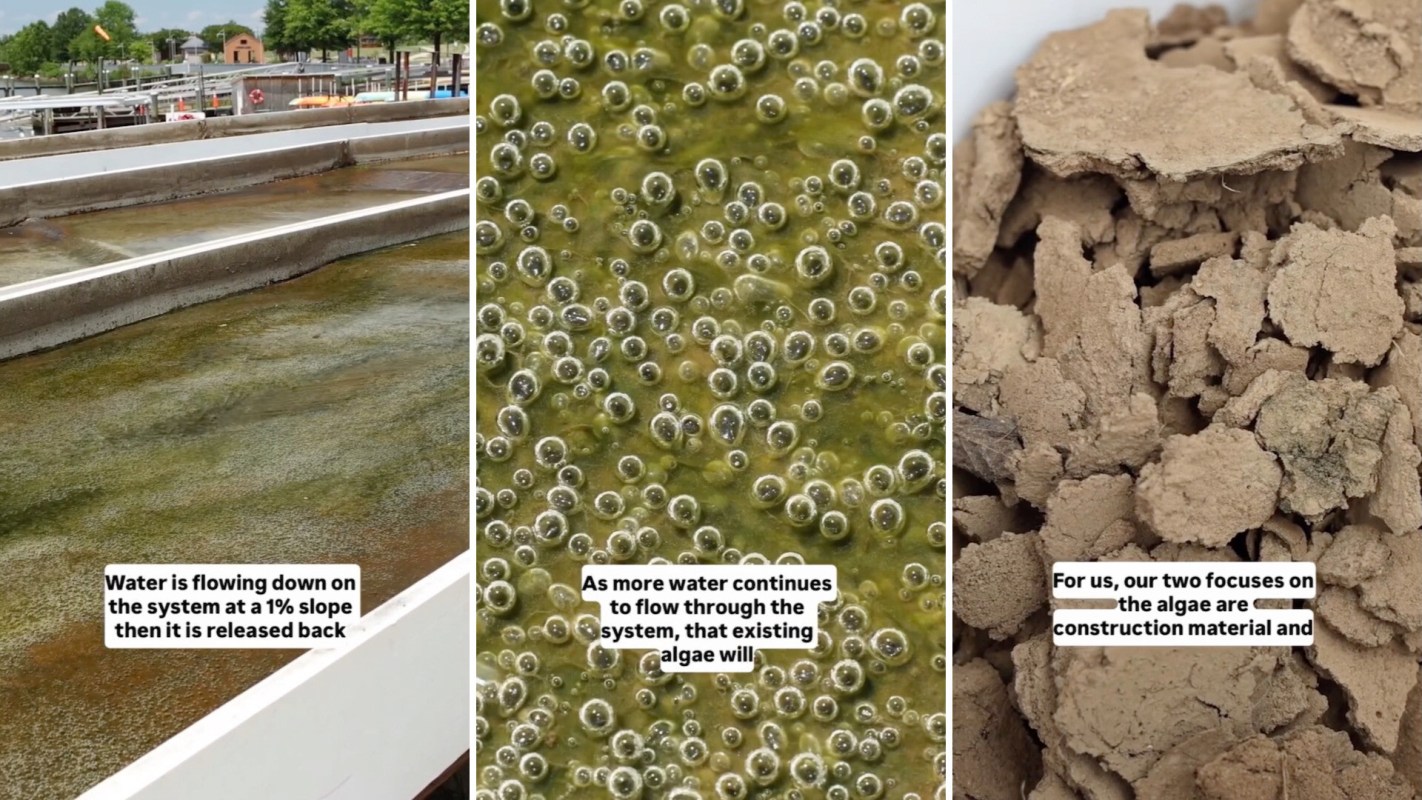
A new device on the Anacostia River is turning one of the region's recurring water problems into part of the solution.
The technology, which is installed at Bladensburg Waterfront Park in Maryland, is designed to use algae to clean pollution rather than letting it rob the water of oxygen.
Here's what to know
The Chesapeake Bay Program (@chesbayprogram) highlighted Green Mechanics' Algal Turf Scrubber in an Instagram post, describing how the same rapidly growing algae associated with poor water conditions can be used to remove pollution from the river.
"Although algae is naturally occurring, an overabundance can lead to harmful algae blooms that suck oxygen out of the water, causing suffocating 'dead zones,'" the Chesapeake Bay Program wrote.
That oxygen loss can be devastating for fish and other aquatic life. It can also affect people who depend on clean rivers for recreation and tourism.
More background
Harmful algal blooms are often fueled by excess nutrients in the water, including runoff tied to fertilizers, wastewater, and other sources. Dead zones may develop when blooms become oversize, which depletes oxygen in the water, leaving marine life struggling to survive.
TCD Picks » Quince Spotlight
💡These best-sellers from Quince deliver affordable, sustainable luxury for all




Dirty waterways can limit fishing, paddling, and other outdoor activities while putting pressure on communities to restore local ecosystems and maintain water quality.
The scrubber system encourages algae growth in a controlled setting so nutrients, chemicals, and sediment can be captured. The algae releases "considerable amounts of dissolved oxygen as it grows," cleaning the water.
Cleaner rivers can support wildlife, improve local parks, and reduce costs associated with polluted water and restoration efforts.
What's being done?
The tool offers the region a visible example of ecological engineering, turning algae into part of the cleanup process. Such devices can complement other efforts to reduce runoff, restore wetlands, and improve wastewater systems.
Over time, better water quality can also help communities avoid some of the economic strain linked to pollution, habitat loss, and remediation work.
Where can I learn more?
The Anacostia scrubber is part of a broader push to keep water pollution from turning into bigger ecological problems. Elsewhere, public agencies, nonprofits, and startups are testing focused solutions to tackle algae, catch trash, and cut the contaminants moving through rivers and into larger waterways.
• In Florida, officials are directing millions to fight algae that threatens public health.
• Scientists have made a significant stride toward cleaner power by harnessing algae's chemistry.
• In Thailand, The Ocean Cleanup launched an interceptor in a heavily polluted river.
• Volunteers are using an innovative river barrier to keep trash from drifting downstream.
• A startup has built a home microfiber filter to curb plastic pollution.
These stories point to the same basic idea: Catch pollution earlier, before it spreads through a watershed. That's part of why the pilot on the Anacostia could matter far beyond one Maryland park.

Get TCD's free newsletters for easy tips, smart advice, and a chance to earn $5,000 toward home upgrades. To see more stories like this one, change your Google preferences here.






