


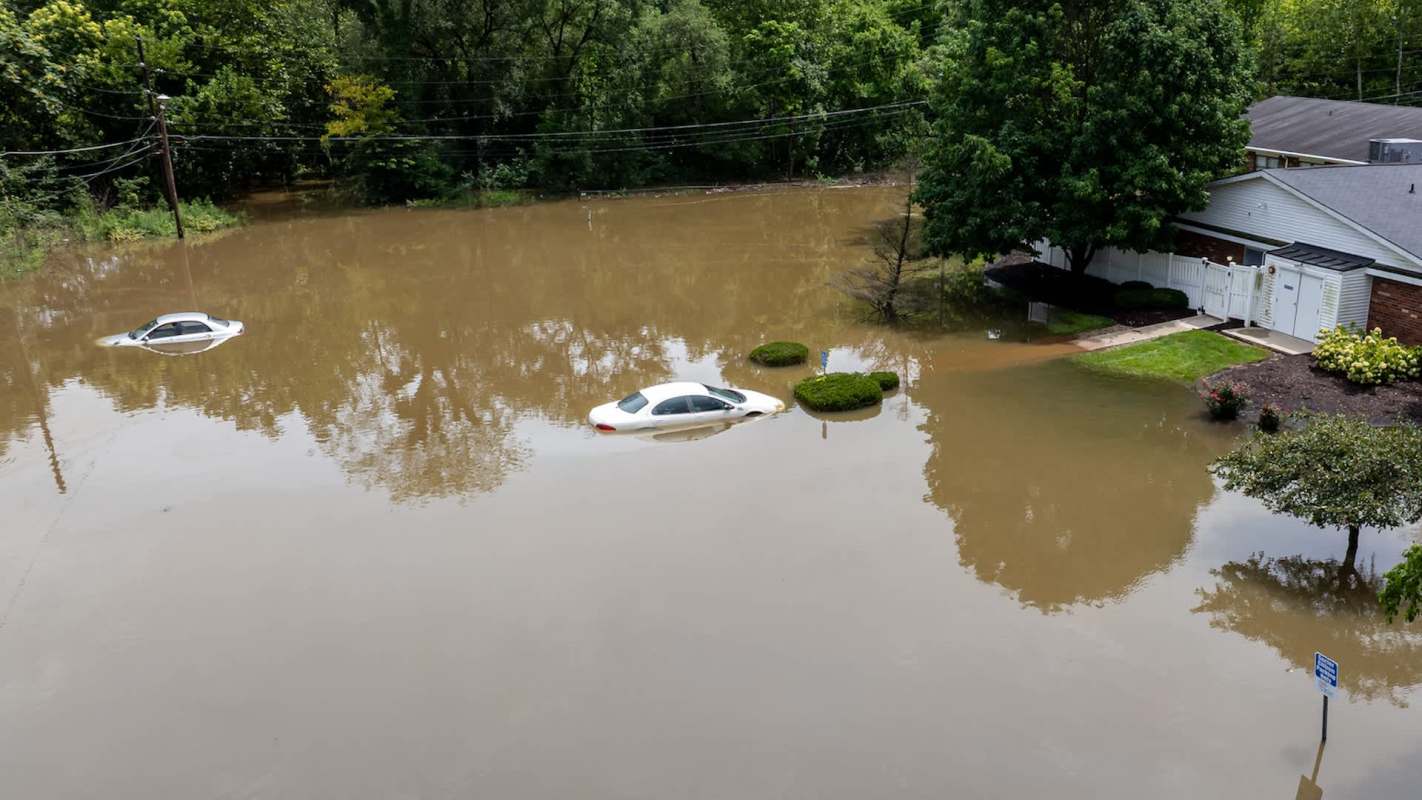
Across Indiana, communities are still living with the aftermath of record August flooding that killed seven people, destroyed homes, and damaged infrastructure. Some survivors said the crisis has been made worse by a government response they view as slow and limited.
Here's what to know
One of the places hit hardest was Cambridge City, a southeastern Indiana town of roughly 1,700. About 10 inches of rain fell there Aug. 12, and flooding from Creitz Creek damaged roughly a third of local homes, with around 175 sustaining significant damage.
According to The Guardian, the flooding was part of a wider disaster across central and eastern Indiana that displaced more than 1,000 people and damaged major infrastructure, including part of Interstate 70 near Cambridge City. In Gary, many residents went without power for over two weeks after an Aug. 11 derecho.
Indiana received a limited FEMA disaster package of $5 million for more than 50 counties after President Donald Trump approved aid. Separately, Indiana Gov. Mike Braun filed a disaster declaration request Aug. 21 that could bring more federal support for flood victims, though no response has been received.
"Climate change played a role in the intensity of the event since the warmer atmosphere would have allowed for more vapor to ultimately condense and fall as rain," Beth Hall, director of the Indiana state climate office, said, per The Guardian.
More background
From 2010 to 2024, Indiana reduced funding for its environmental agencies by 19%, even as neighboring Ohio and Michigan increased theirs. The state Senate's environmental affairs committee also twice declined to take up legislation to create a climate solutions task force, and Indiana remains one of 18 states without a climate action plan.
TCD Picks » Quince Spotlight
💡These best-sellers from Quince deliver affordable, sustainable luxury for all




Beyond the immediate danger, heavy rainfall and flooding bring a cascade of problems, including injury, mold exposure, contaminated water, power outages, and prolonged displacement. They can also destroy homes, wipe out cars and appliances, interrupt work, and put small businesses under pressure.
In places where the median household income is far below the national average, such as Cambridge City, the financial toll can be especially harsh if residents go without flood insurance because premiums and deductibles cost too much. Nearly all the flooded properties in town are in a high-risk FEMA flood zone.
The damage is also weighing on local shops.
"I think people think that everything's closed," Tami Hall, who runs Vinton House Antiques, said.
What's being done?
Some of the shortfall in aid is being addressed locally. In Cambridge City, volunteers have been running a food truck that gives dozens of people hot dogs, chips, and drinks each day, and some small businesses can apply for county grants of up to $5,000.
Indiana raised its disaster relief fund from $2 million to $5 million. Still, state leaders estimate the storms and floods caused roughly $5 billion in damage, a huge gap between losses and available assistance.
For many survivors, what comes next is still unclear. "I have a gentleman, he's 69 years old, he lost his mobile home, his four cars, everything. He's living with me right now. We're past a week of this, and we still don't know anything," Tom Saunders, a town board member in nearby Lewisville, told The Guardian.
Where can I learn more?
What happened in Indiana is part of a wider pattern: Disasters are getting more dangerous, more expensive, and tougher to recover from. Deadly flooding is also happening abroad, and the damage lasts long after the storm. Additionally, insurance and climate pressures are leaving many communities exposed.
• In India and Pakistan, more than 150 people died as floods stranded hundreds in a day.
• After Hurricane Helene, scientists said climate justice concerns were missing from coverage.
• Across storm-hit communities, recovery workers faced deadly heat after floodwaters and winds receded.
• Across the U.S., homeowners said insurance struggles after disasters deepened losses and delayed rebuilding.
• Federal scientists warned that the worst threats are hitting certain communities soonest.
Flood recovery involves more than clearing out water. It also hinges on public attention, worker safety, insurance access, and long-term climate planning.

Get TCD's free newsletters for easy tips, smart advice, and a chance to earn $5,000 toward home upgrades. To see more stories like this one, change your Google preferences here.






