


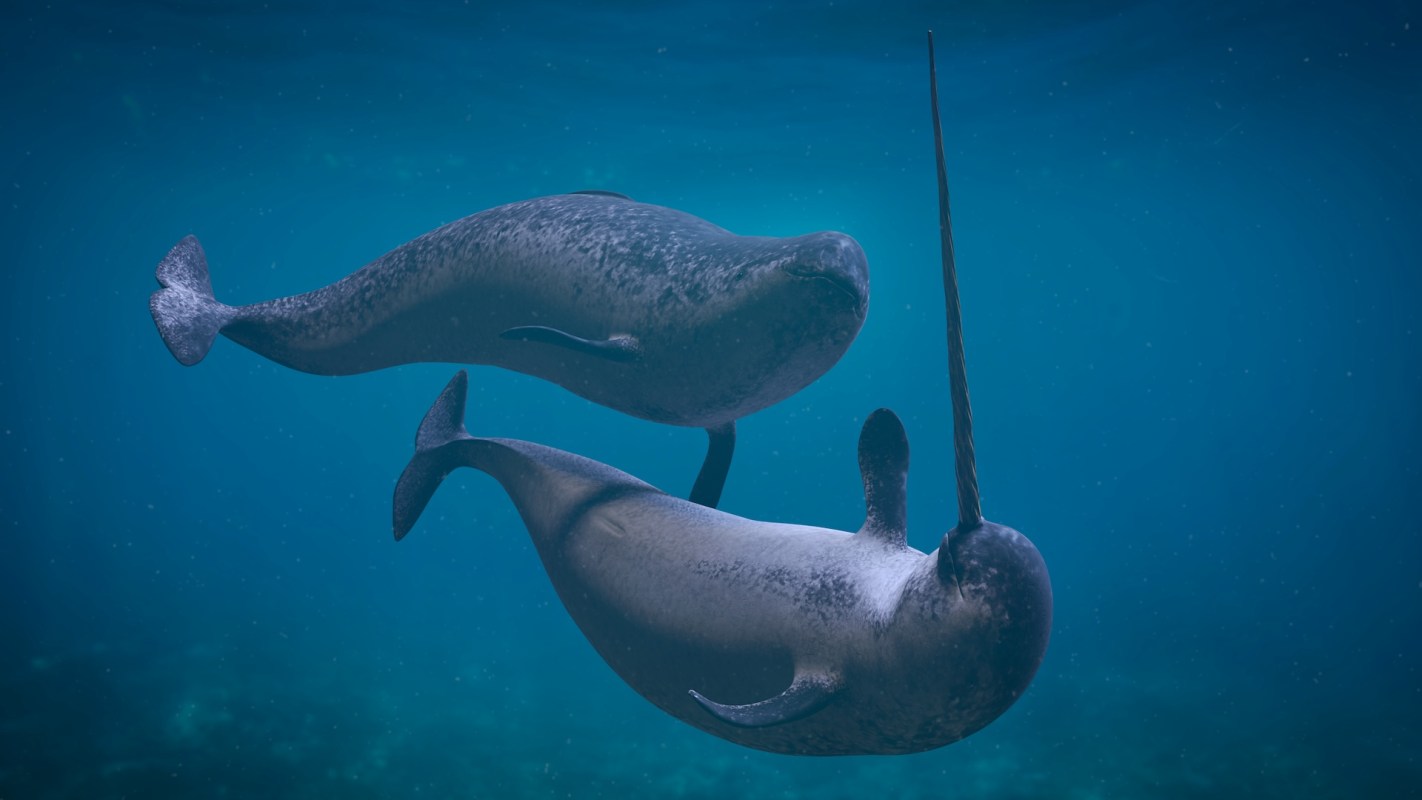
A detailed look at hidden ocean heat deep inside Greenland's fjords came from six narwhals that spend much of their lives under Arctic sea ice, in places humans rarely reach.
Data from their dives showed warm Atlantic water pushing far inland, where it can melt glaciers from underneath.
Here's what to know
In Scoresby Sound — an East Greenland fjord system that extends about 217 miles inland and spans roughly 3,900 square miles — scientists gathered 2,060 profiles of temperature, salinity, and depth from sensors mounted on six narwhals, according to ZME Science.
Warm, salty Atlantic water appeared beneath a colder surface layer and reached toward glacier fronts hundreds of miles from the coast, based on measurements collected during narwhal dives from August 2017 to July 2020. The tags stayed attached for 85 to 332 days and recorded descents deeper than 4,921 feet.
Mads Peter Heide-Jørgensen, a professor at the Greenland Institute of Natural Resources, summed up the significance, saying, "The narwhals have been in parts of the fjords where very few measurements have been taken before. And there, 300 kilometres (186 miles) from the coast, we find traces of Atlantic water. It is completely new that we can show this."
More background
Directly observing glacier melt below the waterline is especially difficult. These remote, ice-covered fjords are often inaccessible to research ships for large parts of the year, so much of that activity has remained hidden.
TCD Picks » Quince Spotlight
💡These best-sellers from Quince deliver affordable, sustainable luxury for all




The observations match a broader Arctic shift known as Atlantification, in which warmer, saltier Atlantic-origin water is having a growing effect on regions once buffered by colder water and sea ice. That means more heat can reach glacier fronts from below.
To put the narwhal measurements in context, the researchers combined them with more than 2,200 historical ocean profiles from the World Ocean Database, creating a record that goes back to 1891. The study, published in Science Advances, found an average warming trend of about 0.085 degrees Fahrenheit per year in waters above 1,640 feet from 1960 to 2021.
As glaciers lose ice more quickly, the consequences can include rising sea levels, changes to Arctic ecosystems, and shifts in ocean conditions that affect global weather and coastal risk.
What's being done?
Scientists are increasingly using animals that are already adapted to extreme environments as research partners. In waters where ships and instruments have trouble operating, narwhals can collect data simply by moving through their normal habitat.
These new observations also give climate models a better starting point. By combining whale-gathered data with long-term historical records, researchers can more accurately estimate how much warm water is reaching glacier fronts and how rapidly subsurface conditions are changing.
That knowledge can help communities and decision-makers prepare for the downstream effects of a warming Arctic, from coastal planning to conservation.
The finding shows how much these animals can teach researchers about a rapidly changing Arctic. As Heide-Jørgensen put it, "This is the water that helps melt the glaciers. We show how the warm water can contribute to accelerating the rate at which glaciers lose ice."
Where can I learn more?
Greenland's fjords are offering a closer look at how fast the Arctic is changing, from deep-water ecosystems that rarely come into view to shifts in how marine animals move through warming seas. These articles show how changing ocean conditions in the same region are reshaping both wildlife and the science used to follow it.
• In East Greenland, deep-sea life and mystery creatures appeared on cameras lowered into a remote fjord.
• Across the Arctic, whales and salmon are making warming-water migration shifts noticed by hunters and researchers.
• In Greenland's Ilulissat Icefjord, a newly identified seal population is drawing scrutiny as Arctic conditions change.
Warming water is altering habitats, animal behavior, and what researchers can detect below the surface. That context makes the whales' underwater measurements feel even more significant.

Get TCD's free newsletters for easy tips, smart advice, and a chance to earn $5,000 toward home upgrades. To see more stories like this one, change your Google preferences here.






