


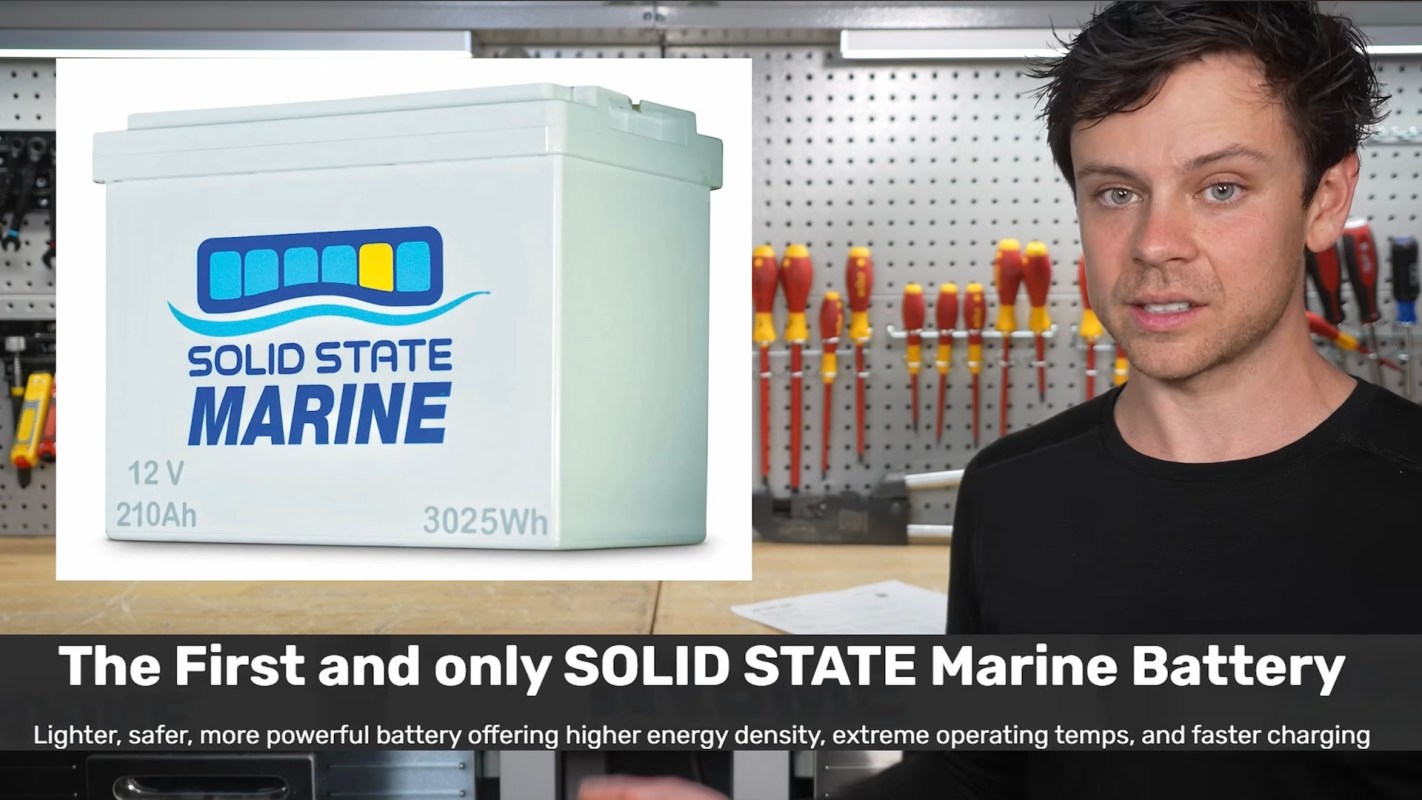
Battery backups can make daily life easier, whether they keep a boat's electronics running offshore or help a household get through a blackout without relying on a loud generator.
But Will Prowse of DIY Solar Power(@WillProwse) says consumers should be careful with a battery on the market labeled "solid-state."
Here's what to know
Prowse argued that Solid State Marine's batteries warrant scrutiny before buyers spend extra on them.
He focused on the products' construction, the safety messaging around them, and whether the certifications and claims justify the premium.
In the video, Prowse dug into the specs and noted it was a semi-solid-state battery. Other problems included a claim of 3,000 cycles, while Prowse's research of marketing materials pointed to 500-2,000.
There is a series of flaws with the website, and other marketing claims don't seem to hold up, Prowse said. The high cost of the product doesn't seem to be justified by the performance or its safety.
TCD Picks » Quince Spotlight
💡These best-sellers from Quince deliver affordable, sustainable luxury for all




"In my opinion, never in a billion years would I use these batteries with these cells without a
pack-level certificate on a boat," Prowse declared. "That is crazy. You are one BMS failure away from a fire."
More background
In theory, solid-state batteries can make energy storage more compact and dependable for boats, RVs, cabins, and homes. Better batteries can save fuel, reduce maintenance, and keep essentials such as lights, navigation systems, refrigerators, and communications running when the grid or an engine is unavailable.
As new battery chemistries reach consumers, buyers are often left to decode technical language and weigh bold promises about lifespan and safety.
In marine settings, the risks can be especially serious. A battery problem on a boat can be more dangerous than one in a garage because the space is smaller, ventilation may be limited, and emergency response may be more difficult. Similar concerns apply to home battery systems installed in sheds, utility rooms, and enclosed storage spaces.
What can be done?
Prowse pointed viewers toward established safety testing, including UL 1973, and said shoppers should look beyond marketing labels to understand what is actually inside a battery.
That can mean reviewing warranty terms; verifying third-party certifications; asking how cycle testing was done; and confirming that the battery management system includes protections for charging, temperature, and short circuits. Buyers can also compare retailer listings to see whether product claims change over time.
It can also help to buy from established companies or installers willing to provide documentation. A proven battery chemistry with transparent specifications may be a better value than a new product with questionable claims.
"Maybe they can rename to Semi-Solid State Marine and get a pack-level certificate," Prowse said. "I think you guys should use lithium iron phosphate. And there's lots of problems with lithium iron phosphate, but it's better than this."
Where can I learn more?
Similar questions come up beyond the marine world. These articles look at fire risk, battery chemistry trade-offs, and how hard it can be to separate real progress from polished marketing.
• Scientists say common flame-retardant additives may do little to stop lithium-ion battery fires.
• DIY tinkerers showed how discarded vape cartridges can hide waste and battery fire risks.
• At NTNU, engineers tested a lithium-sulfur coating to create safer, longer-lasting batteries.
• Grid-storage developers are putting iron-based battery chemistry to the test as lithium alternatives.
• Researchers built a sugar-based flow battery for long-duration storage without conventional lithium cells.
These stories demonstrate why buyers should look closely at safety claims and chemistry labels before paying a premium. That matters whether a battery is headed for a boat, a shed, or a home backup system.

Get TCD's free newsletters for easy tips, smart advice, and a chance to earn $5,000 toward home upgrades. To see more stories like this one, change your Google preferences here.






