


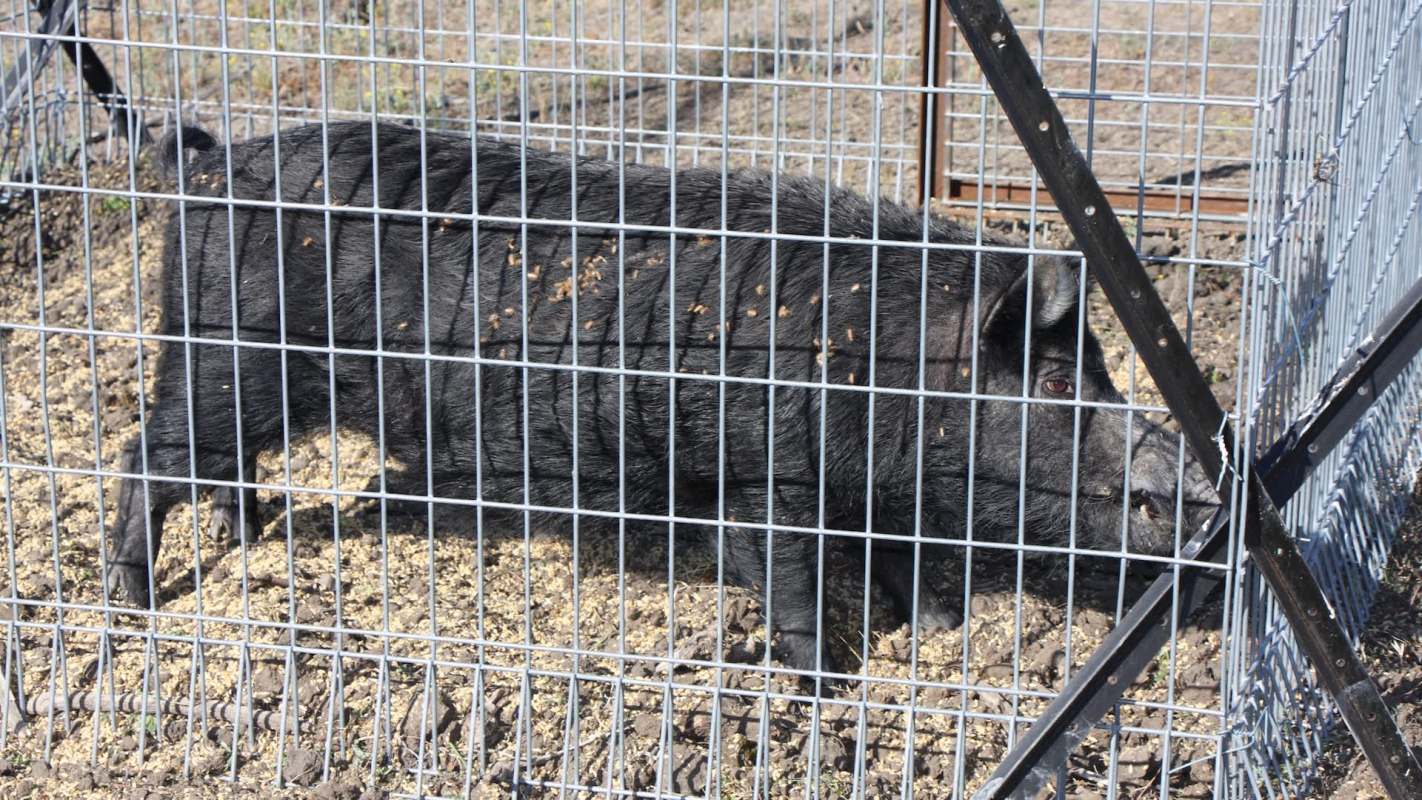
Feral hogs have been tearing up residential lawns in a Florida city, turning carefully kept yards into churned dirt and leaving officials looking for answers.
In Edgewater, repeated damage led police and wildlife authorities to work together to trap the animals before the issue worsened, according to WFTV.
Here's what to know
Even after trapping more than 50 feral hogs, Edgewater Police are still receiving requests for help as the animals continue to show up in neighborhoods, according to WFTV.
Along with tearing up lawns, the hogs can damage drainage systems.
"You spend a lot of money to make sure your lawn is nice, and no one wants to see their lawn torn up. … It's definitely a nuisance problem," resident Alissa Eggenfeller told WFTV.
Lt. Dave Williams said the Edgewater Police Department coordinated with trappers from the Florida Fish and Wildlife Conservation Commission, including a contractor hired to supply traps and other equipment needed to address the problem.
TCD Picks » Quince Spotlight
💡These best-sellers from Quince deliver affordable, sustainable luxury for all




"He's been able to answer the city's needs, provide the traps and the equipment necessary to at least address our problem," Williams said, per WFTV.
A response call at Eggenfeller's home also turned into a frightening moment for Officer Jordan Snipes when lightning struck a nearby tree.
"All I saw was a big flash of light and I got knocked down and I get up and run away," Snipes told WFTV.
More background
Feral hogs are far more than a landscaping nuisance.
They can destroy soil, damage waterways, and pose safety risks to people and pets when they wander into residential neighborhoods.
The conflict is driven in part by human expansion.
Run-ins can become more common as neighborhoods push farther into wooded spaces and natural habitat increasingly overlaps with homes, roads, and stormwater systems.
A BBC explainer on human-wildlife conflicts reported that these events often increase when people and animals are forced into closer contact.
Wrecked lawns can be expensive to repair, while damaged drainage systems can raise concerns for neighborhoods already dealing with heavy rain and flood risks.
In Edgewater, it's an ongoing problem for the community.
What's being done?
The city is relying on a trapping plan that routes reports through the police department and uses the contracted trapper, working with the FWC, to respond to sightings.
Officials and experts generally warn against trying to handle feral hogs. The animals can be unpredictable, and attempting to corner or remove one can put people in danger.
Depending on where someone is in Florida, the right agency to contact may differ. In Edgewater, residents were told to call the police, while in other areas they may need to reach the FWC directly.
Eggenfeller said she was relieved that the city had a system in place.
"You pay taxes and you hope that maybe the city can do something, and I was surprised that they were able to without having to have our own trapper come out here and handle it," she told WFTV.
Where can I learn more?
Edgewater isn't alone. Communities across Florida, Arkansas, Georgia, and Texas are dealing with feral hogs damaging yards, farmland, and even roadways, and approaches to managing the damage vary.
• In South Florida, trappers pulled five invasive hogs from one yard before clearing a tree farm.
• In Gurdon, Arkansas, homeowners were stunned after feral hogs wreak havoc on neighborhood yards.
• Also in the Natural State, officials say a groundbreaking eradication program is showing promising results against feral hogs.
• In Georgia, landowners can use a major incentive for capturing destructive wild hogs on private property.
• Across North Texas, feral hogs are invading yards and roads, adding traffic risks to property damage.
These stories make it clear that the calls in Edgewater reflect a problem playing out across the South. What starts with ripped-up lawns can turn into a broader safety and wildlife management issue.

Get TCD's free newsletters for easy tips, smart advice, and a chance to earn $5,000 toward home upgrades. To see more stories like this one, change your Google preferences here.







