


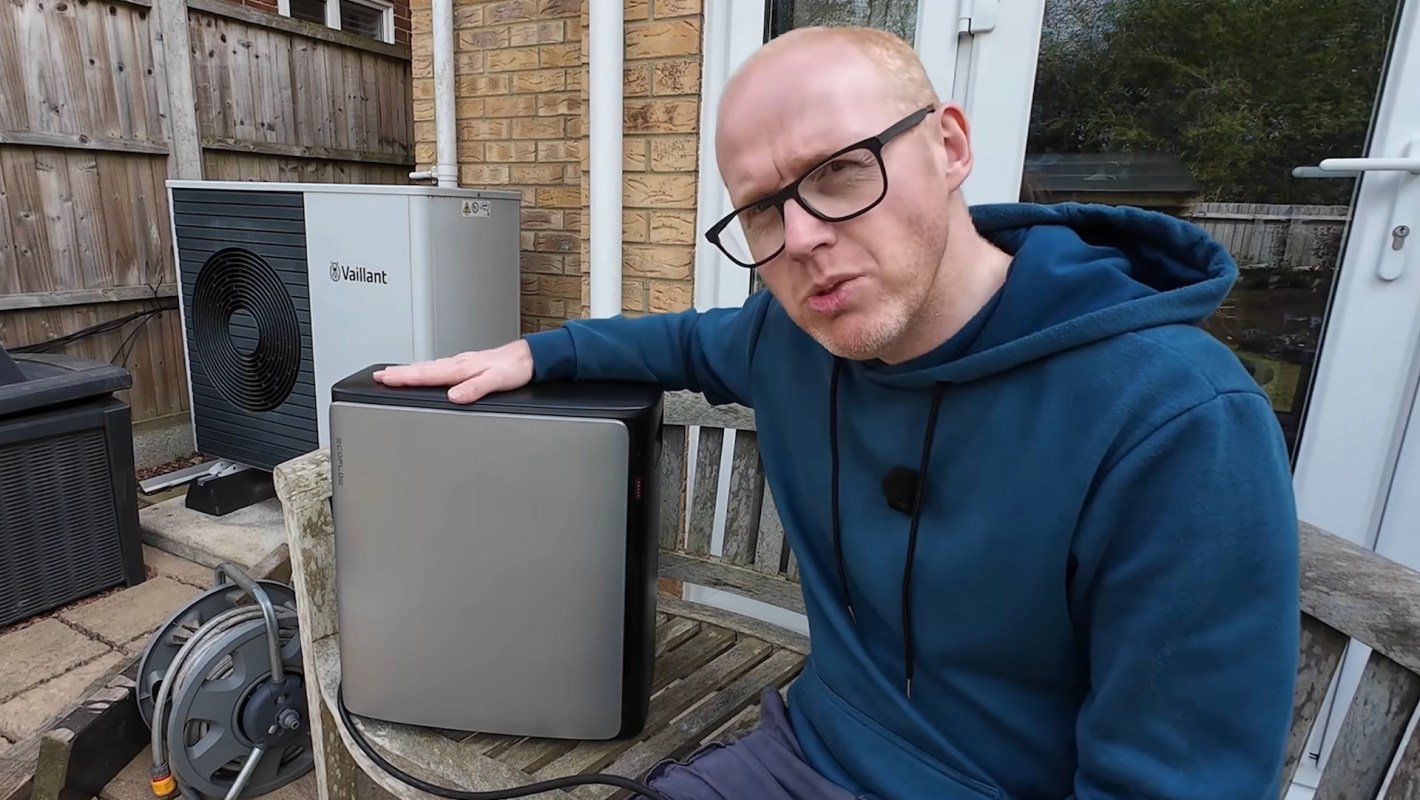
EcoFlow's Stream 5000 home battery system is on sale in the U.K., and the company is presenting it as a way for households to bank solar power and possibly trim electricity bills.
The product debut has also highlighted a separate issue of how plug-in battery storage still seems much harder to access than plug-in solar in the country.
Here's what to know
Based on both home testing and attendance at the launch, UpsideDownFork (@UpsideDownFork) said EcoFlow's U.K. range is built around two modular units. Those are the Stream AC 5000, aimed at homes that already produce solar power, and the Stream 5000, which combines storage with integrated solar capability.
In the launch walkthrough posted to YouTube, EcoFlow said the lineup begins at 5 kilowatt-hours, accepts as much as 5,000 watts of solar, and can be enlarged in 5-kWh increments up to 90 kWh. The company also said the new models remain compatible with the first-generation Stream platform and can continue operating without an internet connection.
EcoFlow said launch pricing includes smart meters, while the creator said the company had not yet shared prices for gateways or extra battery packs. Presenters framed Stream as a middle ground between basic plug-in solar gear and full home energy systems installed by professionals.
More background
To show how quickly the category is growing in Europe, speakers at the event said battery adoption among Dutch households with existing local solar has nearly tripled, and that Germany has "well over a million registered balcony solar systems."
TCD Picks » Quince Spotlight
💡These best-sellers from Quince deliver affordable, sustainable luxury for all




Event presenters said U.K. plug-and-socket safety rules and an interim product specification were scheduled to take effect August 27. Even so, UpsideDownFork argued that plug-in batteries still lag in actual market availability and called their exclusion from the broader rollout "a glaring omission."
Batteries could be especially useful for renters, apartment residents, and people in terrace homes with limited roof area, since they can hold cheaper overnight power or surplus solar for use later in the day when electricity is costlier. That would make time-of-use and dynamic tariffs easier to take advantage of.
The creator cast that as a fairness question too, saying wider battery access could give households that cannot afford a full solar-plus-storage installation a way to leverage cleaner and cheaper energy.
What can be done?
EcoFlow's answer is a modular setup that households can build out gradually. The system is designed to work with smart meters, earlier Stream devices, and solar equipment already in place.
If plug-in solar keeps advancing under U.K. rules while simpler battery options remain harder to adopt, many households may lose access to a tool that can move consumption away from peak-price periods and reduce strain on the grid.
The launch, therefore, doubles as a measure of whether home battery storage can reach people who have long been excluded from energy-upgrade opportunities.
"Think there is something to a plug-in battery only offering, but prices and payback time are going to have to come down a lot," one commenter said. "Plus users will need certainty over their return."
"Lobbying is a significant reason why plug-in battery is taking time," another commenter theorized.
Where can I learn more?
Can home batteries become practical, affordable tools outside of full custom installs? Storage tech and networked battery programs are moving ahead elsewhere, even as plug-in access for renters and smaller homes remains patchy.
• Engineers are advancing water-based battery designs that could make home storage safer in garages.
• In the United States, home batteries are forming virtual power plants.
• In Puerto Rico, Sonnen batteries are building a resilient network that shares stored solar power.
Battery access matters beyond backup power. The bigger issue for the U.K. is whether plug-in storage can open the door to cheaper, cleaner electricity for more households.

Get TCD's free newsletters for easy tips, smart advice, and a chance to earn $5,000 toward home upgrades. To see more stories like this one, change your Google preferences here.






