


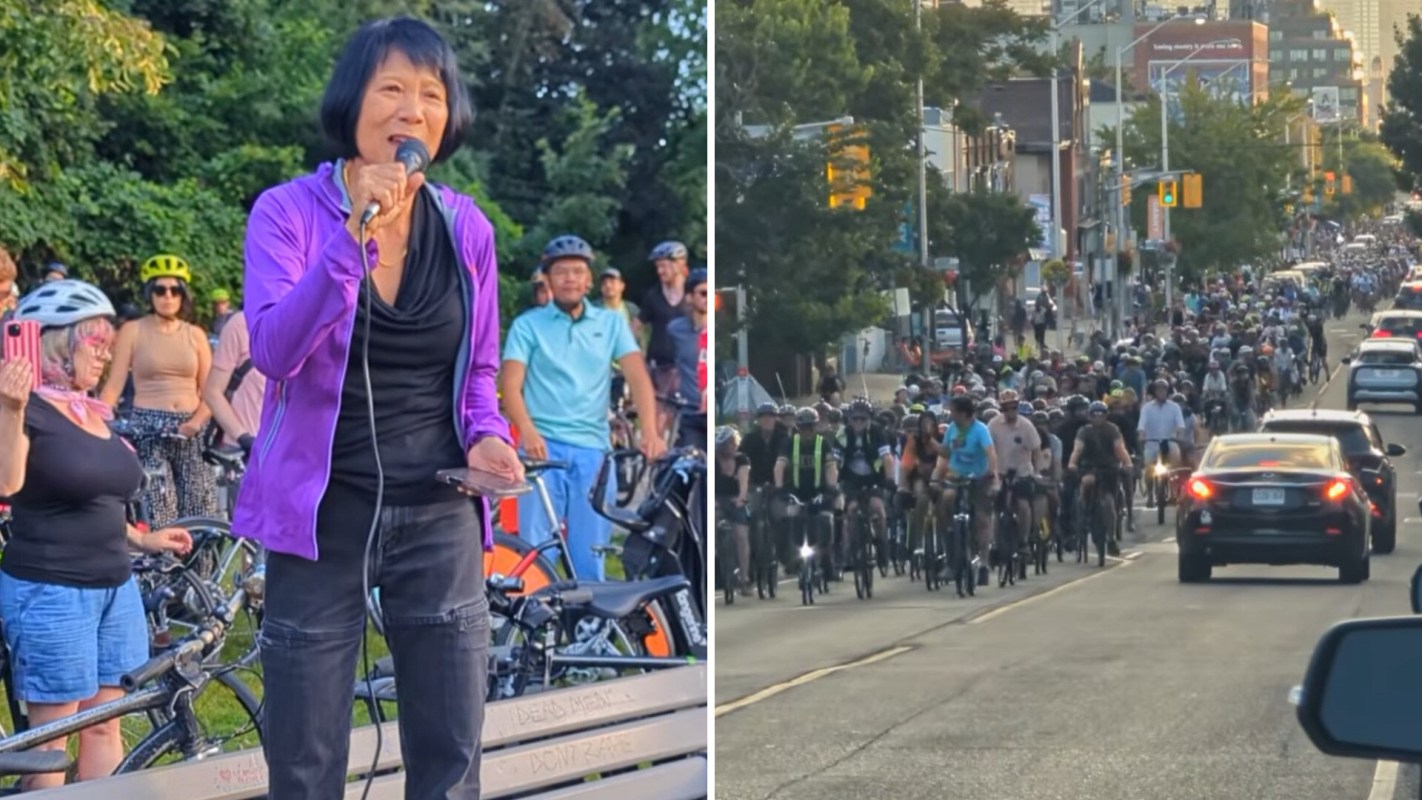
Toronto cyclists turned out in huge numbers for a mass ride to defend the city's bike lanes.
Here's what to know
In a YouTube video documenting the event, cyclist Brian Tao (@BrianTao) said more than 800 people showed up for the Critical Mass ride as Toronto Mayor Olivia Chow criticized efforts to remove cycling infrastructure.
After setting off from Bloor Street East at Castle Frank Road, the group crossed the Prince Edward Viaduct and continued east along Danforth Avenue before turning back just past Woodbine Avenue near the constituency office of Toronto City Councillor Brad Bradford, who is running for mayor.
Fear over the possible removal of protected bike lanes drove the event, with opponents arguing that taking them out would make streets less safe for both cyclists and pedestrians. In her remarks, Chow blamed Ontario Premier Doug Ford for stepping into what she portrayed as local road safety decisions.
Criticism also centered on Bradford. Tao accused him of backing away from bike lanes he had supported, and commenters voiced similar frustration.
"What I think is hilarious about this is the government of Ontario is doing this Safer Ontario thing and what are they doing? They're taking out the bike lanes," one user wrote.
TCD Picks » Quince Spotlight
💡These best-sellers from Quince deliver affordable, sustainable luxury for all




More background
For years, Critical Mass rides in Toronto have functioned both as a way for cyclists to be seen and as a broader statement about how street space gets used. In the city, bike lanes can be more than a convenience for commuters. They can be crucial for people trying to travel affordably.
When bike lanes disappear, people may feel pushed to drive cars, which leads to more traffic, higher fuel costs, and more heat-trapping pollution. Others may stop biking altogether, losing a low-cost, low-pollution transportation option.
Chow emphasized the stakes by referencing the city's tradition of honoring victims of crashes.
"I've gone on too many rides that installed the white bikes," she said in the video. "The ghost bikes. And it is so sad. Every time we put up a ghost bike, it's sad."
What's being done?
Hundreds of riders peacefully took over the streets. Tao described the ride as bigger than a policy disagreement, writing that "it truly reflected the diverse and inclusive nature of the movement and of Toronto itself."
Political resistance is coming from the city. Chow said Toronto had not simply yielded to what she described as provincial bullying, casting the dispute over bike lanes as a matter of local authority as well as public safety.
Many residents see bike lanes as public safety infrastructure.
"We will win again because we want every cyclist, pedestrian to be safe," Chow said.
Where can I learn more?
Toronto's bike lane fight is part of a bigger argument over what makes streets safer and whether cities treat cycling like a legitimate way to get around. Other cities offer a useful comparison: Protected lanes have increased ridership, bad designs have left riders uneasy, and smarter traffic systems have made biking easier for commuters.
• Across multiple cities, protected bike lanes nearly doubled ridership where officials made room for cyclists.
• In Charlotte, North Carolina, riders warned that one bike lane in particular was incredibly dangerous.
• In Chicago, a vehicle blocked a bike lane, leaving cyclists squeezed beside traffic.
• In Copenhagen, Denmark, green-wave traffic signals showed how cities can make commuting by bike easier.
These stories show what's at stake in bike lane fights, how many people feel comfortable biking, and whether cycling works as an everyday option.

Get TCD's free newsletters for easy tips, smart advice, and a chance to earn $5,000 toward home upgrades. To see more stories like this one, change your Google preferences here.







