


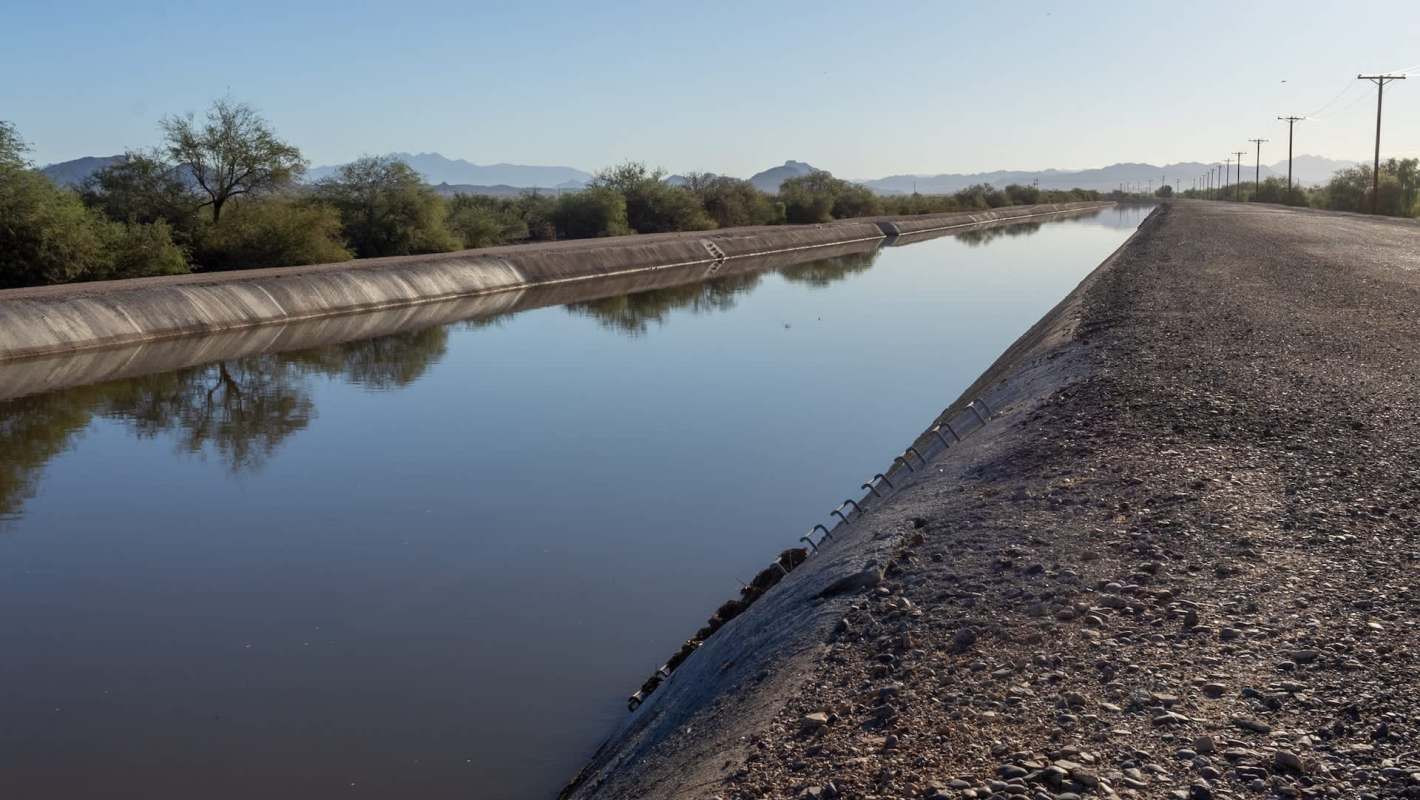
Phoenix will have to manage with a smaller share of Colorado River water through 2028, but city leaders say that does not mean homes are headed for dry faucets.
The more immediate impact for residents is expected to be financial, with water providers around the region investing heavily to maintain supply in one of the nation's hottest and fastest-growing metro areas.
Here's what to know
Under a new federal approach to the Colorado River, Arizona is set to take annual reductions equal to 27% of its allotment through 2028, and those cuts could become steeper after 2028, according to NPR.
That matters greatly in Phoenix, where about 40% of the water delivered to customers comes from the Colorado River.
Even so, officials say households are not expected to lose service.
Max Wilson, water resources management advisor for the City of Phoenix, made that clear: "The cuts that we're talking about today will not threaten water deliveries to homes. There will never be a moment where you go into your house, you turn on your faucet and no water comes out the other side."
TCD Picks » Quince Spotlight
💡These best-sellers from Quince deliver affordable, sustainable luxury for all




Phoenix and neighboring cities say they can handle the reductions because they have spent decades building a broader mix of water sources. In Phoenix, roughly 58% of the city's water comes from the Salt and Verde River system, with groundwater used as a backup.
The tougher issue is how much that response will cost.
Wilson put it bluntly: "They are going to be very expensive. And ultimately, our customers are going to be the ones who have to pay that bill."
More background
What Arizona is dealing with is part of a larger problem affecting the entire Colorado River basin.
Years of drought and hotter conditions have driven Lake Powell and Lake Mead to record lows, and the federal government stepped in after the states were unable to agree on a plan.
For many people, the first noticeable change may be a higher monthly bill rather than an interruption in water service.
Gilbert already provides a preview. About 41% of the town's water supply comes from the Colorado River, and officials expect the new cuts to shrink that allocation by 20%.
Water bills there have roughly doubled since 2024 as the town began paying for wells and upgrades at its water treatment plant.
Gilbert water resources manager Lauren Hixson said residents do not always immediately understand why those increases are happening.
"Then they see the bill, and they're like, 'Wait, why?'" she said.
Communities with fewer resources may have an even harder time adapting. Cave Creek, for example, gets about 95% of its water from the Colorado River and is using temporary exchange agreements while seeking longer-term solutions.
What's being done?
Across the Valley, utilities are leaning on long-term planning and expensive infrastructure work.
In early 2023, Phoenix finished a roughly $300 million "drought pipeline" that allows water to be moved from the south side of the city to north Phoenix, where more than 400,000 residents had depended more heavily on Colorado River supplies.
Private utility provider EPCOR has taken similar steps by connecting its systems and securing access to more protected Colorado River water through a lease with the Ak-Chin Indian Community.
Doug Dunham, associate director of water resources for EPCOR USA, said that groundwork is helping the region stay ahead of the cuts.
Water recycling is also becoming a bigger part of the strategy.
Phoenix is developing a major reuse project at its Cave Creek Water Reclamation Plant that officials said could begin sending purified drinking water into city pipes in early 2029. The project could cost more than $359 million to build, plus $8.5 million per year for operations and maintenance.
Some experts say higher prices could also curb waste.
Kathryn Sorensen, director of research at the Kyl Center for Water Policy at Arizona State University, said steeper rates can prompt households to reconsider water-intensive landscaping and heavy summer use.
Phoenix officials say the spending may be painful, but they view it as essential preparation for a drier future.
As Wilson put it: "Arizonans have been solving water problems for our entire history, and we didn't forget how to do that overnight. We're going to do it again now."
Where can I learn more?
Phoenix is hardly alone. Across the West and beyond, water agencies are dealing with deeper Colorado River cuts, drought restrictions in other basins and growing competition over limited freshwater. That helps explain why utilities are spending more to shore up supplies well before service is threatened.
• Federal planners warned 40% water cuts could hit Arizona, California and Nevada.
• In the Carolinas, drought alerts brought new restrictions on major lakes across the Keowee-Toxaway basin.
Those pressures are likely to shape the choices Phoenix faces: higher costs, tougher tradeoffs, and a more competitive fight over water.

Get TCD's free newsletters for easy tips, smart advice, and a chance to earn $5,000 toward home upgrades. To see more stories like this one, change your Google preferences here.






