


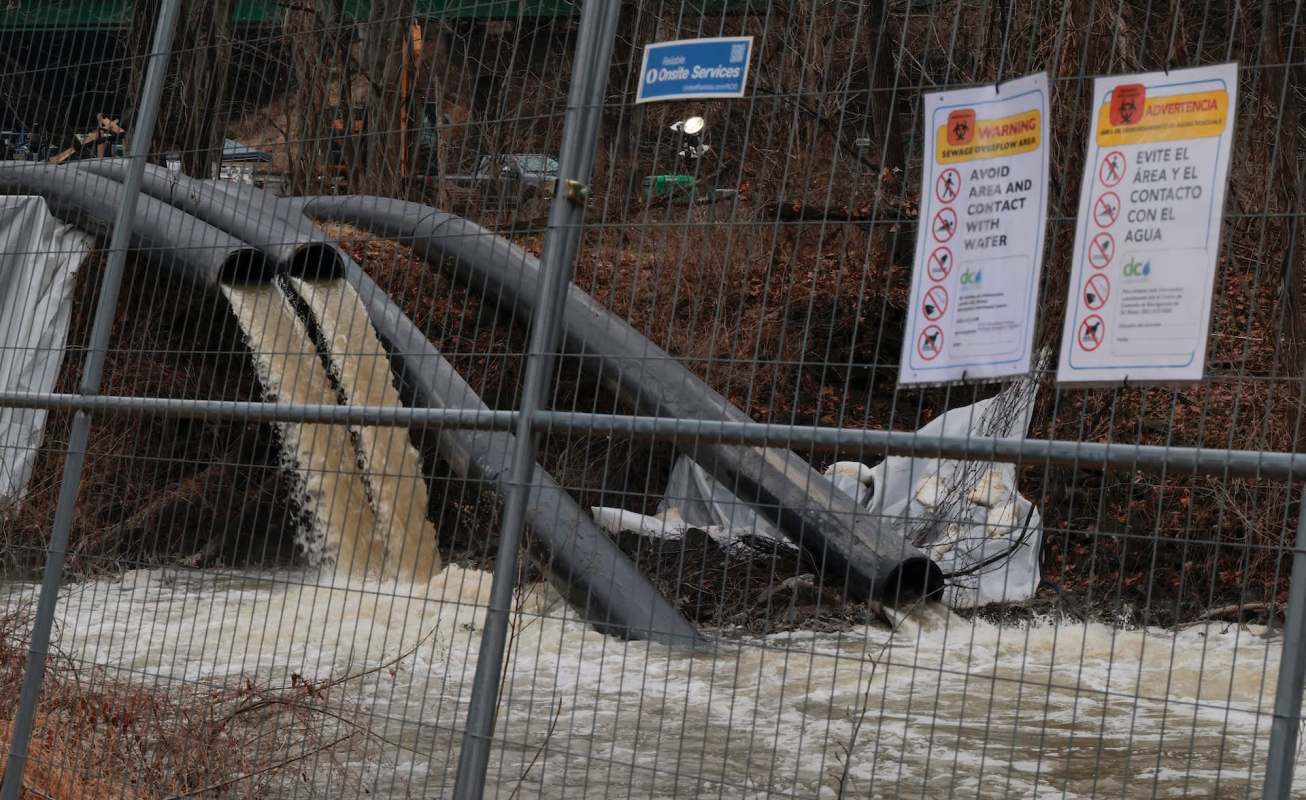
Maryland's WSSC Water is seeking a role in a federal lawsuit tied to the Jan. 19 sewer collapse outside Cabin John, which released more than 240 million gallons of raw sewage into the Potomac River.
For customers, the outcome could help determine how future repairs are handled — and whether utility costs rise in the process.
Here's what to know
According to Bethesda Magazine, the Washington Suburban Sanitary Commission — better known as WSSC Water — wants to participate in a federal Clean Water Act lawsuit involving the District of Columbia and DC Water. The Justice Department's Environment and Natural Resources Division brought the case in federal court on April 20.
The case centers on the 54-mile Potomac Interceptor, a major sewer line that gave way Jan. 19 near Clara Barton Parkway and I-495. The lawsuit says DC Water had known for years about severe corrosion in the pipe but did not properly maintain it or respond adequately after the collapse.
Nearly 2 million residents in Montgomery and Prince George's counties get service from WSSC Water. The utility said joining the case would let it "engage directly in decisions about costs, future capital improvements and financial responsibilities tied" to the wastewater infrastructure.
The utility also said the sewer repairs near Pennyfield Lock are about two miles upstream from its Potomac Water Filtration Plant, which provides 70% of customers' drinking water.
TCD Picks » Quince Spotlight
💡These best-sellers from Quince deliver affordable, sustainable luxury for all




More background
Officials said the January collapse did not directly endanger drinking water, but the spill still raised alarms about the Potomac's condition, aquatic life, and recreation on the river.
The interceptor ordinarily carries about 60 million gallons of sewage each day to the Blue Plains Advanced Wastewater Treatment Plant in Southeast D.C.
Contamination concerns downstream reshaped river activity, with conservation groups and paddling organizations changing operations and seasonal schedules.
Following extensive testing of water and sediment, Montgomery County health officials have lifted the remaining Potomac shoreline health advisories.
Environmental advocates have described the collapse as a warning sign for aging utility systems.
Potomac Riverkeeper Network President Betsy Nicholas said in a June press release, "It was a failure of decision-making, accountability, and urgency. We, as the voice of the community, must have a seat at the table to assure that paddlers, anglers, outfitters, watermen, and residents — all of whom rely on the Potomac — are made whole and that there is no repeat of this catastrophe."
What's being done?
Repair work is already underway. One phase of rehabilitation at Pennyfield Lock has been completed, with DC Water repairing a deteriorated access chamber. The next phase is sliplining, a process that places a new pipe inside the old one to restore it to near-new condition.
DC Water had begun applying a new geopolymer lining to a 175-foot section near Pennyfield Lock that officials identified as critically weak. Inspections after the January collapse also turned up other badly corroded areas that needed quick repairs.
Potomac Riverkeeper Network also moved in June to intervene in the DOJ-EPA lawsuit and conducted its own water-quality monitoring. WSSC is seeking its own formal place in the case as questions about repairs and cost-sharing continue to develop.
As WSSC put it, "Our priorities are clear: secure reliable wastewater treatment infrastructure, protect our customers' financial interests, safeguard our drinking water, and ensure our customers have representation in decisions that could have significant and lasting impacts."
Where can I learn more?
These stories examine the same pressures behind the Potomac Interceptor dispute: utility accountability, pollution claims, and who pays when critical systems break down.
They also show how contamination, disaster risk, and insurance costs can spread well beyond one repair project.
• In Iowa, a continuing problem over coal ash discharge is keeping a major utility in court.
• Much of Bangkok could be submerged by 2030 as flood risk accelerates across the low-lying city.
• In California, wildfire insurance runs from $92 to $32,000 depending on ZIP code.
Read alongside the WSSC case, they show how infrastructure failures and environmental risk can quickly become long legal and financial fights. That broader context helps explain why the utility wants a formal seat in decisions over repairs, responsibility, and customer costs.

Get TCD's free newsletters for easy tips, smart advice, and a chance to earn $5,000 toward home upgrades. To see more stories like this one, change your Google preferences here.






