


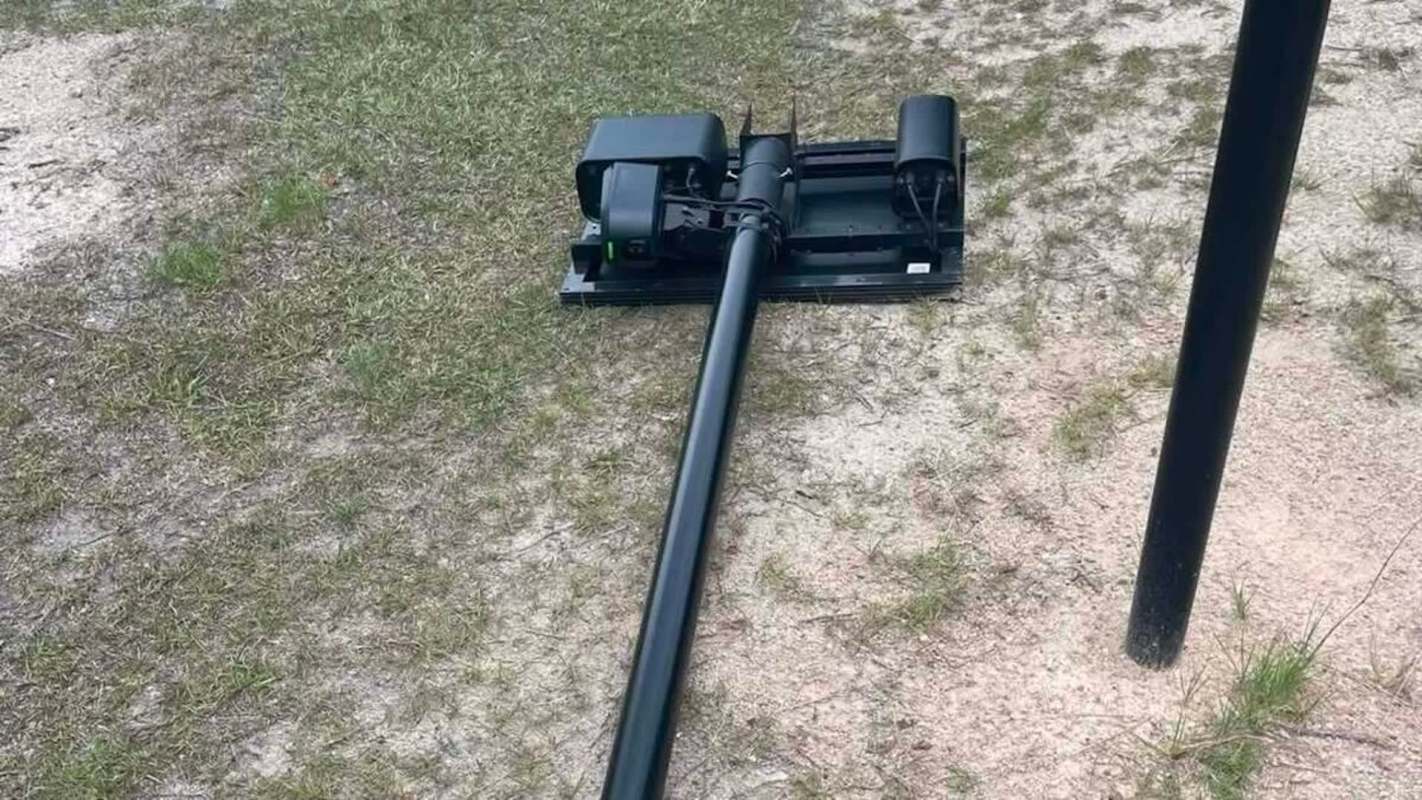
A dispute over police surveillance technology in South Carolina has escalated from public criticism to criminal charges after three 19-year-olds were accused of cutting down Flock safety cameras in Chester County.
Here's what to know
According to K104.7, James MacMillan Ryerson, Samuel Jonathan Carlisle, and Blaze Lawrence Fuller were charged with conspiracy and malicious damage to property after investigators said they damaged two Flock cameras in Edgemoor, South Carolina during the early-morning hours of August 15.
Authorities estimated the damage at $5,150 and said the equipment had been burned with an unknown object. Arrest warrants also allege the cameras were cut down and struck with a hammer "with the intent to intimidate or coerce a civilian population to influence government policy," per K104.7.
Each of the three teens was released on bail after their arrests.
More background
Flock's AI-powered license plate reading systems are used by law enforcement to monitor plates and capture visual information, but the technology has become a flashpoint in South Carolina and across the country.
Critics object to the cameras over privacy concerns, government and police overreach, a consistent pattern of police misuse, and serious errors.
TCD Picks » Quince Spotlight
💡These best-sellers from Quince deliver affordable, sustainable luxury for all




Meanwhile, backers of license plate readers, including countless police departments, say the systems can speed up investigations and help find dangerous suspects. Yet, critics argue that the system's inaccurate alerts and weak oversight can lead to wrongful stops, invasive tracking, and less trust in law enforcement.
Where can I learn more?
The dispute over Flock cameras is part of a much broader debate over how quickly powerful technologies are rolled out, who keeps watch over them, and who pays the price when they fail. You can see that tension in fights playing out from Congress to research labs to local power grids.
• In Congress, lawmakers rejected AI regulations despite warnings about climate and public health.
• Utilities warn AI data centers are disrupting home appliances through worsening grid harmonics.
• Across the country, backlash may get brutal as AI strains jobs, water, and electricity.
These stories all reflect broader questions about accountability, infrastructure, rising costs, and the level of risk the public is willing to accept.

Get TCD's free newsletters for easy tips, smart advice, and a chance to earn $5,000 toward home upgrades. To see more stories like this one, change your Google preferences here.






