


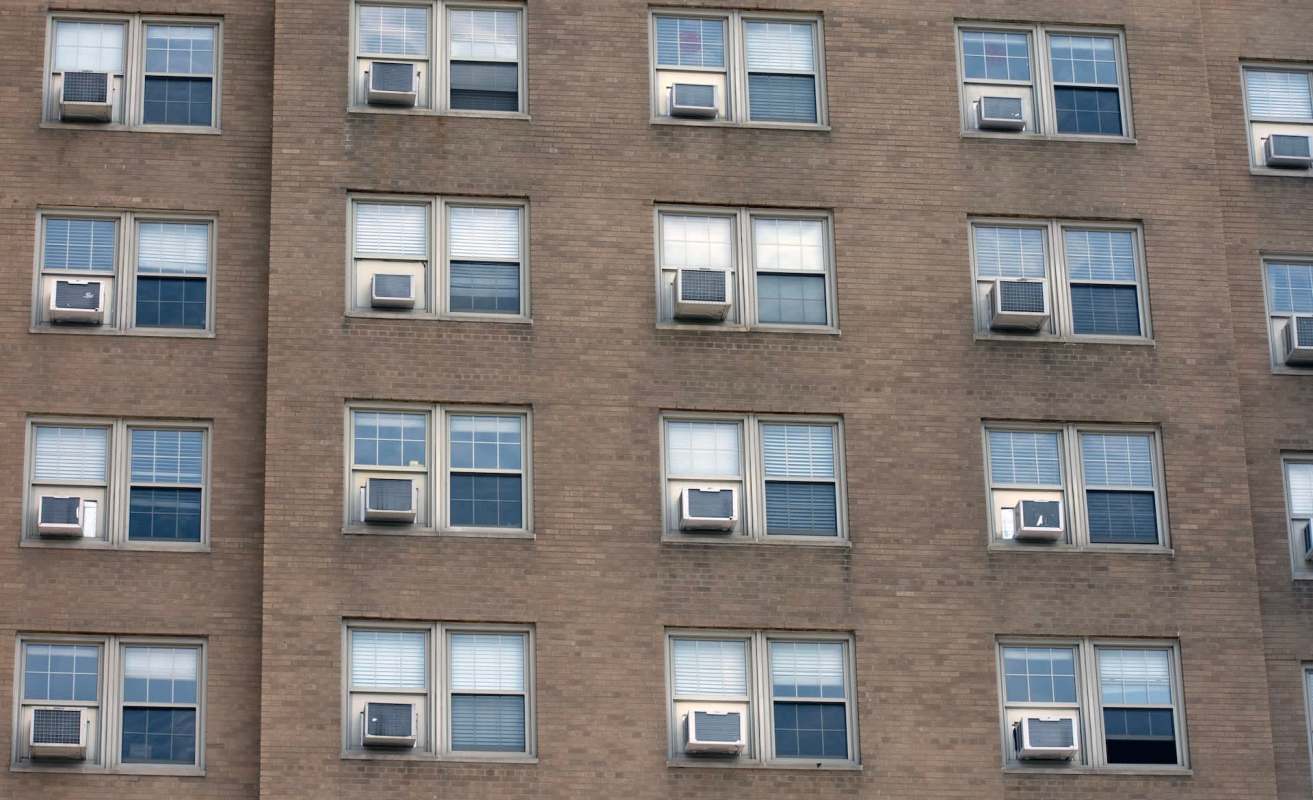
New evidence suggests air conditioning is a powerful defense against deadly heat, though it cannot completely eliminate the risk.
In a Yale-led study, researchers found that the extent to which people use air conditioning is associated with a 57% reduction in heat-related deaths in the United States, preventing more than 5,000 deaths a year.
Even so, truly extreme temperatures still raise the danger level.
Here's what to know
The study, covering 3,108 counties in the contiguous U.S. from 2010 to 2020, was published in Nature Health and summarized by the Yale School of the Environment.
Instead of simply tracking whether households had AC units, the researchers examined how much those systems were actually used.
That difference matters because owning an air conditioner does not necessarily mean a family can afford to run it regularly. The researchers found that focusing on usage, rather than ownership alone, offers a clearer view of how cooling can prevent heat deaths.
TCD Picks » Quince Spotlight
💡These best-sellers from Quince deliver affordable, sustainable luxury for all




"Our dataset enabled us to relate AC use to mortality and temperature at a meaningful spatial scale," said study co-author Narasimha Rao, professor of energy systems.
Florida saw the greatest concentration of avoided deaths, with the Southwest and Gulf Coast also standing out. The researchers also found that the protective effect of AC begins to plateau after moderate use, so using more cooling is not always associated with greater lifesaving benefit.
More background
Heat stress kills more people than any other weather-related hazard. Exposure to high temperatures is tied not only to heat exhaustion and heat stroke, but also to cardiovascular, respiratory, and kidney disease.
Even in places where air conditioning is common, record heat can still prove deadly.
More than a quarter of U.S. households reported difficulty paying for energy use. That means some people may have an AC unit at home but still avoid using it enough to stay safe.
"For years we have known that air conditioning protects people from extreme heat, but we could only guess by how much because the available data told us who owned an air conditioner, not who could actually afford to run one," said Kai Chen, associate professor of epidemiology at the Yale School of Public Health.
What can be done?
Because AC showed such a strong protective effect, the study authors said there is a public health need to make cooling more affordable and to expand urban greening.
The findings also suggest that communities cannot depend on air conditioning alone as a complete solution as extreme heat intensifies.
Rao said the study is part of a larger effort to understand how lower-income households manage rising temperatures and the tradeoffs they are often forced to make.
"This is one of many studies we are undertaking to understand how low-income households cope with extreme heat," Rao said. "While some choose to turn on their ACs, others make the uncomfortable choice of bearing the heat to save money for food."
Where can I learn more?
These articles add context to the Yale findings, showing how heat danger, access to cooling, and the fallout from rising AC use are playing out in very different places. Read together, they show why air conditioning can save lives during dangerous heat even as communities face hard choices about emissions, affordability, and urban design.
• In France, air conditioning as survival is reshaping a long-running climate debate.
• In Australian cities, risk is higher during heat waves when urban exposure intensifies.
• In managed forests, natural air conditioners show how tree cover can lower extreme temperatures.
These examples reinforce a central point from the research: getting through extreme heat takes more than simply having an AC unit in the house.
They also highlight broader policy questions about cooling, utility bills, and how to make neighborhoods safer.

Get TCD's free newsletters for easy tips, smart advice, and a chance to earn $5,000 toward home upgrades. To see more stories like this one, change your Google preferences here.






