


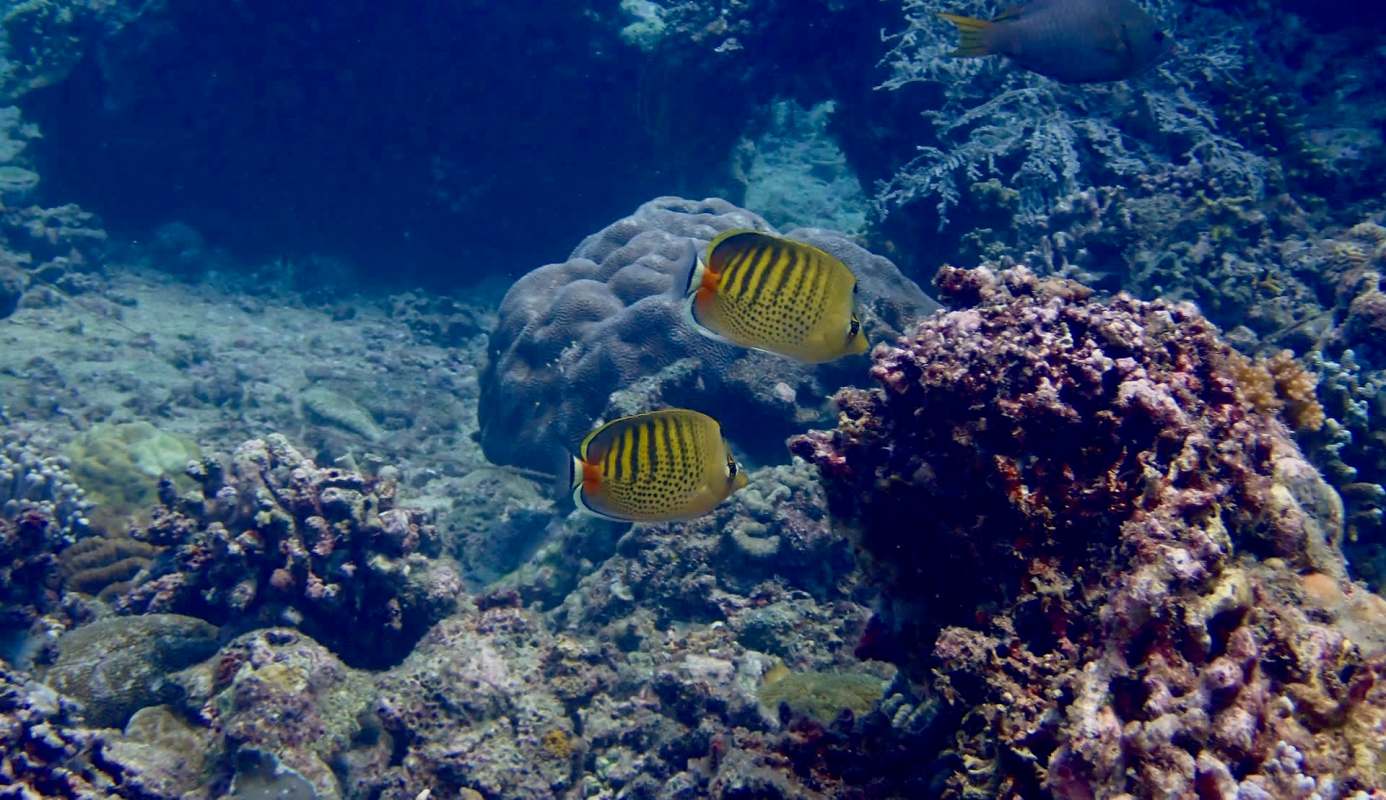
Coral reefs across the Indo-Pacific that buffer shorelines and shelter marine life may be unable to stay near the surface if high-end sea-level rise projections come to pass, according to a major study from Singapore.
Here's what to know
In a news release from Nanyang Technological University, Singapore, researchers said that 76% of surveyed Indo-Pacific reef sites may fail to match projected sea-level rise under a high greenhouse gas pollution scenario.
Once relative sea level rises by more than 0.21 inches a year, reefs have an estimated greater than 90% chance of no longer sustaining upward growth. The researchers said that level could be reached within 35 years unless air pollution levels drop substantially.
For thousands of years, reefs have responded to rising seas by building upward and outward. Corals and other organisms do that by producing calcium carbonate, but the process is not unlimited. If the ocean rises faster than reef framework can accumulate, reefs sink into deeper water in what scientists call reef drowning.
Why is this concerning?
"Coral reefs have kept pace with rising seas for thousands of years, but the rate of sea-level rise expected in the coming decades could exceed the limits of most reefs," warned Kyle Morgan, one of the researchers, in the release.
When reefs lose their shallow structure and sit deeper below the surface, they become less effective at weakening incoming waves, shielding coastlines, and maintaining the habitats that fisheries and coastal communities depend on.
TCD Picks » Quince Spotlight
💡These best-sellers from Quince deliver affordable, sustainable luxury for all




To estimate how reefs grow over long time spans, the researchers used 288 ancient reef records from 92 sites across the Indo-Pacific. The records cover the Holocene, which spans roughly the past 11,700 years.
The team stressed in the release that a quickly growing coral colony does not reveal whether an entire reef can survive over the long term. Many things like erosion and local ocean conditions shape whole-reef growth.
The makeup of those coral communities matters as well. According to the researchers, competitive corals that built large, structurally complex frameworks formed many ancient reefs.
Conversely, disturbance-tolerant "weedy" corals that can rebound after damage are dominating modern reefs. But they may not construct reef frameworks as quickly or as extensively.
What can be done?
The researchers said local action still matters, even if it cannot solve the problem by itself. Reducing pollution, overfishing, and direct physical damage can help sustain healthier coral communities and keep reefs producing the material needed to build their structure.
Those steps can also make reefs better able to withstand stresses like marine heatwaves, bleaching, and ocean acidification.
Even so, the study warns that reef restoration and local conservation can only do so much if sea levels keep rising faster. Protecting coastal communities will also require much deeper cuts to greenhouse gas pollution so reefs are not forced to outgrow a pace of change they cannot match.
"They will no longer function in the same way, potentially allowing greater wave energy to reach the coastline and increasing risks to coastal communities," Morgan cautioned in the release.
Where can I learn more?
Researchers are continuing to investigate this harm to reefs and how to preserve them in other ways.
• Global climate models suggest reefs will likely be overwhelmed as ocean temperatures keep rising.
• Along Australia's Great Barrier Reef, declining fish populations may weaken already stressed ecosystems.
• In Queensland, Australia, Mary River restoration aims to keep sediment from smothering nearby reefs.
Again, even though local action and research won't solve the entire problem, any effort taken to save coral reefs is better than nothing.

Get TCD's free newsletters for easy tips, smart advice, and a chance to earn $5,000 toward home upgrades. To see more stories like this one, change your Google preferences here.






