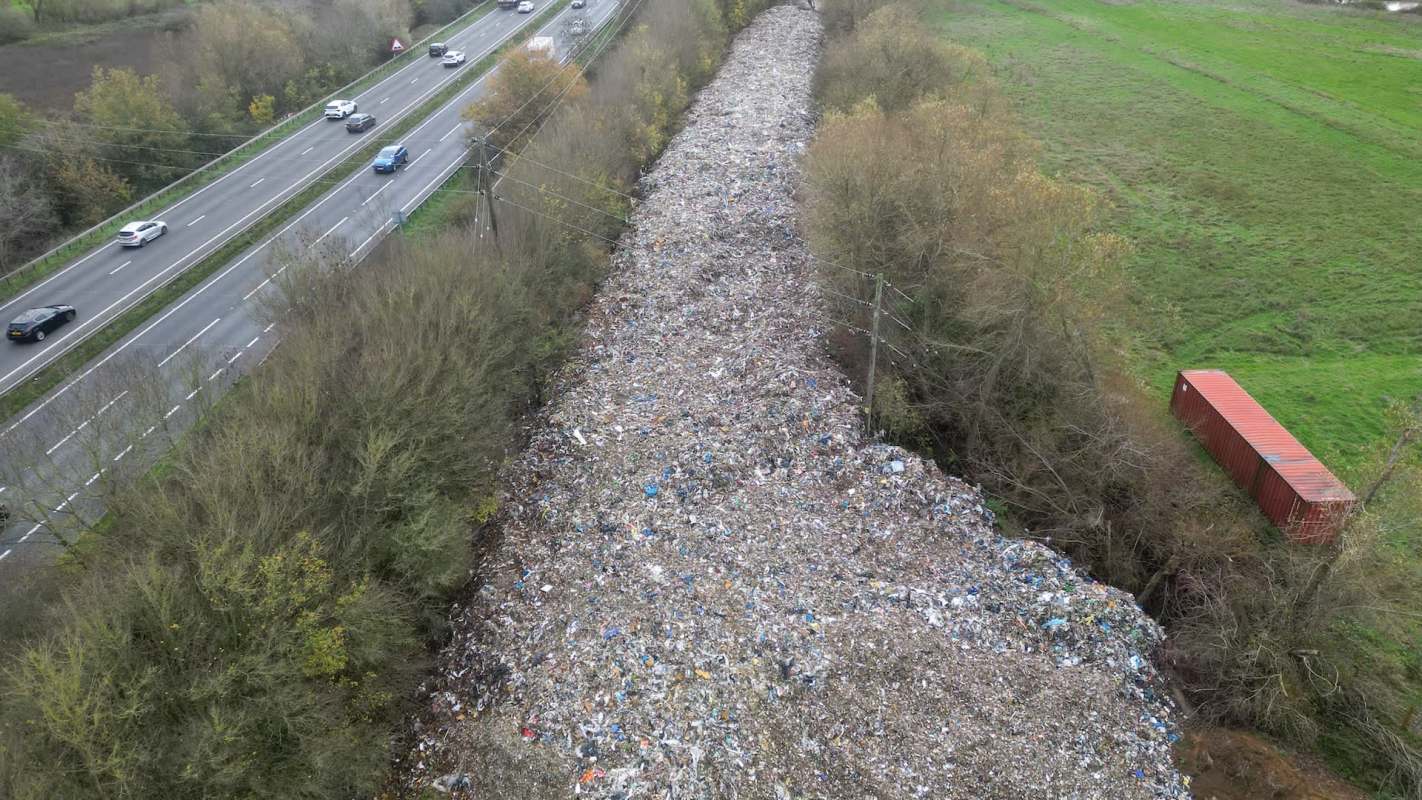
Taxpayers are facing an estimated £6 million ($8.1 million) cleanup cost after work ended on an illegal dump near the River Cherwell in Oxfordshire, England, a job that took five months to complete.
Located beside the A34 in Kidlington, the site exemplified how waste crime can scar the landscape while generating steep public expense, according to the Daily Mail.
Here's what to know
Crews spent five months clearing tires, shredded plastic, and household trash from the Kidlington site.
An estimated 25,027 US tons (22,704 tonnes) of waste were removed from the 86,111 square-foot (8,000-square-meter) zone, which stretched for 492 feet (150 meters) and covered more ground than Wembley Stadium.
After the site was shut down in October 2025, the Environment Agency classified it as a critical incident in November. Officials then decided on Dec. 11 that the waste could not remain because of the fire risk and concerns that pollution might reach the River Cherwell.
Removal work began in April, when contractors from Acumen Waste Service started taking away about 15 to 30 truckloads a day. The agency said the site entrance was sealed off with concrete barriers, while the main gate was locked with a padlock to prevent further access.
TCD Picks » Quince Spotlight
💡These best-sellers from Quince deliver affordable, sustainable luxury for all




The Environment Agency paid for the cleanup, though officials said they plan to recover the cost from those responsible as the criminal investigation continues.
Four people have been arrested.
More background
At Kidlington, officials were especially concerned about two major threats: fire and water contamination.
Barriers were erected to help protect the River Cherwell, and repeated water testing showed no significant harm to the nearby environment.
Even so, the site imposed a major burden on nearby residents and taxpayers.
Illegal dumping operations can damage local landscapes, create health and safety risks, and force governments to spend millions in public funds that would otherwise go toward public services.
The Kidlington cleanup is also part of a broader national response, as authorities say organized waste crime is a growing problem across the country.
What's being done?
The government said the Kidlington operation is just one part of a wider strategy to ensure illegal dumping sites do not become large-scale environmental emergencies.
"Communities deserve to be free from the blight of illegal waste dumping, and this clean-up shows we will bring hope back to local residents," said Environment Secretary Dame Angela Eagle.
"After years of waste crime being allowed to fester, we are taking decisive action through our crackdown, and cleaning up sites like Kidlington is just one part.
"By putting more officers on the frontline and using drones to catch offenders in the act, we're putting the criminal gangs on notice that there is nowhere left to hide," she added.
Officials have also committed to clearing five more illegal waste sites, including one in Wigan containing 19,842 US tons (18,000 tonnes) of waste and another in Hyndburn, Lancashire, where 11,023 US tons (10,000 tonnes) was dumped.
Environment Agency chief executive Philip Duffy described an ongoing operation.
"Dumping like this needs to be stopped in the first place," he began.
"To do that we are going upstream, removing criminals and corruption from the waste system; improving the exchange of intelligence between agencies; and revoking the permits of those who do not take adequate care."
Where can I learn more?
The Kidlington cleanup was one example of the kind of environmental damage that can leave taxpayers footing the bill or force local authorities into costly response efforts.
The stories below look at how pollution breaches, illegal land clearing, and poor waste handling can lead to fines, enforcement action, and fresh scrutiny.
• At East Midlands Airport, a breach of critical safety regulations led to nearly $1 million in fines.
• In Langwarrin, a landowner faced a massive fine after illegally clearing vegetation despite community outrage.
• At one airport, staff began donating confiscated toiletries, turning waste into community support instead of sending it to the landfill.
Each case comes with its own consequences, but the broader pattern is familiar: environmental mismanagement can be costly for communities and disruptive long after the original damage is done.
That's why prevention and enforcement matter before the problem gets worse.

Get TCD's free newsletters for easy tips, smart advice, and a chance to earn $5,000 toward home upgrades. To see more stories like this one, change your Google preferences here.