


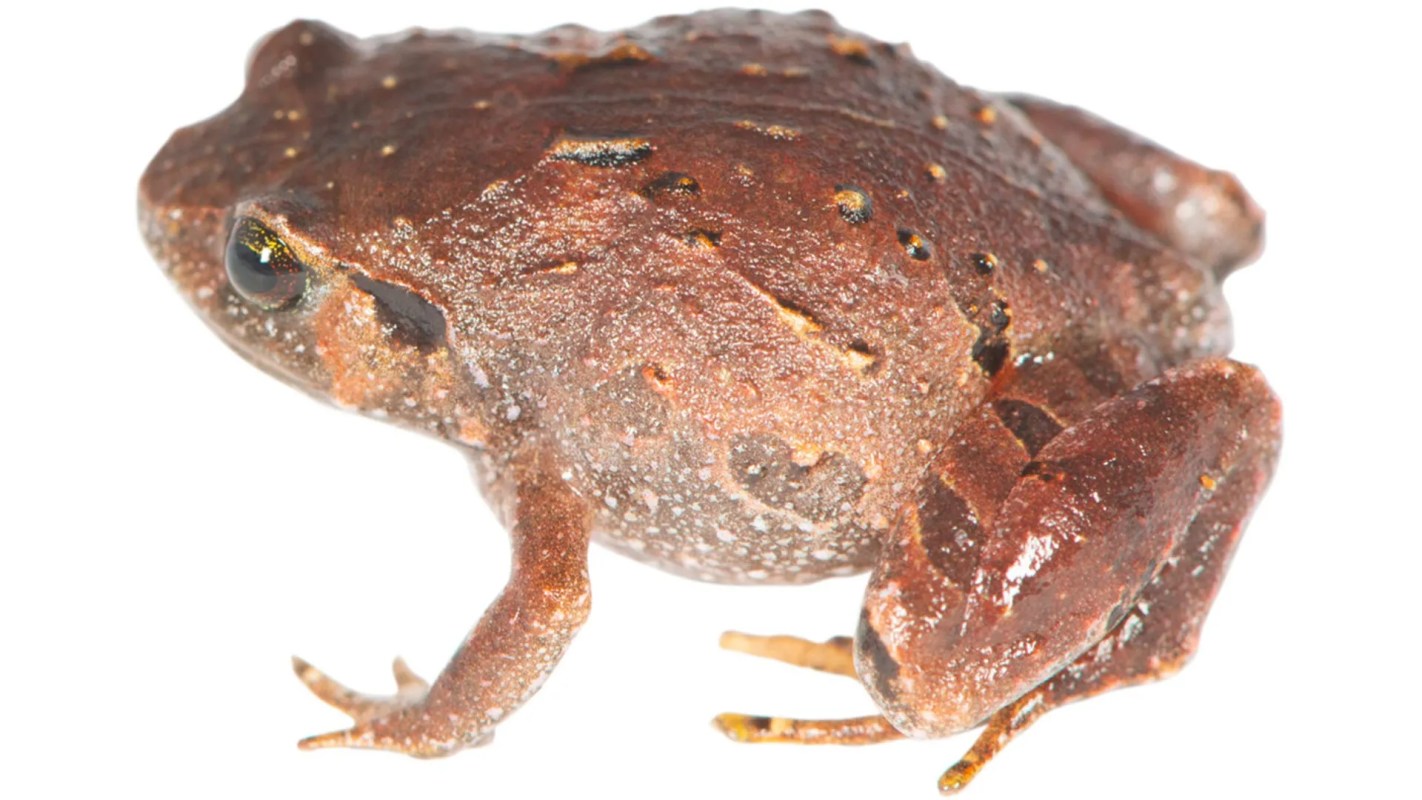
An international research team has identified seven previously undescribed species of Madagascar's diamond frogs, elusive amphibians that often stay hidden in leaf litter, moss, and forest soil — a discovery that is reshaping what researchers understand about the island's biodiversity, according to ScienceDaily.
Here's what to know
The discovery brings the number of known Rhombophryne — or diamond frog — species to 27.
A taxonomic mystery that had remained unresolved for more than a decade was finally addressed through a yearslong study that used frog calls, anatomy, DNA analysis, museum specimens, and field observations to separate the species.
Dr. Mark D. Scherz, curator of herpetology at the Natural History Museum Denmark and lead author of the study, said the group's diversity has long been easy to miss. "Diamond frogs have been hiding their diversity beneath our feet," Scherz said.
Part of the challenge lies in both how these frogs live and how they look. Many spend most of their lives beneath leaf litter, while others live among moss or along the forest floor. Even when they emerge, several can appear nearly identical at first glance.
Still, some of the frogs have more dramatic features that are not immediately obvious; these can include sudden orange flashes or stark black-and-white markings that may startle predators.
TCD Picks » Quince Spotlight
💡These best-sellers from Quince deliver affordable, sustainable luxury for all




More background
For scientists and policymakers, identifying which species are present and mapping where they live makes biodiversity easier to measure and helps determine which habitats should be protected first.
That need is especially pressing in Madagascar, where deforestation continues to fragment many forests. When scientists do not know exactly which species live in a given area, it becomes much harder to measure ecological loss or build effective conservation plans for local communities and ecosystems.
Scherz said the project stretched across 12 years partly because newer genetic evidence did not always align neatly with older species names tied to museum collections.
"When I started this project twelve years ago, we already knew there were several species waiting to be described, and almost every expedition to Madagascar revealed another one. Some were relatively straightforward to describe, but others were complicated by uncertainty surrounding older species names. Untangling that puzzle took years," he said.
That kind of scientific clarity can shape land-use planning, protected-area decisions, and efforts to safeguard forests that support both wildlife and human well-being.
What's being done?
One of the biggest breakthroughs involved museomics, a method that applies DNA sequencing to older museum specimens. By comparing older samples — including original type specimens — with newly collected frogs, the team was able to match names with the right lineages and clear up decades of taxonomic confusion.
Dr. Alice Petzold of the University of Potsdam, who led the museomics work, emphasized why that process matters. "Museum collections are far more than archives of the past — they are essential scientific resources for understanding biodiversity today."
The research also directly informed conservation planning. During a protected area planning workshop held in March 2026 as part of Madagascar's Biodiversity 30x30 Program, several of the newly described frogs, including Rhombophryne quentini, were cited in the ScienceDaily report as informing guide proposals to strengthen and expand protected areas.
Scientists say there is still much more to learn. Dr. Andolalao Rakotoarison of the Institut d'Enseignement Supérieur de Soavinandriana Itasy, Madagascar, noted that researchers still know little about breeding, population size, or habitat needs for many of these species — basic information that can determine whether protection efforts succeed.
As Scherz put it: "Every newly described species represents millions of years of unique evolutionary history. The more we learn about Madagascar's remarkable amphibians, the clearer it becomes that there is still an enormous amount left to discover."
Where can I learn more?
These stories highlight how frogs can slip out of sight for years, and why the places they depend on are often under strain:
• In Peru's Andes, scientists rediscovered a "lost" frog after 116 years without documentation.
• Scientists warn tree frogs face a new threat as drought intensifies habitat loss.
• In Argentina's Patagonia, conservationists made an incredible breakthrough protecting a last stream-frog refuge.
Finding amphibians and protecting them go hand in hand. Every discovery or comeback adds to the urgency of conserving the ecosystems frogs need to survive.

Get TCD's free newsletters for easy tips, smart advice, and a chance to earn $5,000 toward home upgrades. To see more stories like this one, change your Google preferences here.






