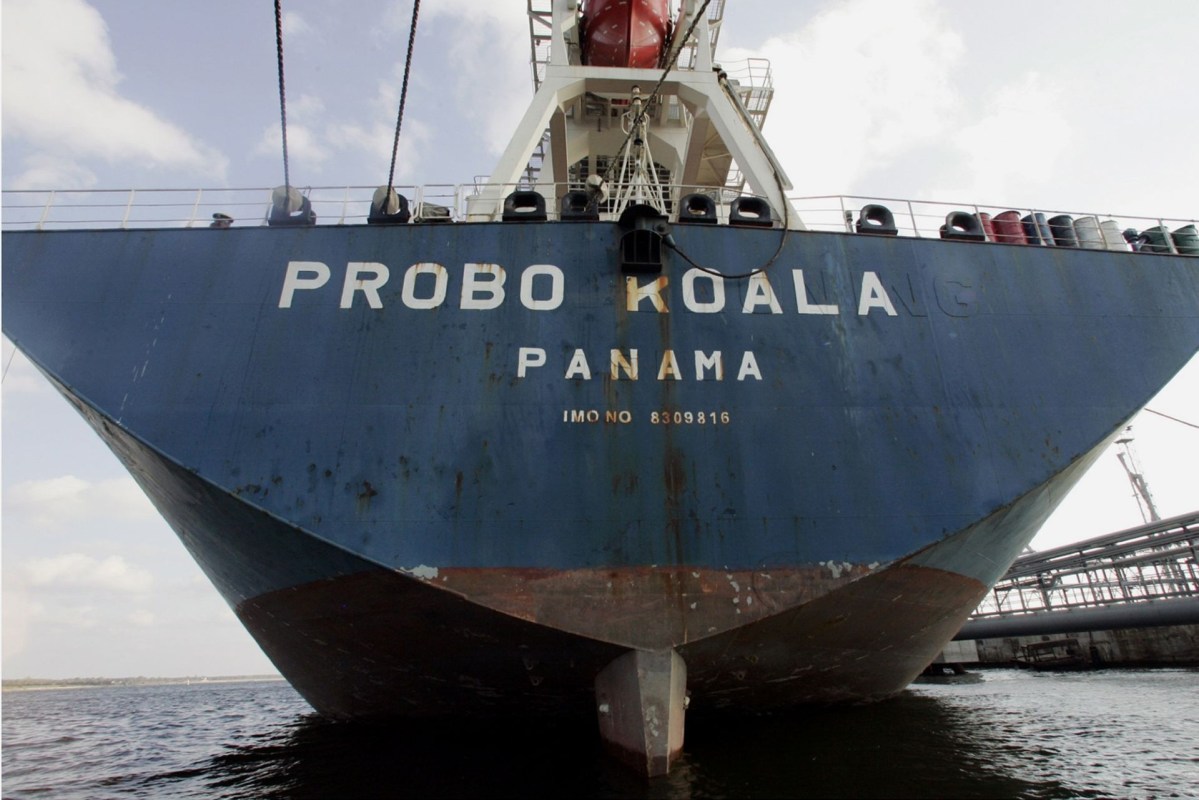
Toxic waste from the cargo ship Probo Koala was dumped across Abidjan over 20 years ago, and survivors in Côte d'Ivoire are still dealing with the fallout.
Here's what to know
On August 19, 2006, more than 551 tons (500 tonnes) of toxic material was discarded across Côte d'Ivoire's economic capital in 18 locations by the Probo Koala. Residents reported a noxious smell in parts of the city while tens of thousands said they experienced poisoning symptoms, leaving 17 dead.
Among the communities cited by RFI was Akouédo, an Ebrié village in the Cocody district. William Akessé, spokesperson for the village chief, says that night remains unforgettable as it was the same night he and his wife lost their child after a problematic birth.
In 2007, Trafigura — the commodities trading company found responsible — and the Ivorian government reached a controversial €152 million settlement for cleanup and compensation for victims. In return, Côte d'Ivoire withdrew any further legal action.
The agreement also prevented victims from pursuing any further compensation or legal action, which many found to be unjust. Denis Yao Pipira, who represents victims' associations, said, "What the government did was sign an agreement that grants Trafigura immunity."
More background
According to Amnesty International, Trafigura could have disposed of the toxic liquids in the Netherlands, where the ship stopped before continuing to Côte d'Ivoire, but did not because the process would have cost about $620,000.
TCD Picks » Quince Spotlight
💡These best-sellers from Quince deliver affordable, sustainable luxury for all




Instead, the company hired the Ivorian firm Tommy, which offered to handle the material for just $17,000. Some of that waste was then dumped in and around Abidjan, turning a cost-cutting decision into a public health disaster for locals.
Environmental groups use the term "waste colonialism" to describe situations in which richer countries or companies ship waste to poorer countries because disposal is cheaper there, even when local systems cannot manage it safely. Communities near landfill sites and workers in informal recycling often end up shouldering all the risk.
Electronic waste, plastics, and second-hand textiles have become common waste streams entering Africa, especially after China's 2018 ban on many solid waste imports, which pushed exporters to look elsewhere. In Kenya, Greenpeace estimated that 30% to 40% of second-hand clothing imported in 2019 was worthless, adding pressure on dumps, waterways, and streets.
What's being done?
Victims have kept seeking remedies outside Côte d'Ivoire. In the Netherlands, the Court of Cassation ordered Trafigura to compensate victims. In 2023, the African Court on Human and Peoples' Rights ruled that Côte d'Ivoire's compensation arrangements were inadequate and ordered the creation of a fund to make up for the harm caused.
That fund has not been created, even as Ivorian authorities continue to say all polluted sites have been fully cleaned up since 2015. For residents, however, the consequences have rippled far beyond cleanup efforts.
Regulators are also tightening waste-export rules. The European Union adopted new waste shipment rules in 2024, including tougher restrictions on plastic waste exports. Starting November 21, 2026, EU countries will generally be prohibited from exporting plastic waste to non-OECD countries unless those countries receive exemptions and show they can process it safely.
The rules are meant to keep waste closer to where it is produced, reducing the chances that lower-income communities are left paying the price for someone else's trash. Still, some African countries, including Egypt, Mauritius, Morocco, Niger, Tunisia, and Togo, are seeking exemptions to continue importing certain plastic waste from the EU.

Get TCD's free newsletters for easy tips, smart advice, and a chance to earn $5,000 toward home upgrades. To see more stories like this one, change your Google preferences here.