


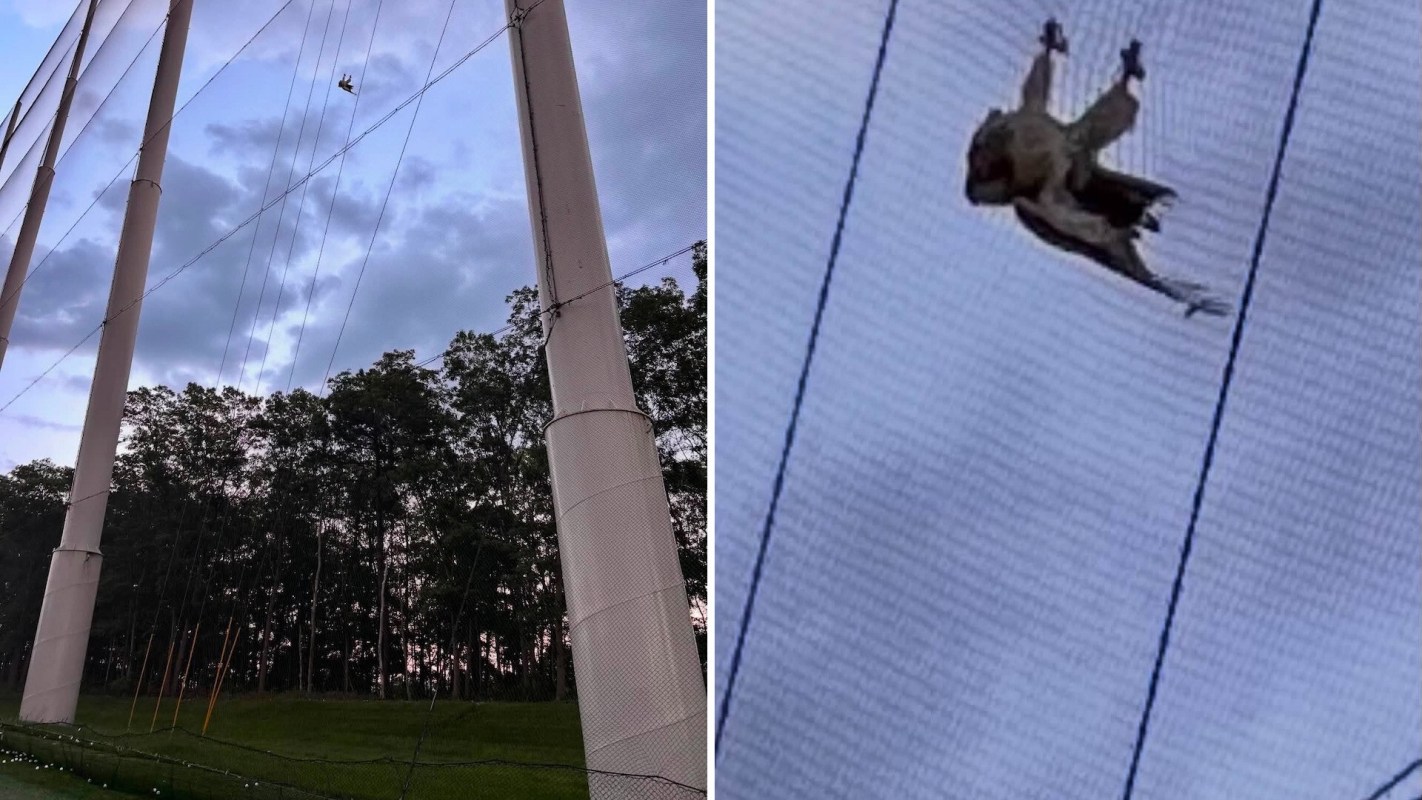
One Topgolf facility is collecting way more than just well-hit golf balls, and it's not a good thing.
News 12 reported that an osprey, a federally protected bird, became entangled in netting at the Topgolf facility in Holtsville, New York, and managed to free itself. The incident is deepening concern because another raptor had been trapped at the same site just one week before.
Here's what to know
Frankie Floridia, an animal rescuer and advocate with Strong Island Animal Rescue, told the station that the bird got caught in the netting at the Holtsville Topgolf and later got out on its own.
Another raptor had already been caught in the same net on Aug. 19. In that episode, a hawk was stranded about 100 feet above the ground for more than 24 hours before it was able to break free, News 12 said.
Floridia said the osprey's escape could easily have ended much worse.
"We're very grateful for that because if he was fatigued and he went to fly and he fell down, he would hit like a rock and probably be dead," he explained to the station.
TCD Picks » Quince Spotlight
💡These best-sellers from Quince deliver affordable, sustainable luxury for all




News 12 reported that a manager at Topgolf said the New York State DEC had been on-site, though the company did not offer further comment. Ospreys are federally protected through the Migratory Bird Treaty Act.
More background
Two birds of prey were caught in the same netting within a single week. In this case, the threat was not a predator or a storm but a large man-made structure built for recreation.
For birds such as ospreys and hawks, tall netting can become a life-threatening barrier in what would otherwise be an open flight path. Even when a bird manages to escape, the stress and exhaustion can leave it vulnerable to serious injury or death.
Rescuers and advocates are calling for a more dependable plan. Floridia said the Holtsville incident reflects a broader pattern in comments to News 12.
"It's very frustrating," he told the outlet. "We see that this is happening [in] a lot of Topgolfs all over the country and something needs to be put in place."
Man-made threats to wildlife like this don't appear to be high on companies' lists of priorities when they build facilities like this. Still, once they're in place, the frequency of incidents indicates that these are legitimate concerns for local birds.
What's being done?
The DEC was on-site, but rescuers are pushing for faster, more practical solutions when birds become trapped high above the ground.
For Floridia, that means acting before the next bird gets trapped and not relying on the animal to solve the facility's problem.
"They need to speak to a company, maybe get on a contract, have something that can be here within an hour or two to get this down," Floridia asserted to News 12. "Maybe the nets can have a drop down where they can pull them down, or they need to get a bucket truck on the ground here that can get them up that high."
Where can I learn more?
Wildlife can run into serious trouble in all kinds of human-made settings. Whether it's fishing line, plastic, or fast-moving traffic, animals moving through those spaces can end up in immediate danger and need help fast.
• In Minnesota, firefighters freed an injured osprey hanging upside down from fishing line.
• Park rangers found a great crested tern on a boat after plastic weakened it.
• ARC Wildlife Sanctuary volunteers rescued young swans weaving through traffic on a busy highway.
Each case emphasizes the value of prevention and a plan to respond quickly when wildlife gets trapped around human infrastructure. That's the same issue behind calls for changes after the repeated raptor entanglements in Holtsville.

Get TCD's free newsletters for easy tips, smart advice, and a chance to earn $5,000 toward home upgrades. To see more stories like this one, change your Google preferences here.







