


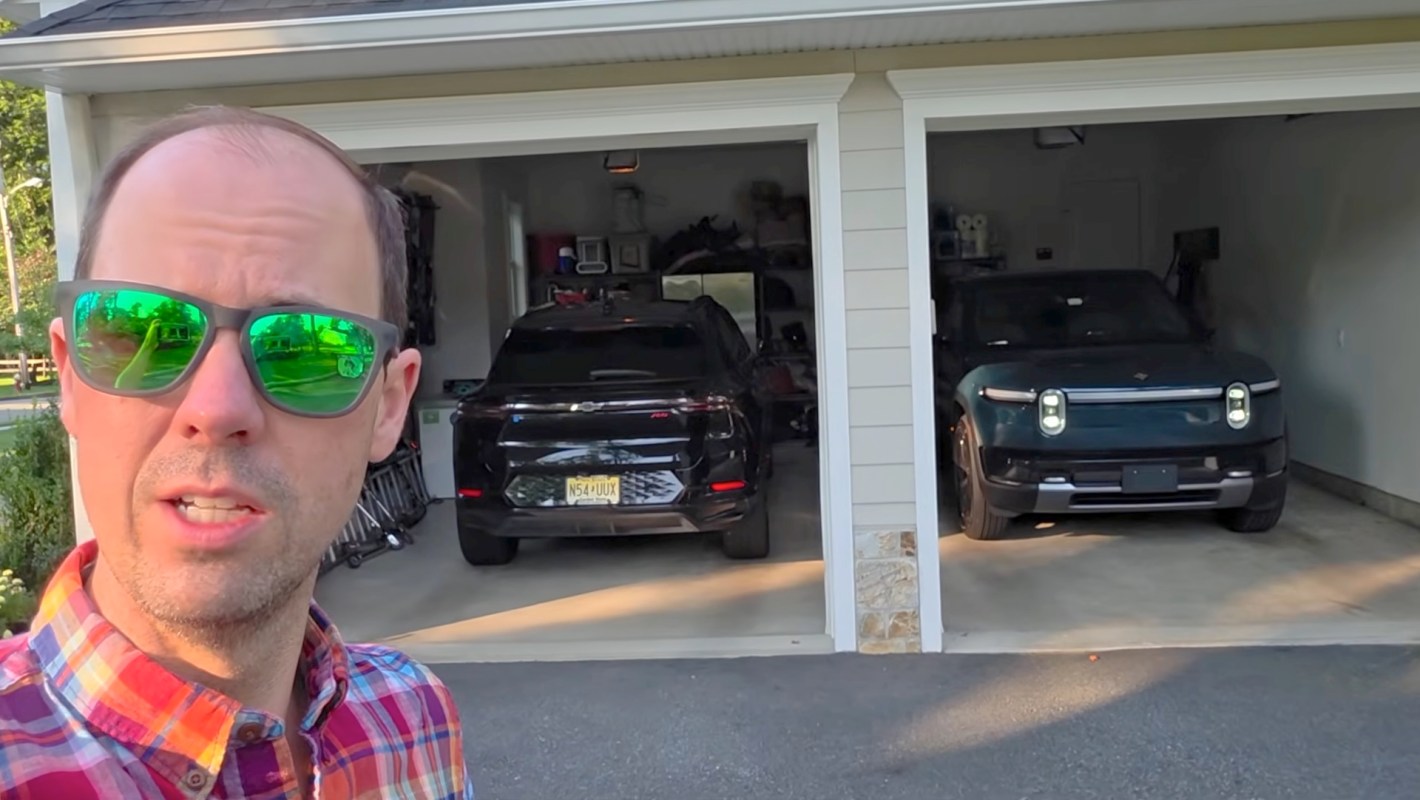
To compare two very different approaches to EV value, a New Jersey family took both on the same 500-mile round trip between New Jersey and Vermont.
The matchup paired Rivian's new R2 against a Chevy Equinox EV 2RS priced roughly $15,000 lower.
Here's what to know
A video from EVenture Family (@Eventurefamily) followed a Rivian R2 Catalina Cove Launch Edition and a Chevy Equinox EV 2RS over almost the same highway loop. Both started fully charged, and each vehicle ran on 21-inch wheels.
Rather than making it a flat-out race, the couple used the drive to look at the issues families tend to care about on longer EV trips: highway energy use, charging stops, navigation and planning, and overall comfort.
Despite the large price gap, the creator said he expected both SUVs to end up "probably right around 3 miles per kilowatt-hour."
EPA ratings make the range comparison look straightforward, but the drive suggested the answer is messier in practice. The all-wheel-drive Equinox EV is rated at 285 miles, while the R2 carries a 330-mile EPA estimate, though the creator said of the Rivian, "nobody's getting that."
TCD Picks » Quince Spotlight
💡These best-sellers from Quince deliver affordable, sustainable luxury for all




Charging specs also didn't tell the whole story on this route. The Equinox can top out at about 150 kilowatts, and the R2 is capable of higher rates, but the available stations did not include the hardware Rivian needs to reach its best numbers, so both SUVs mostly ended up using Tesla Superchargers.
More background
When the Equinox arrived at a Tesla Supercharger in Bennington, Vermont, it still had about 25% battery left, which was better than predicted.
A charger error appeared after about five minutes at one stall, so the driver moved to another unit, and the session then continued normally until charging began tapering near 70%.
One commenter wrote, "Efficiency without compromise is my gold standard to assess real advancement in this space."
What can be done?
How long an EV trip really takes depends on more than the window sticker, including speed, weather, wheel choice, charger access, and whether the route lets the vehicle use its fastest charging capability.
The test also underscored how competitive cheaper EVs have become. The Rivian offers a newer design and a more premium cabin, but the Equinox still looked like a credible road-trip choice because of its strong efficiency and lower purchase price.
One commenter put it this way: "Really conflicted. Don't need another crossover/small suv thing in my stable, but the R2 clearly is the better vehicle ... is it $30k better? ... ehhhh ... EQ is absolutely 100% a great value and a good car, but it's looking like it will be getting replaced shortly because I make bad decisions."
Where can I learn more?
The Vermont run showed how quickly EV value turns into a real-world question of price, charging access, and everyday efficiency — not just EPA range. The coverage here digs into those same tradeoffs, from Rivian's push to win over more buyers to the cost and range questions that can sway a family toward a premium model or a cheaper one.
• As prices keep shifting, misunderstood myths about EVs still shape family buying decisions.
• Over a decade of ownership, shocking cost differences of maintaining EVs kept showing up.
• For many households, surprising savings from owning an EV can outweigh sticker shock.
Each one adds a little more context to the question hanging over this road-trip test: how much extra capability is really worth paying for. That calculation gets tougher as lower-cost EVs keep getting better.

Get TCD's free newsletters for easy tips, smart advice, and a chance to earn $5,000 toward home upgrades. To see more stories like this one, change your Google preferences here.






