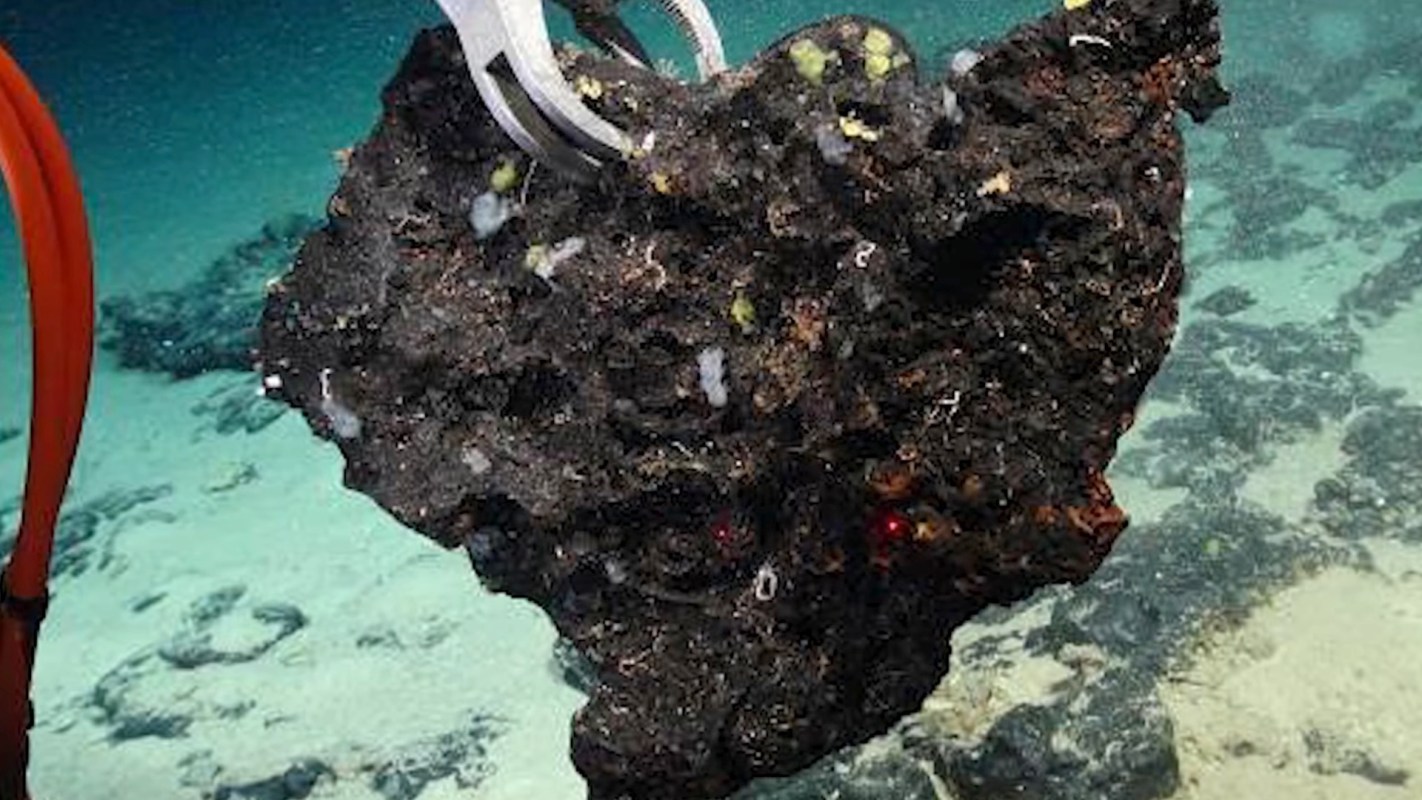
The federal government appears poised to hold its first commercial auction for seabed-mining leases in federal waters off American Samoa.
If the effort proceeds, companies could gain access to ocean-floor minerals used in some battery supply chains. This is happening as several electric vehicle battery chemistries are reducing their reliance on those same materials.
Here's what to know
According to a YouTube video by The Electric Viking (@ElectricViking), the U.S. Department of the Interior is preparing a commercial deep-sea mining lease sale, with federal waters near American Samoa tentatively first later this year on Nov. 19.
After that, the plan would move on to the Northern Mariana Islands and Alaska.
The resources in question are seafloor nodules that contain nickel, cobalt, copper, and manganese. Those metals have long been considered important to industrial supply chains, including some EV batteries.
Many newer battery types — particularly cheaper chemistries that are gaining market share — do not depend on nickel and cobalt the way older designs did. That means the U.S. could be accepting major ecological risk to obtain minerals that are becoming less essential.
TCD Picks » Quince Spotlight
💡These best-sellers from Quince deliver affordable, sustainable luxury for all




One YouTube user commented, "This is dangerous for all of humanity, corporations will leave a toxic mess behind because they won't profit from cleaning up the mess they make. Those Islands are stolen land, colonization, and people around the world should fight to stop this and protect the people and the environment."
"Rare earth minerals are used in defense weapons and systems," another person noted.
Why is this concerning?
The seafloor remains one of the least understood environments on Earth. Disturbing that environment could damage fragile ecosystems that may be difficult or impossible to reverse.
That is especially significant for places such as American Samoa and the Northern Mariana Islands. Communities connected to these waters could be left to deal with the environmental and economic consequences of extraction decisions made far from home as short-term profits make people elsewhere richer.
EVs are a key tool for cutting air pollution and planet-heating emissions. But using them as a rationale for risky new mining could undermine progress toward a cleaner future if it causes avoidable damage to oceans and coastal communities.
Cleaner transportation should not require sacrificing another critical ecosystem, especially when battery technology is already evolving in ways that can reduce demand for some of these metals.
What can be done?
Transparent environmental review and meaningful input from affected communities could both make sure any kind of mining is actually worth doing.
Battery makers and automakers can also continue scaling chemistries that use fewer constrained minerals while improving recycling systems that recover metals already in circulation instead of opening new frontiers for extraction.
Where can I learn more?
People in many places are working to make sure that the transition to clean energy doesn't happen at further expense to the environment.
• At the United Nations, advocates pushed for legal rights for the ocean as extraction pressures grow.
• Island communities are also testing next-gen battery systems that could ease mineral demand.
• Tribal Nations are expanding EV access through a Native-led initiative aimed at cleaner transport.
Solutions are going to look different in every location. By learning about what people are doing in other places, advocacy groups and even you can learn how to take effective action for people and the planet.

Get TCD's free newsletters for easy tips, smart advice, and a chance to earn $5,000 toward home upgrades. To see more stories like this one, change your Google preferences here.