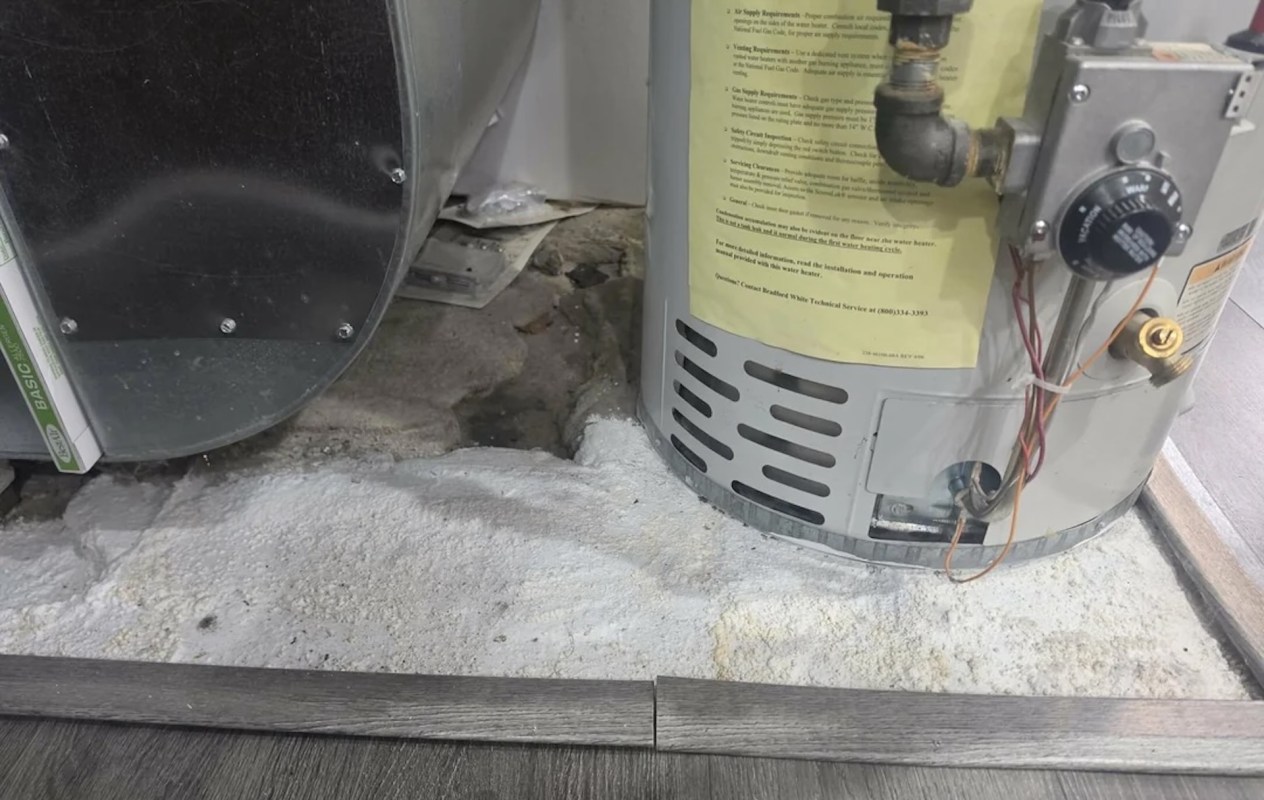
A strange white patch around a basement water heater had a homebuyer wondering if it was harmless residue or a sign of an active moisture problem that could turn into an expensive mess.
The concern is not a small one. Even a minor leak in a utility area can lead to larger repair bills, wasted energy, and hidden damage behind finished walls or carpeting.
Here's what to know
The issue surfaced in a post on Reddit, where a prospective buyer said a house they liked raised concerns because of buildup on the basement floor near the furnace and water heater. "So we really like this home and were interested in purchasing it. The only issue is our realtor is worried about possible water damage," the buyer wrote.
One commenter replied, "This looks to me like a previous water heater failed, leaked gunk all over the floor, and they replaced the water heater but never cleaned up the gunk." The same commenter added that it also "could be someone spilled a sack of salt for a water softener and just left the mess."
Complicating the picture, the Reddit poster said the realtor's moisture meter showed "80+ all over the white area," even though much of the rest of the basement was finished and carpeted. That made the situation seem potentially more serious than a leftover stain.
Not everyone agreed that the reading meant much, though. Another commenter pushed back on that approach, saying: "Tell your realtor to leave the inspections to the inspectors … You don't use a cheap moisture meter on concrete; it'll always report a high number."
TCD Picks » Quince Spotlight
💡These best-sellers from Quince deliver affordable, sustainable luxury for all




More background
Because the house was built in 1927, the list of possible causes goes beyond the water heater itself. Moisture in a basement like that could come from a slow leak at the unit, seepage through the slab, condensation, or residue from an older problem that was never completely cleaned up.
If moisture is active, it can eventually damage nearby wood framing, encourage mold growth, or shorten the lifespan of the equipment itself.
It can also make a water heater work harder than necessary if corrosion or leaking connections are part of the problem, which can translate to more money lost to repairs and utility waste over time. A separate commenter focused on future protection, noting: "They make a pan for it to contain any future leaks." Protection like that can help limit damage if a tank fails.
What can be done?
Strange buildup around a heater may turn out to be manageable, but confirming whether there is active moisture and identifying the source before closing can help avoid larger problems.
The original poster said on Reddit that they planned to arrange a general inspection, a sewer scope, and a foundation inspection. A licensed home inspector or plumber can help determine whether the issue is an old spill, mineral residue, groundwater seepage, or an active appliance leak.
Identifying a real water intrusion issue before purchase can help avoid surprise expenses tied to concrete moisture remediation, framing repairs, water heater replacement, or mold cleanup later on.
If the cause does turn out to be the heater itself, the fix may be relatively straightforward. They can either replace it or repair the leak, improve drainage, install a containment pan, and make sure the setup includes proper safety features and code-compliant connections.
Replies also underscored how many possible sources there are in an older basement. As one person put it: "If it's leaking, it certainly could. But water could also be seeping up from the ground." They later added, "You'll be amazed at the number of random places water can come from in a house that old."
Where can I learn more?
When you spot possible moisture around a basement water heater, it's important to figure out if something is leaking right now and what you can do to keep it from happening again. The articles here cover ways homeowners stay ahead of water heater maintenance and think through replacement options when an older unit starts raising concerns.
• Routine upkeep can keep your water heater running longer and reduce surprise repair costs.
• A simple way to detect hidden leaks can stop moisture damage before it spreads.
• When replacement becomes necessary, heat pump water heaters can trim long-term energy use.
For anyone considering an older home, getting the help of a professional home inspector is the most important step to take, but it's also helpful to bone up on tips and guidance from articles and forums, which can make it easier to tell the difference between leftover residue and a moisture problem that is still developing.

Get TCD's free newsletters for easy tips, smart advice, and a chance to earn $5,000 toward home upgrades. To see more stories like this one, change your Google preferences here.