


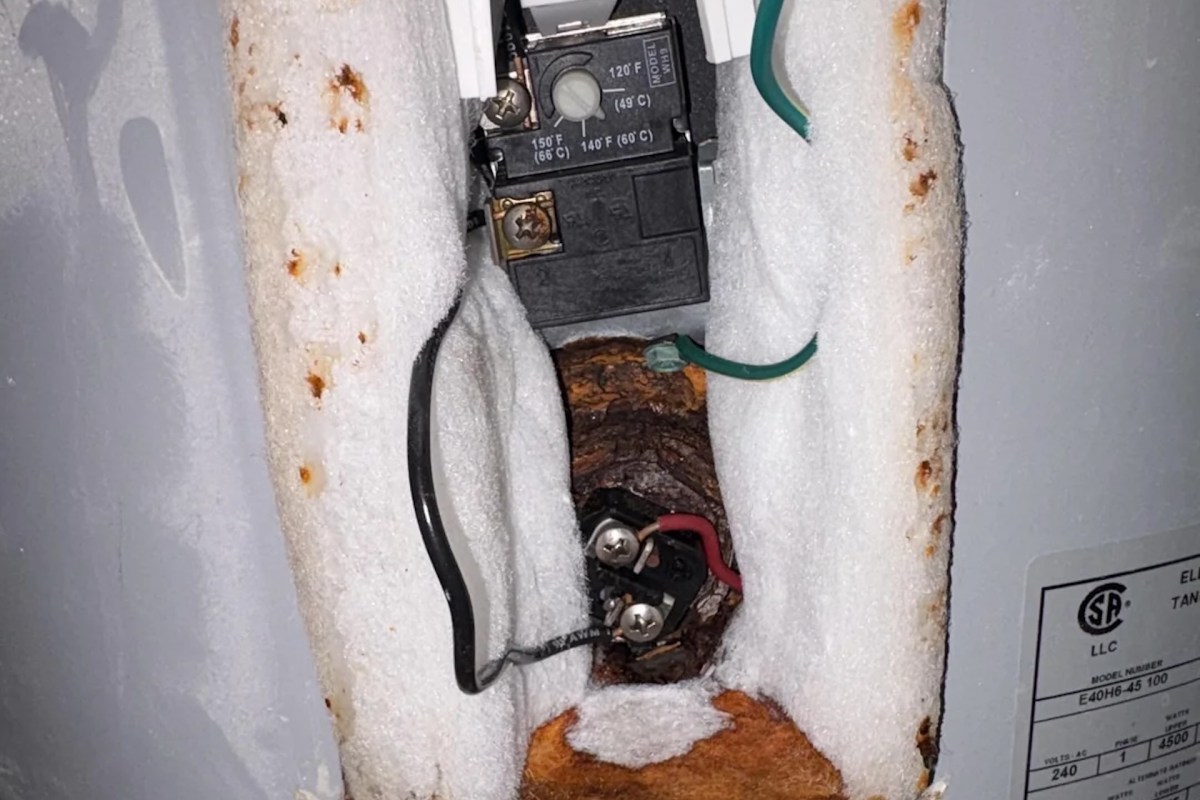
Spotting rust on an aging water heater can quickly turn a minor home-maintenance issue into a much bigger decision. That was the situation one homeowner faced after noticing corrosion near the bottom of a 12-year-old electric unit — and fellow homeowners and plumbing-minded Redditors had a pretty clear answer.
Here's what to know
The issue came up in a Reddit thread from a homeowner trying to decide between a fix and a full swap. The post said, "I have a 12-year-old electric water heater and noticed a rust trail toward the bottom of the unit. Looks like the bottom heating element is super corroded." The poster also asked whether buying from Lowe's or Menards would mean sacrificing quality compared with units from contractor supply houses.
For most commenters, the likely presence of a tank leak settled the repair debate. On an older heater, rust and corrosion near the base can indicate the tank itself is failing, not just a replaceable part.
One commenter advised shoppers going the retail route to be selective: "If you want to buy from Menards, Home Depot, or Lowes, only buy their best units that come with a 12-year tank warranty. They're built better than the 6-year units. And change out the anode rod every 3-5 years; that's what's protecting the tank from corrosion."
Waiting for a more serious failure can lead to flooding that could damage floors, walls, or nearby belongings.
More background
When water appears to be escaping from the tank body or heavy corrosion is concentrated low on the unit, the problem often points to the tank's interior rather than a simple component. Issues limited to a heating element, valve, or gasket can sometimes be repaired, but once the lining is compromised, any fix is usually temporary.
For many households, a failing water heater can mean an unexpected expense, possible water damage, and higher operating costs if the replacement is another less-efficient electric resistance model. It also leaves homeowners weighing the upfront cost against potential savings.
Heat pump water heaters change that equation by using electricity more efficiently to move heat rather than generate it directly. Over time, that can lead to noticeably lower energy bills, especially for families with high hot-water demand.
Save $10,000 on solar panels without even sharing your phone number Want to go solar but not sure who to trust? EnergySage has your back with free and transparent quotes from fully vetted providers in your area. To get started, just answer a few questions about your home — no phone number required. Within a day or two, EnergySage will email you the best options for your needs, and their expert advisers can help you compare quotes and pick a winner. Solar panels can save you more than $50k over their 25-year lifespan, and EnergySage can help you save as much as $10k on installation. Which begs the question — isn't that worth an email or two? |

What can be done?
On an older tank, rust at the bottom or signs of leaking usually mean it makes more sense to get the unit checked promptly and prepare for replacement than to count on a repair lasting. When comparing new models, shoppers can look at warranty terms, component quality, and maintenance details, such as easier anode rod access.
For homeowners considering an efficiency upgrade, Cala offers smart heat pump water heaters designed to go beyond a basic replacement. Its customizable smart heat pump water heaters help homeowners decrease their energy bills by heating water exactly when needed. By matching hot-water production to household routines, the system can reduce wasted energy while still keeping enough hot water available for daily use.
That kind of technology could make a broken tank feel less like a setback and more like an opportunity to reduce monthly costs. For homeowners weighing a replacement, Cala is one example of how newer water-heating systems are being built around savings as much as reliability.
In the end, the thread's advice was direct. "Replace the whole thing. It leaks," one wrote. Another added, "The only option here is replacement, as far as I can see it is leaking, and if the water heater is leaking the only choice you have is to replace it."
Where can I learn more?
For homeowners facing a water heater replacement, the goal is to find one that will last a long time and reduce energy bills along the way. The articles below take a closer look at heat pump models and simple leak-prevention steps that can help protect the area around the tank.
• Many homeowners find a heat pump water heater changes replacement math with lower bills.
• After four years, one homeowner showed how much he's saved using a heat pump unit.
• A plumbing-minded homeowner learned this advice has saved customers thousands by catching leaks early.
A rust-streaked tank is a warning sign, but it also forces a choice about what comes next. Good maintenance can buy a heater more time, and when replacement is unavoidable, a more efficient upgrade can help offset the cost over time.

Get TCD's free newsletters for easy tips, smart advice, and a chance to earn $5,000 toward home upgrades. To see more stories like this one, change your Google preferences here.






