


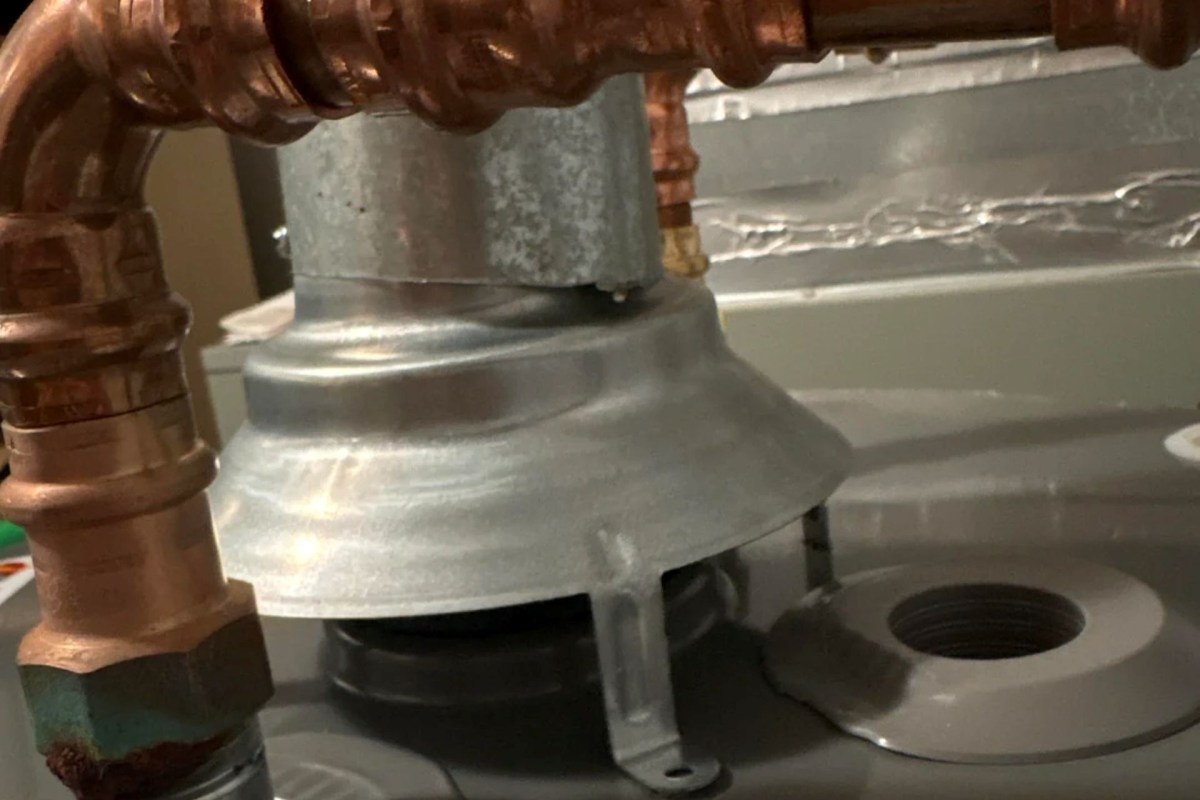
A homeowner who paid for a professional gas water heater installation went to Reddit with concerns and asked, "Issues with brand new gas water heater installed professionally a month ago… Thoughts?"
Looking at the photos, Redditors quickly zeroed in on two possible problems: a cheap component that may have been omitted and a venting issue some viewed as potentially more dangerous.
Here's what to know
Across hundreds of comments, the prevailing view in the Reddit thread was that the pictures showed corrosion developing at the water heater connections, where unlike metals appeared to meet.
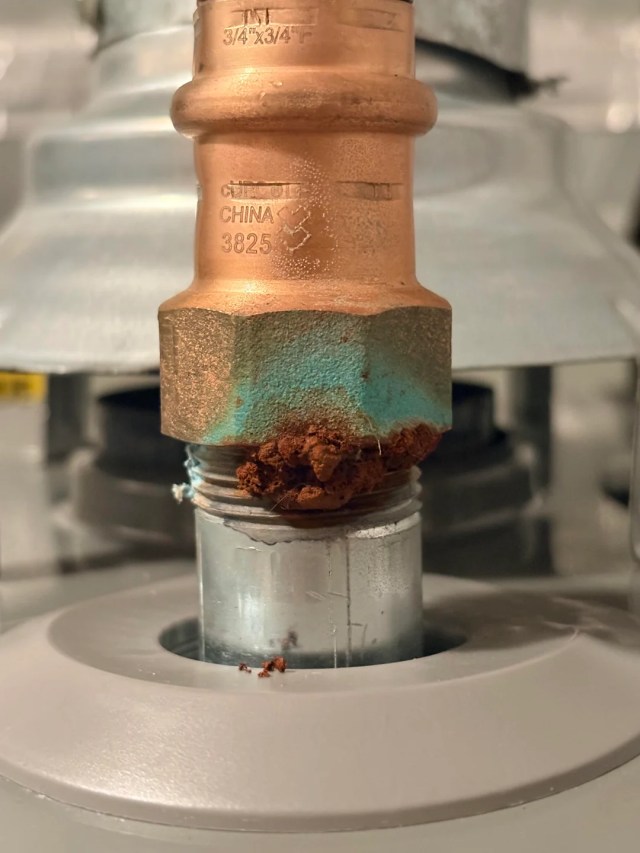
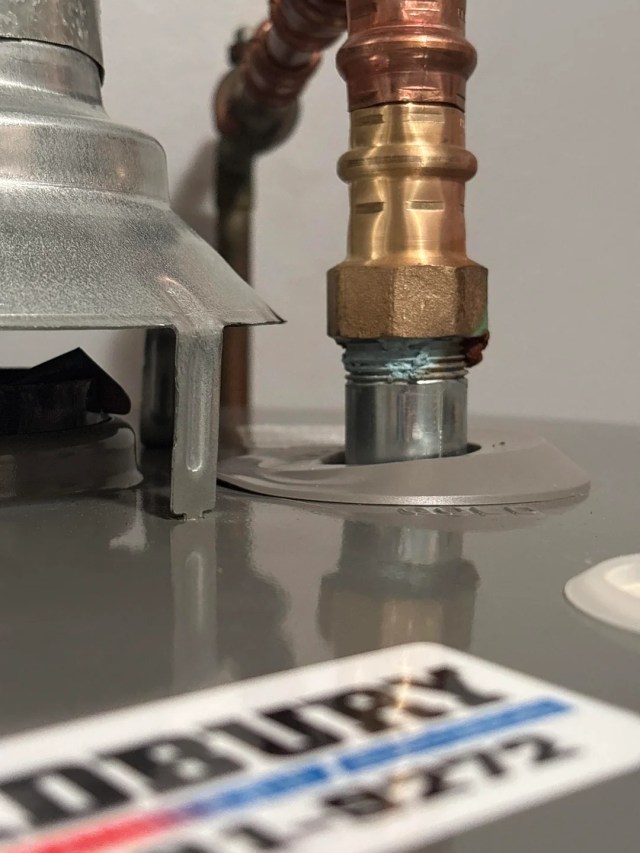
Many commenters said the likely cause was the lack of a dielectric union or another appropriate break between the copper and steel parts. One commenter wrote: "Steel and copper do not mix in contact with water, it creates electrolysis and causes corrosion when they are in contact with one another. Hence the need for a dielectric union. That's like water heater 101."
The venting drew a separate wave of concern. Commenters said the melted plastic visible near the flue could indicate poor drafting, a condition that may allow carbon monoxide to become a risk indoors.
More background
Several people noted that the suspected missing part in this installation is typically inexpensive, with some describing it as costing only a few dollars.
TCD Picks » Quince Spotlight
💡These best-sellers from Quince deliver affordable, sustainable luxury for all




Spotting corrosion before it worsens can mean swapping out a fitting instead of dealing with a leak, water damage, or a shorter service life for the unit. Improper venting or other installation mistakes on gas equipment can also affect how the appliance operates.
More than one commenter said the flue issue warranted quick action, warning that backdrafting exhaust can push hazardous combustion gases into living areas. Many people suggested that the OP get a carbon monoxide detector for that room, or, if they already have one, double-check that it is working.
A few users added that local code or manufacturer instructions may permit brass in some setups. Even so, those commenters still said the corrosion and the apparent venting problem were enough to justify a closer look from a qualified professional.
What can be done?
It's never a bad idea to look over the top of a gas water heater every once in a while, focusing on the places where copper piping meets steel or galvanized parts. Signs such as rust, green discoloration, crusty residue, or newly forming corrosion at those joints can indicate a problem.
It can also help to inspect the vent area for melted plastic, discoloration, or other clues that exhaust is not rising out of the system as intended. When anything looks off, a licensed plumber or HVAC technician can determine whether the right transition fittings were used and whether the vent is drafting safely.
For homeowners seeing both corrosion and evidence of venting trouble, commenters generally said it should not be dismissed as a cosmetic issue. As one commenter warned, "But dont allow the water heater to keep running if its still not drafting properly. Not to be that guy but this is literally life or death."
Where can I learn more?
The Reddit discussion focused on corrosion, venting, and the possibility that a poor installation could shorten the heater's lifespan. These articles look at maintenance that can catch trouble early, along with tankless and heat pump options that some homeowners consider when a standard unit starts to become a headache.
• Routine upkeep can keep your water heater running smoothly and help catch early trouble.
• Some homeowners switch to tankless water heaters to cut bills and avoid standby losses.
• After four years, one owner showed how much he's saved with a heat pump model.
• Midea has unveiled an advanced and efficient replacement for traditional water heaters.
A problem with one water heater can quickly become a bigger decision about maintenance, efficiency, and whether it makes sense to replace the unit. Reading through those examples may help homeowners figure out whether to push for a repair or start weighing a different setup.

Get TCD's free newsletters for easy tips, smart advice, and a chance to earn $5,000 toward home upgrades. To see more stories like this one, change your Google preferences here.






